Patagonia has been on our “to visit” list for a while, but it’s surprisingly difficult to get to from Seattle. For us, most of South America requires at least one layover, with flight times and costs often exceeding those to Europe. Up until this year, I’ve used Europe as the benchmark for big cultural trips – why spend more on “X” when Amsterdam is a direct flight away?! Europe is fantastic, and we still have so much to see there, but South America is really growing on us as an often overlooked (for Americans) travel destination.
Where Are We?
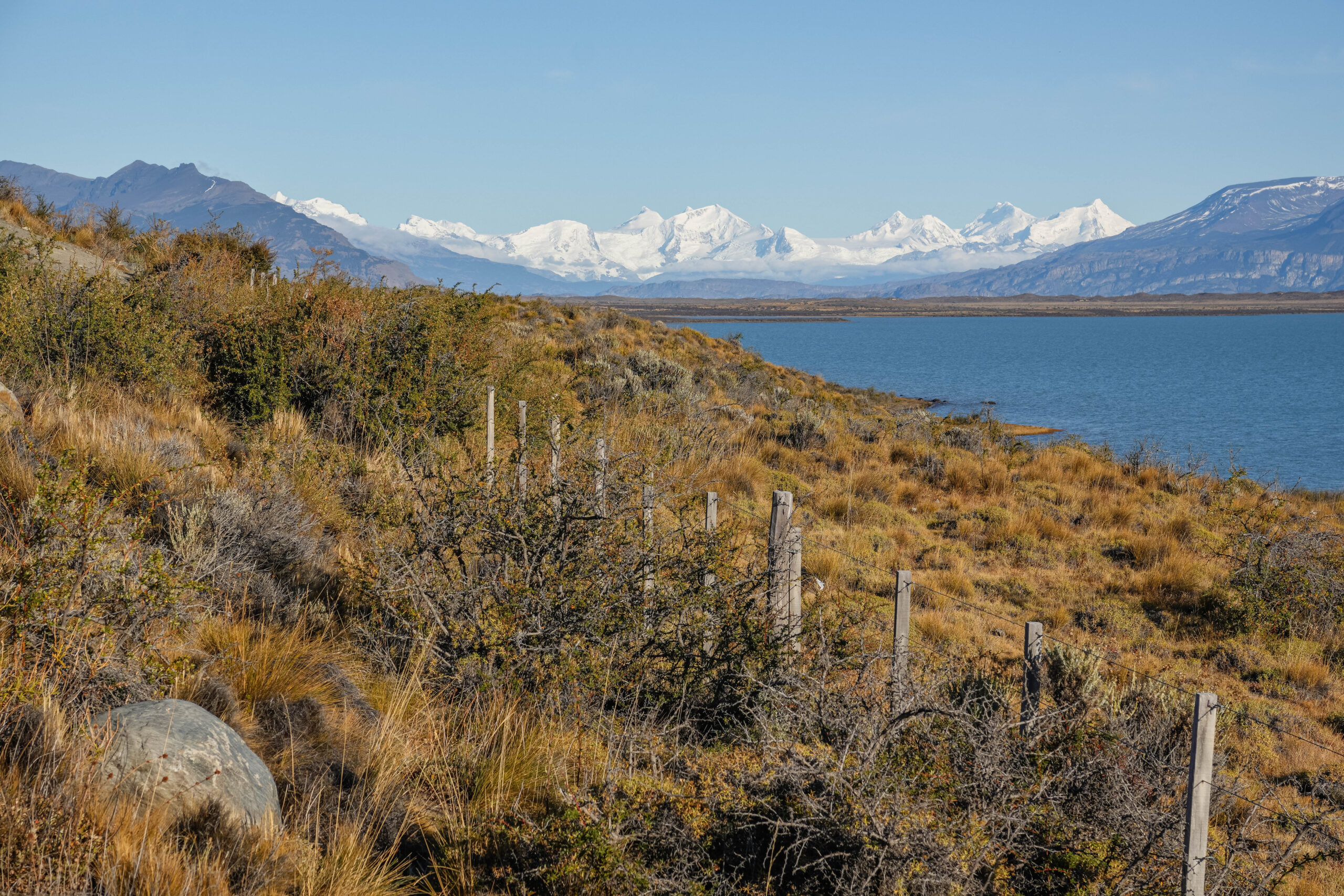
For our visit to Patagonia, we did both the Chilean and Argentinian side, each offering their own bucket list of natural wonders. At the beginning of March, we were in the early autumn of the Southern Hemisphere and built in a few extra days at each stop to account for potential bad weather days. Here was our itinerary:
- Torres Del Paine, Chile (3 Nights) – We stayed just outside the Rio Serrano Entrance for easy access to the park. We did 3 days of driving into the park with shorter kid-friendly hikes versus the famous (and much longer) W-Trek or O-Circuit.
- Puerto Natales, Chile (3 Nights) – A town a few hours south of Torres del Paine, it served as our hub for arrival and departure from Chilean Patagonia. We also went on the awesome Balmaceda Glacier cruise from here.
- El Calafate, Argentina (3 Nights) – Our arrival point in Argentina, we stopped here for one reason: the Perito Moreno Glacier.
- El Chalten, Argentina (5 Nights) – The day hiking capital of Patagonia. A purpose built tourist town with some of the best trails starting in the town itself.
All in we went on six hikes (tagged at the end of the blog) and completed just over 21 miles with two toddlers. The impressive part is that our almost-3-year old and 5 year old did 70% of that on their own, with a little bit of treat bribery of course. We felt like we honestly were able to do Patagonia justice, even with toddlers. Buuuut we can’t wait to come back when they are older and force them to do the multi-day hikes, probably still with some bribery.
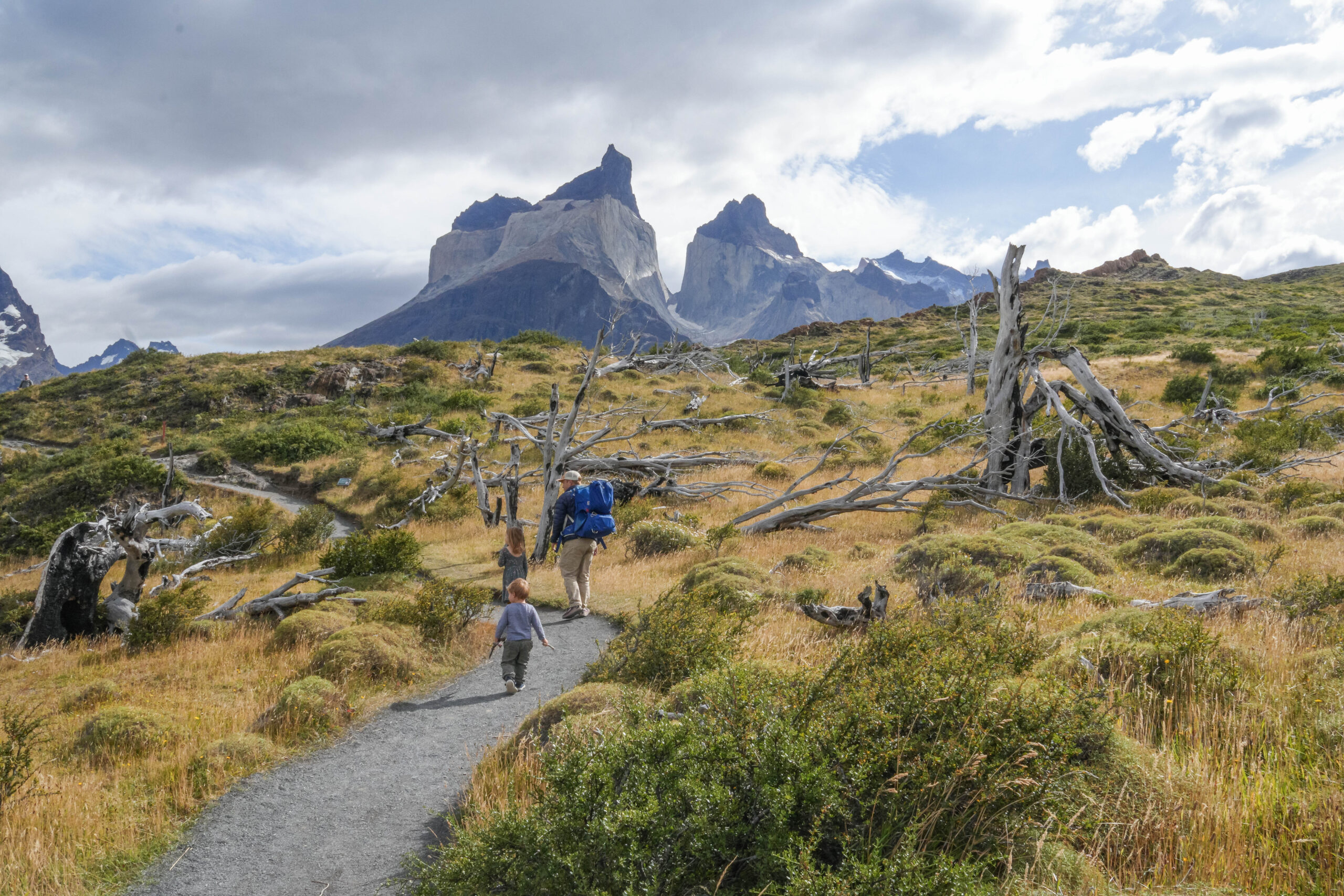
Torres Del Paine, Chile
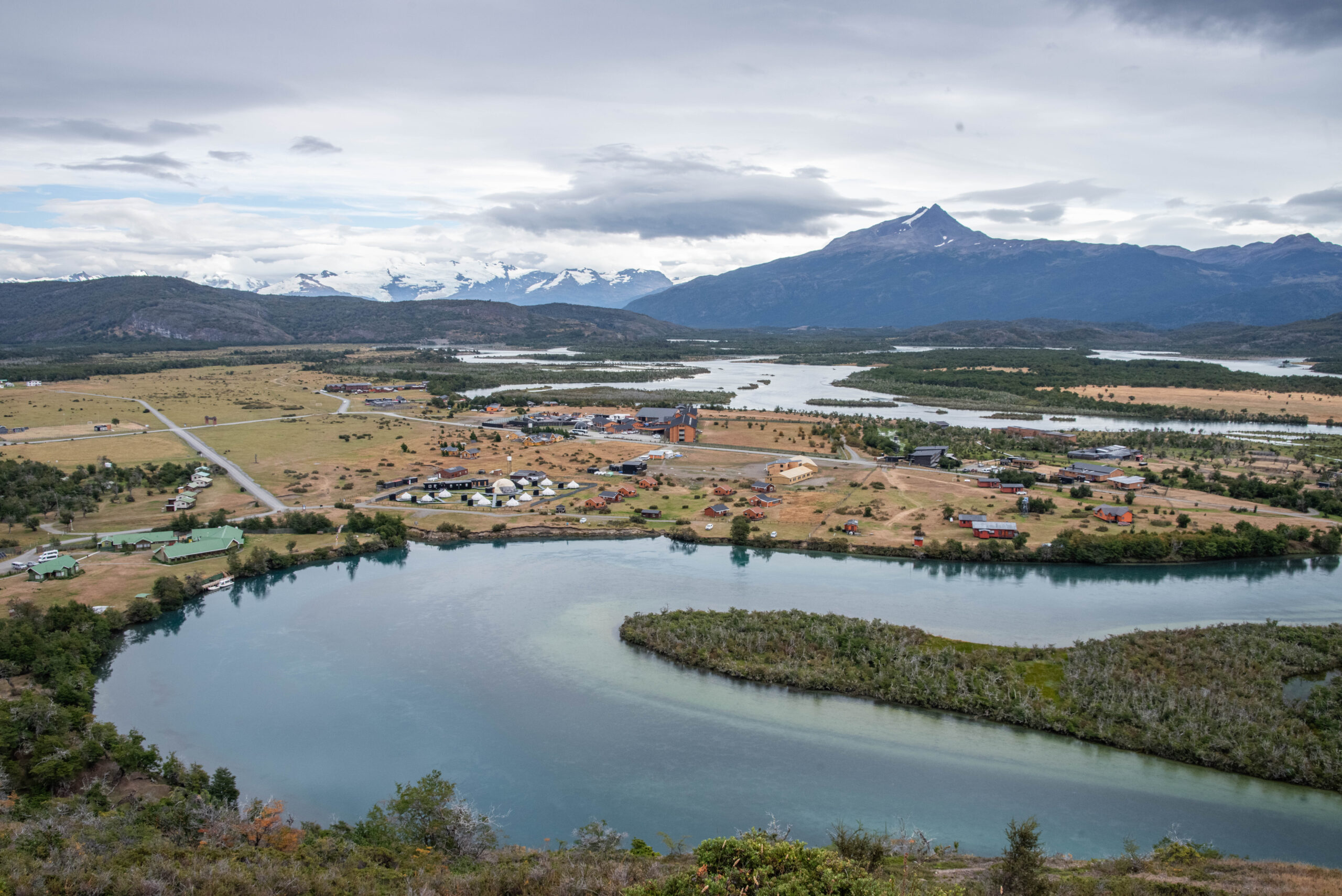
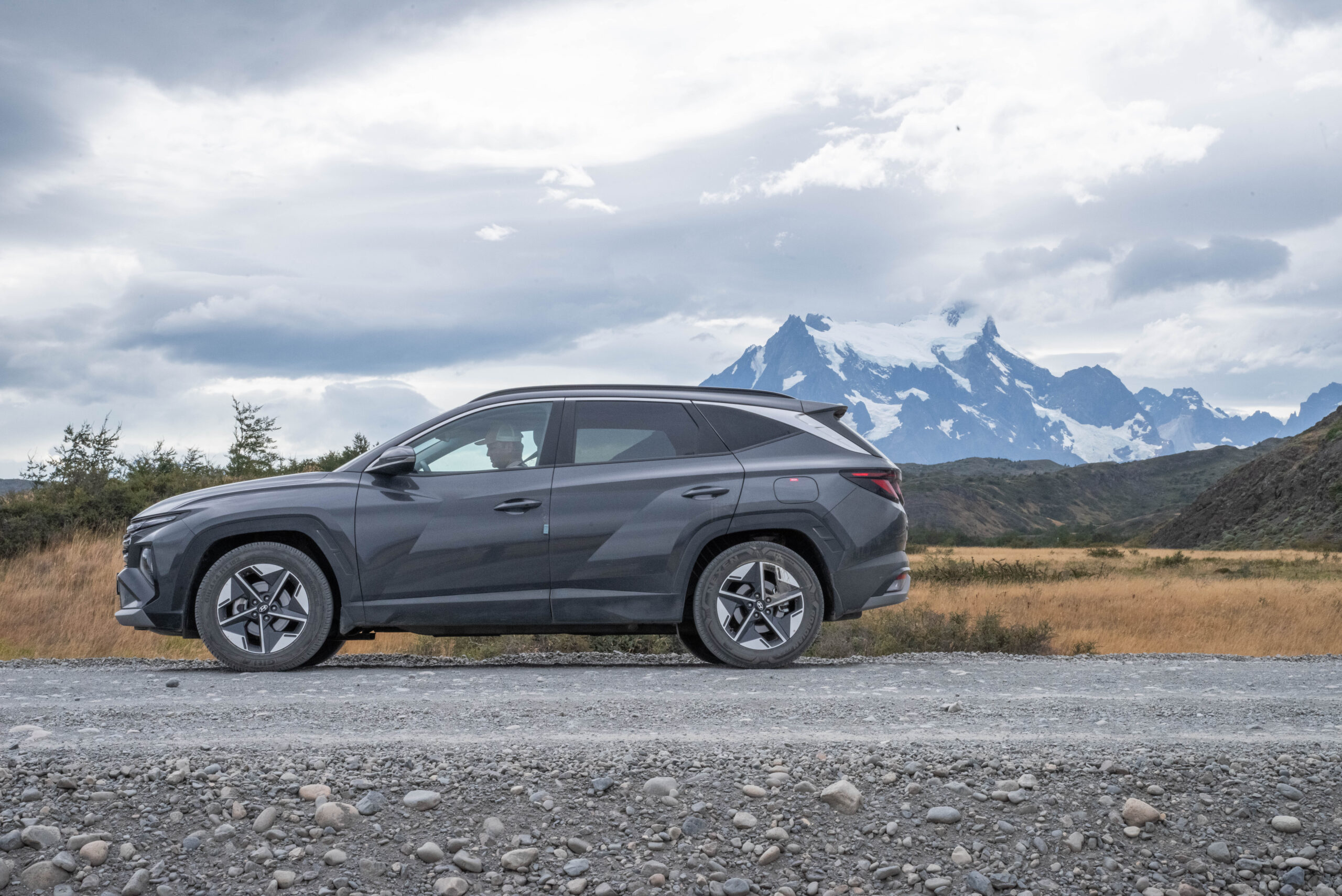
Coming from Santiago, we started our visit to Patagonia with a domestic flight to Puerto Natales. The other airport option is Punta Arenas, which is a larger city further south with tours to see penguins but adds two hours of driving (so five total) to visit Torres del Paine. With our focus being on the Park, we flew into the closer airport. We arrived, got our rental, empanadas for the road and drove to our accommodations near one of the park entrances at Rio Serrano.
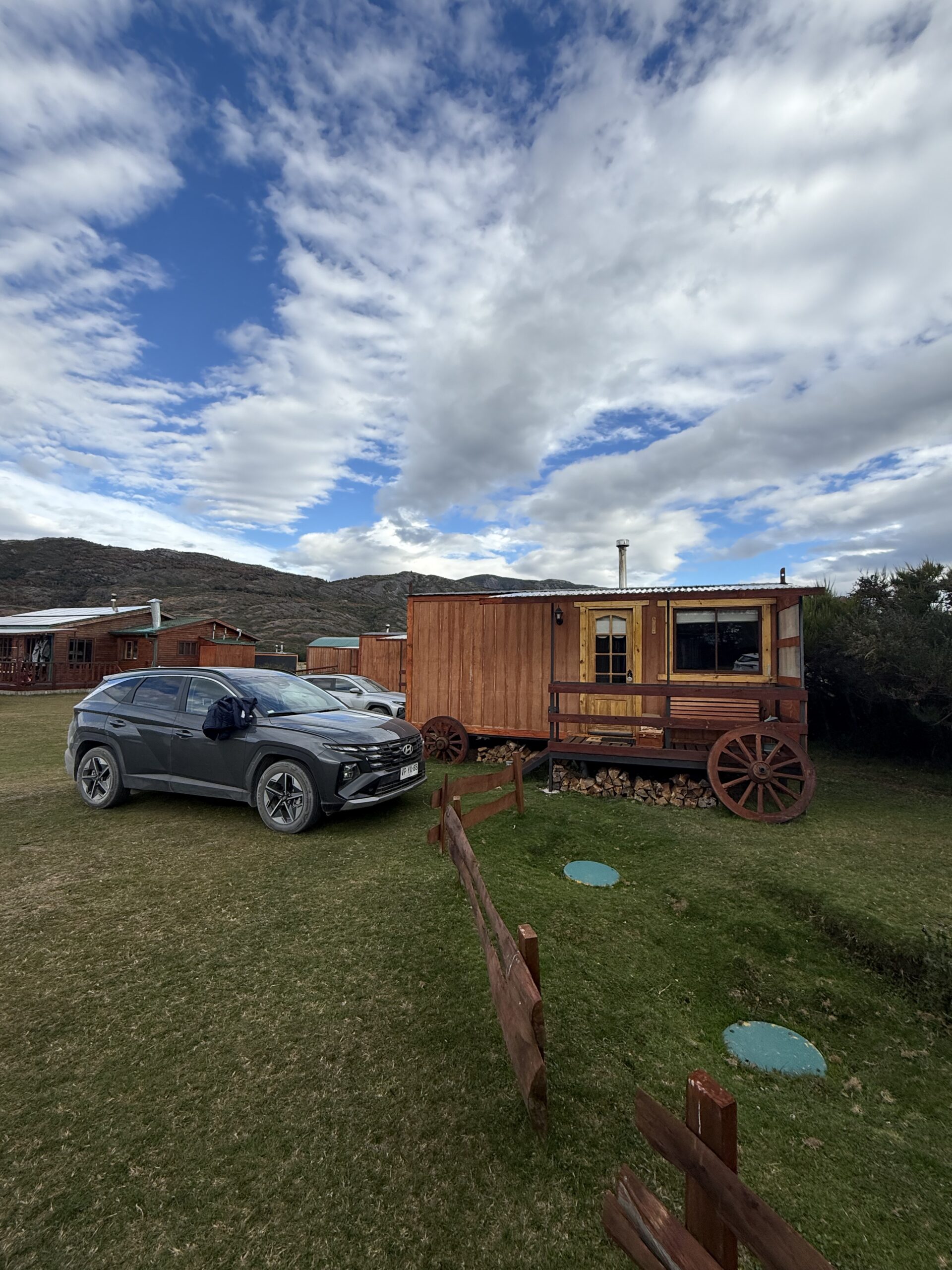
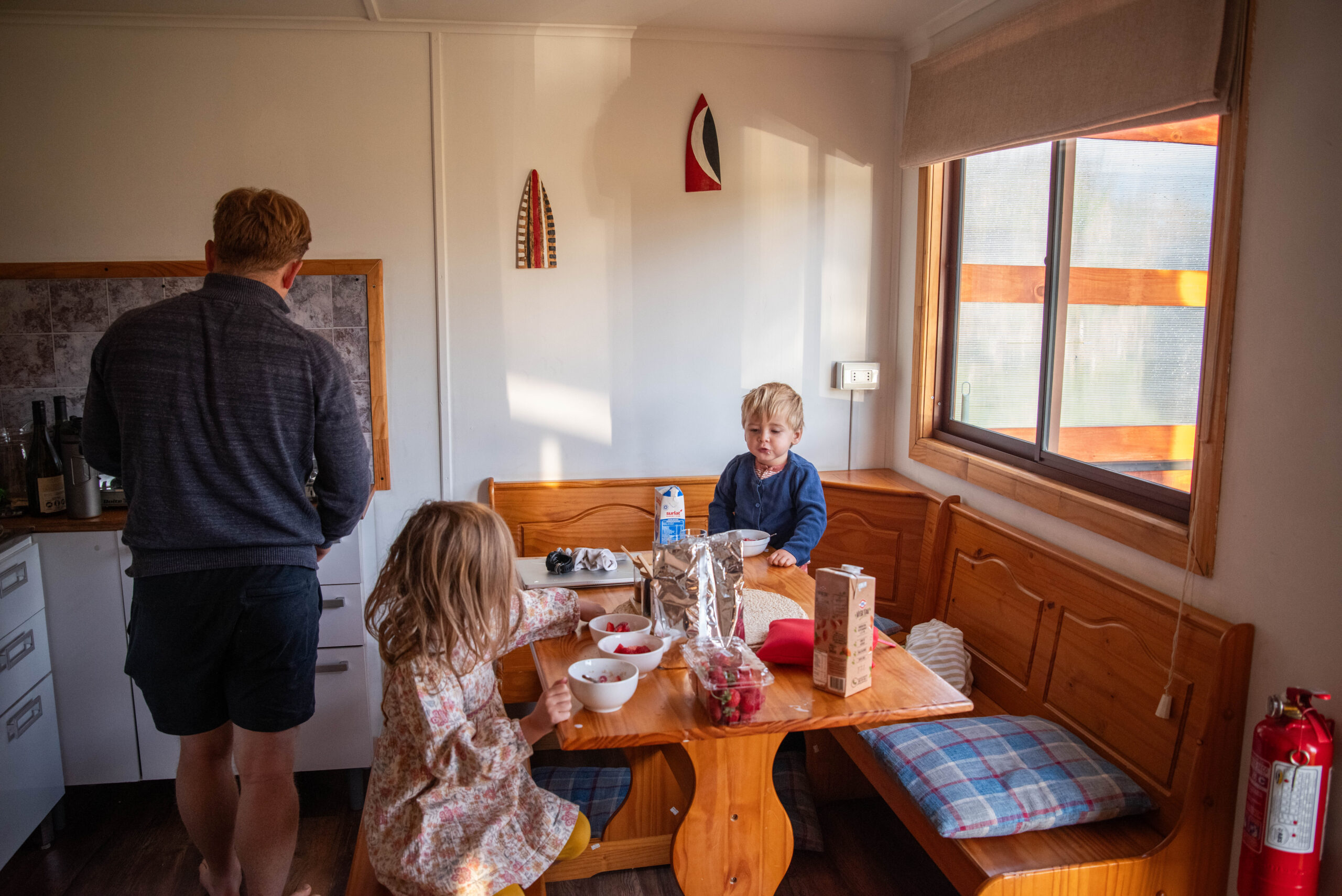
While our hearts were initially set on finding one of those Instagram worthy hotels with unimpeded views of the peaks, our wallets got the final say. We stayed at the Konkashken Lodge in a teeny bunkbed trailer, which was still over $400 USD a night (!!!). We opted to pay the premium for the convenience into the park with our kids in tow, saving 4 extra hours of driving per day. The staff and grounds made it worth it but staying close to Torres del Paine ended up being some of the most expensive nights of our year long trip.
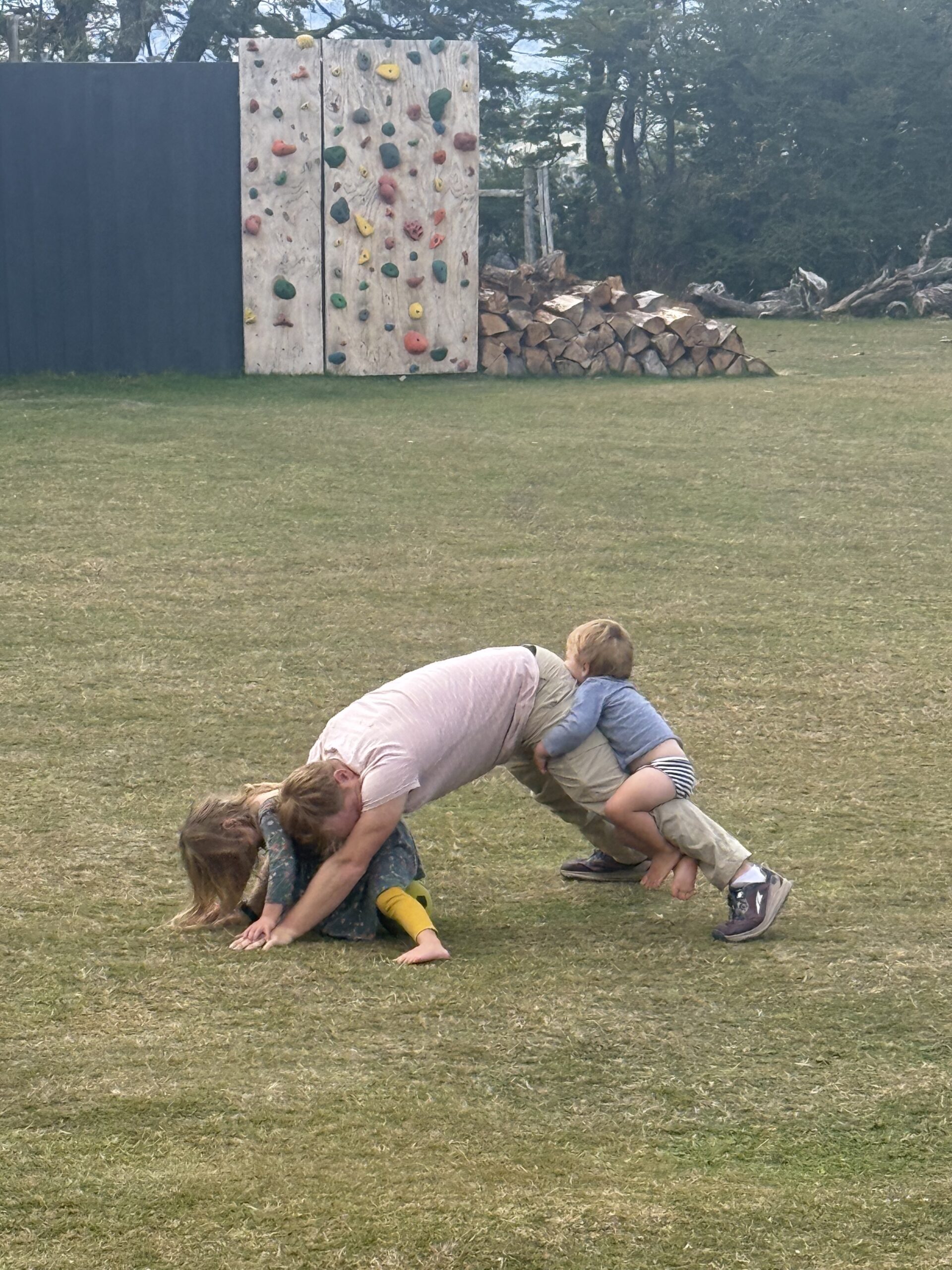
Food options were limited in the area and nothing opened before 7:00pm, meaning hungry, fidgety kids. To pass the time before dinner, we channeled pent up car-riding-energy into lively games of soccer. Both kids had their own rule set, so we created our own version of the sport with Mae sitting on the ground as the “goal” and Emmett pretended to be a “soccer-car”. Our best dinner was at Restaurant Don Pascual where I had the famous Patagonian lamb cooked over a fire (cordero al asador). The kids were invited back to the kitchen to see the huge parilla (grill) and sampled freshly made sopapillas.
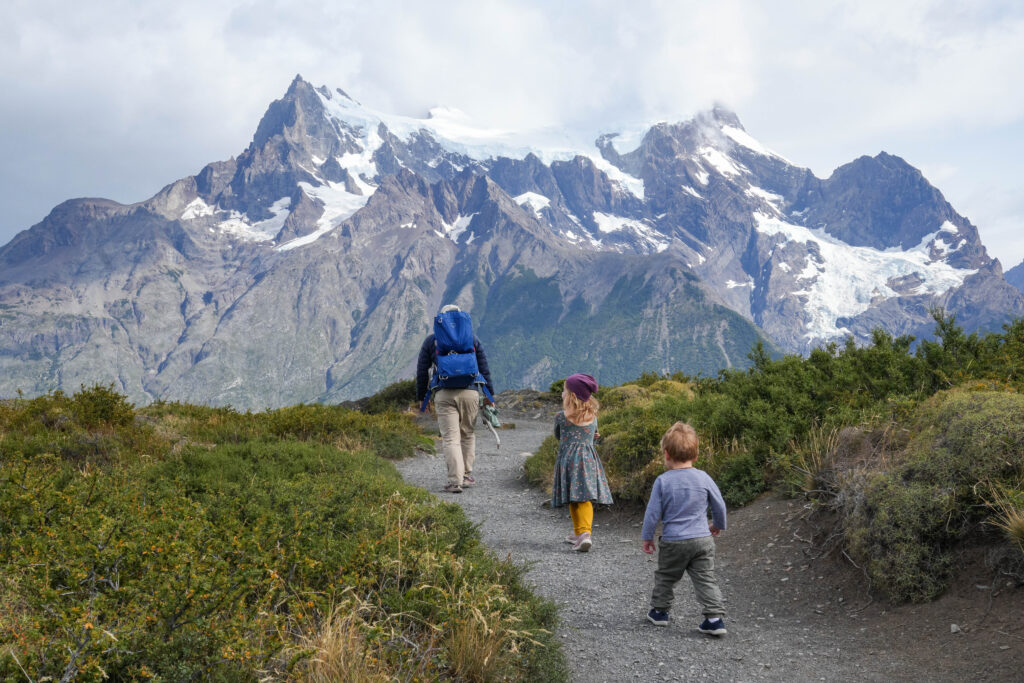
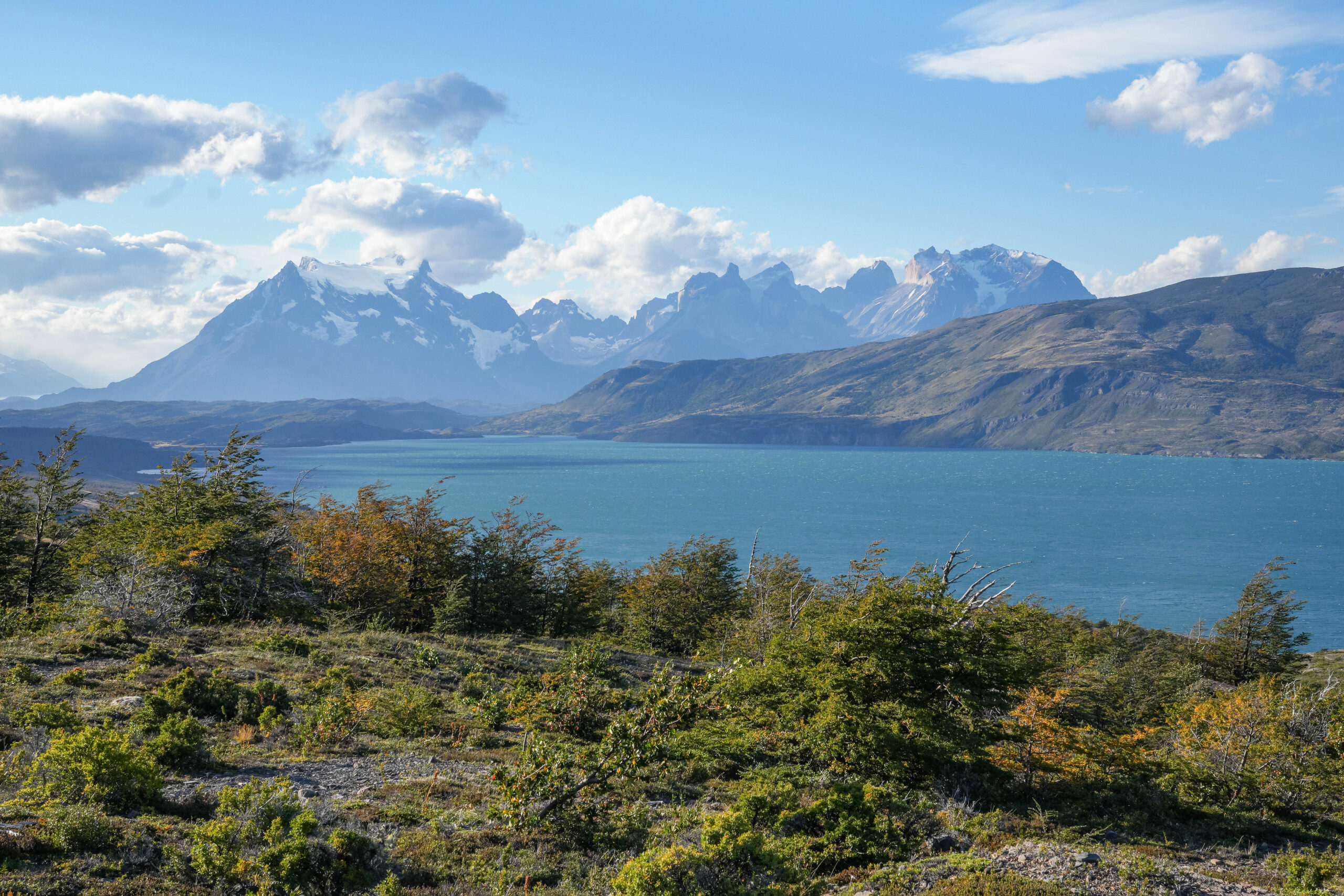
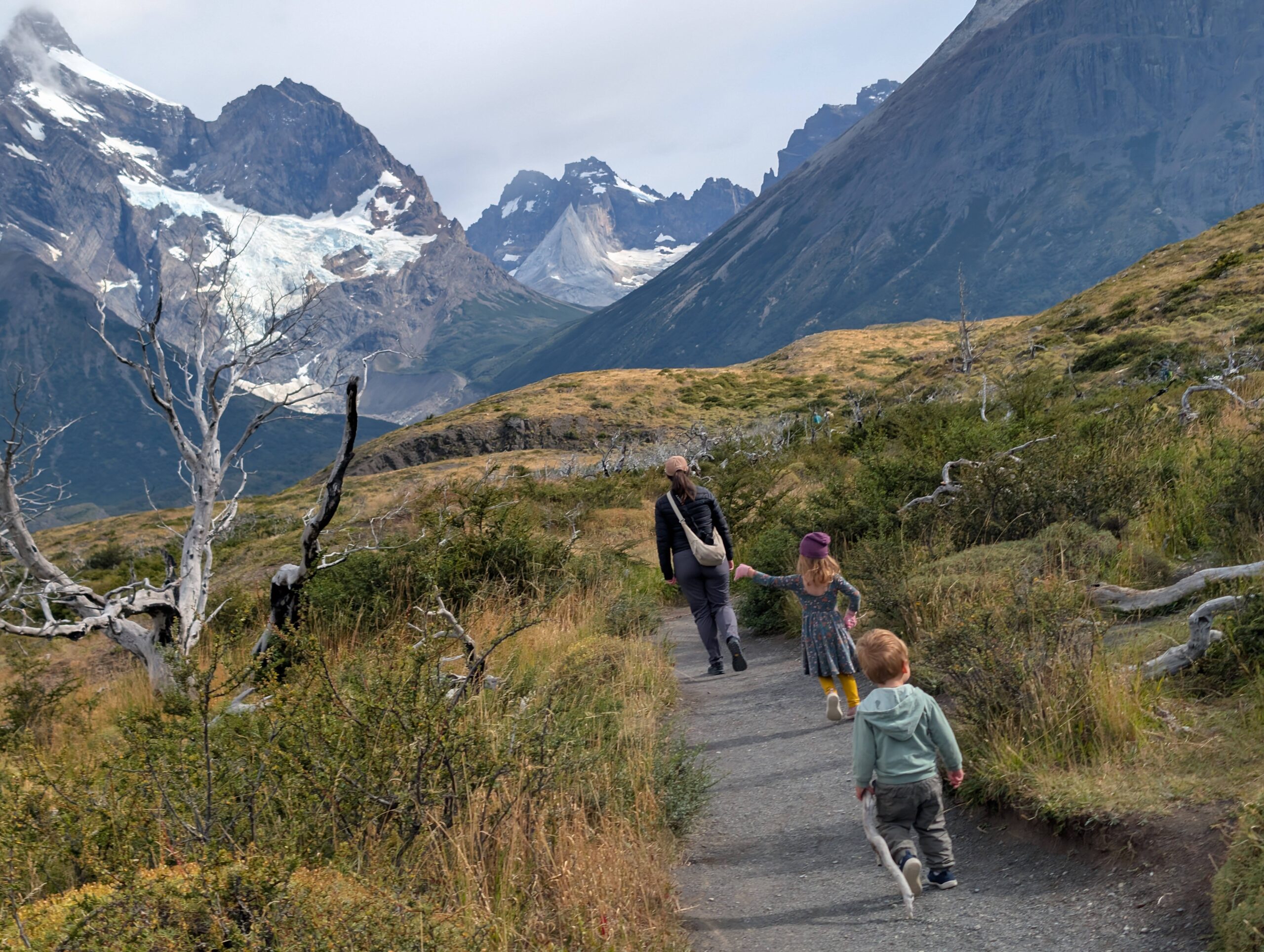
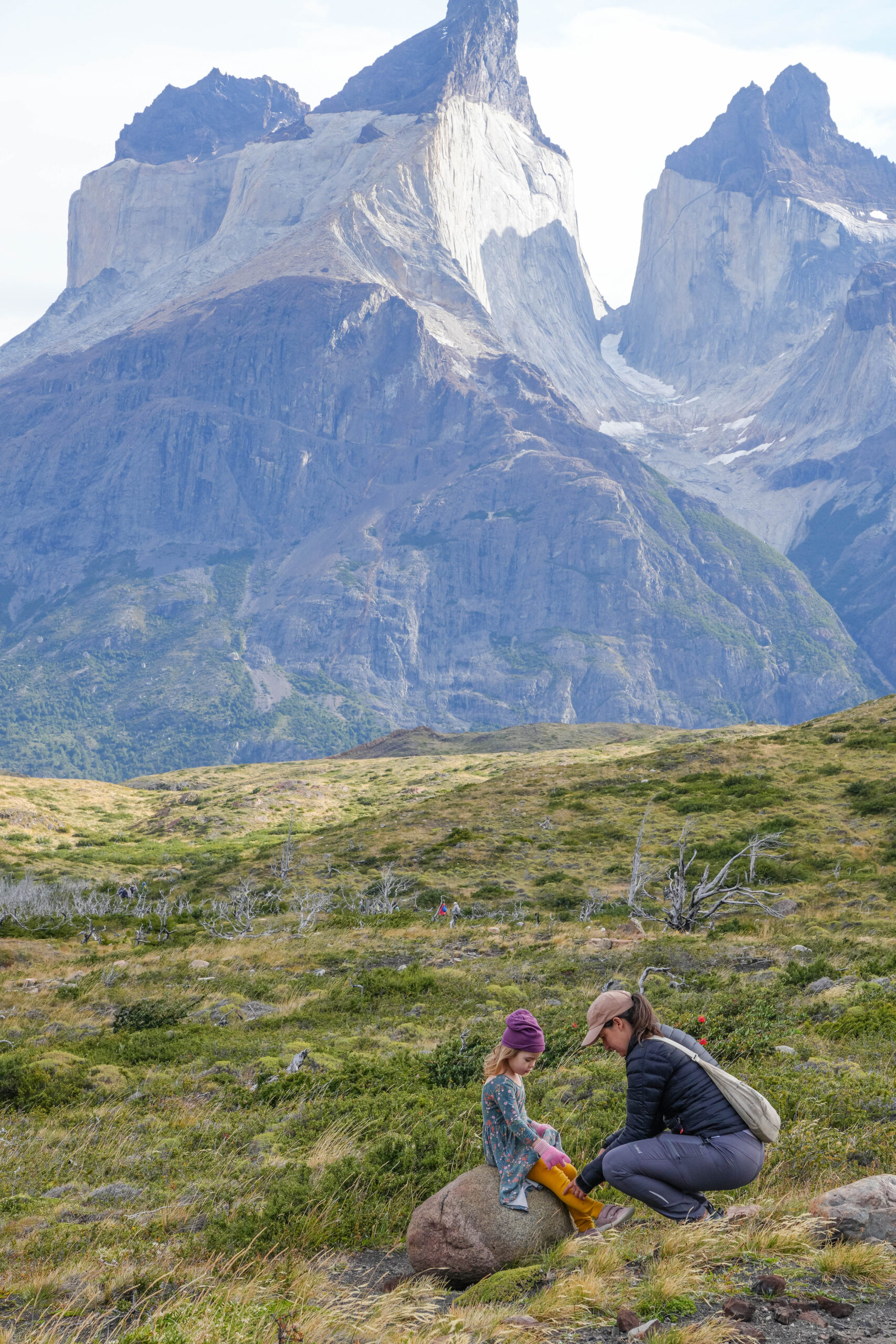
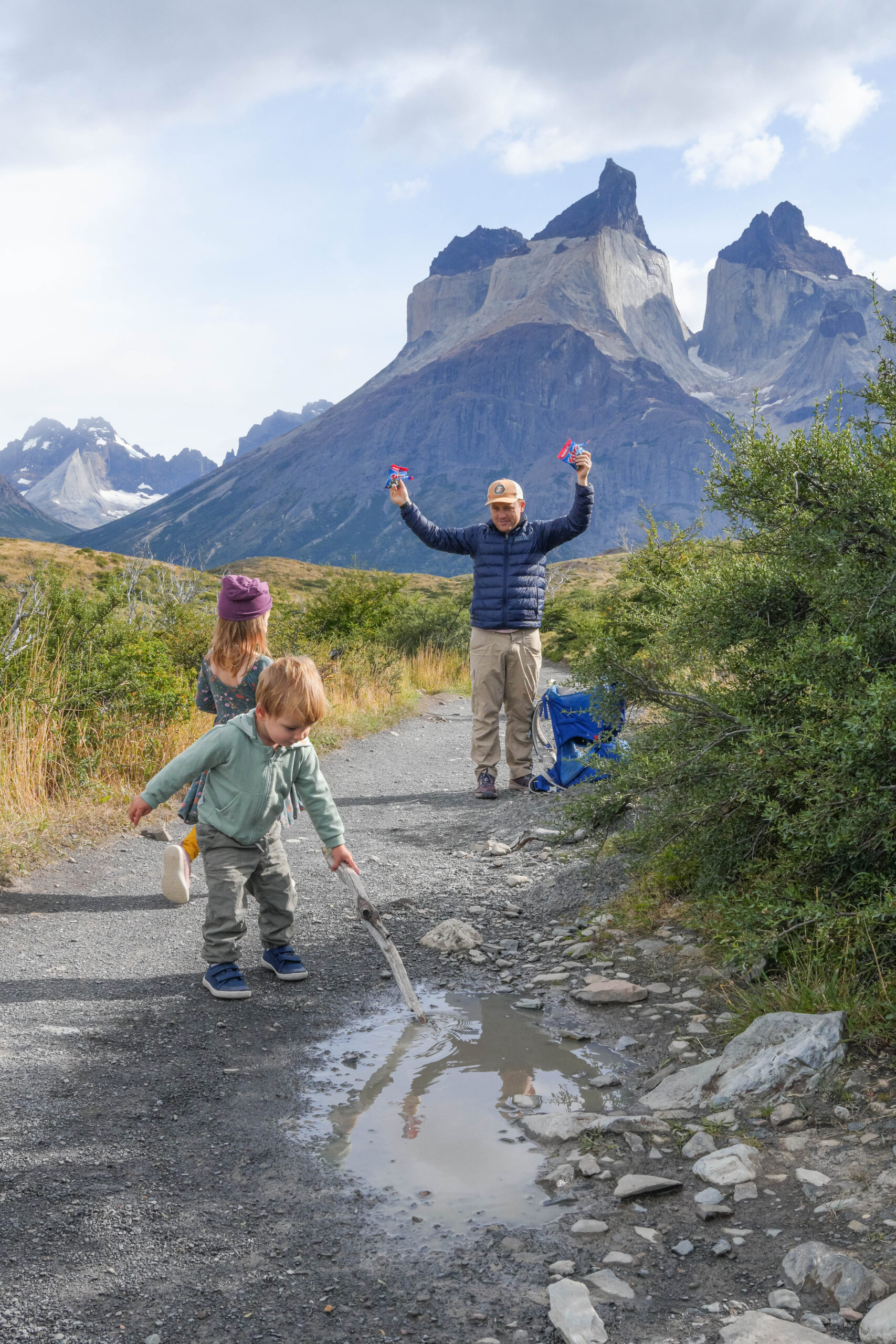
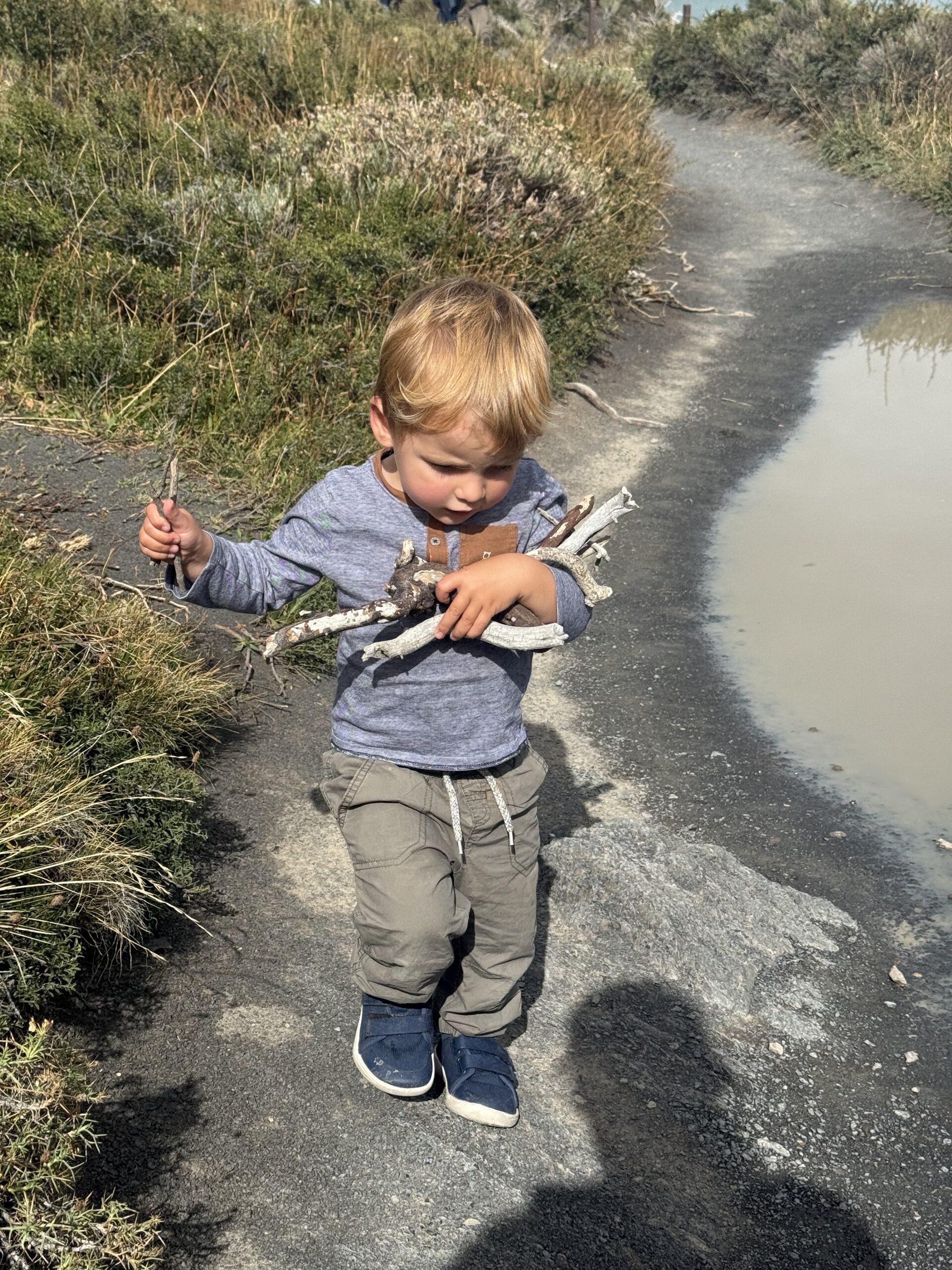
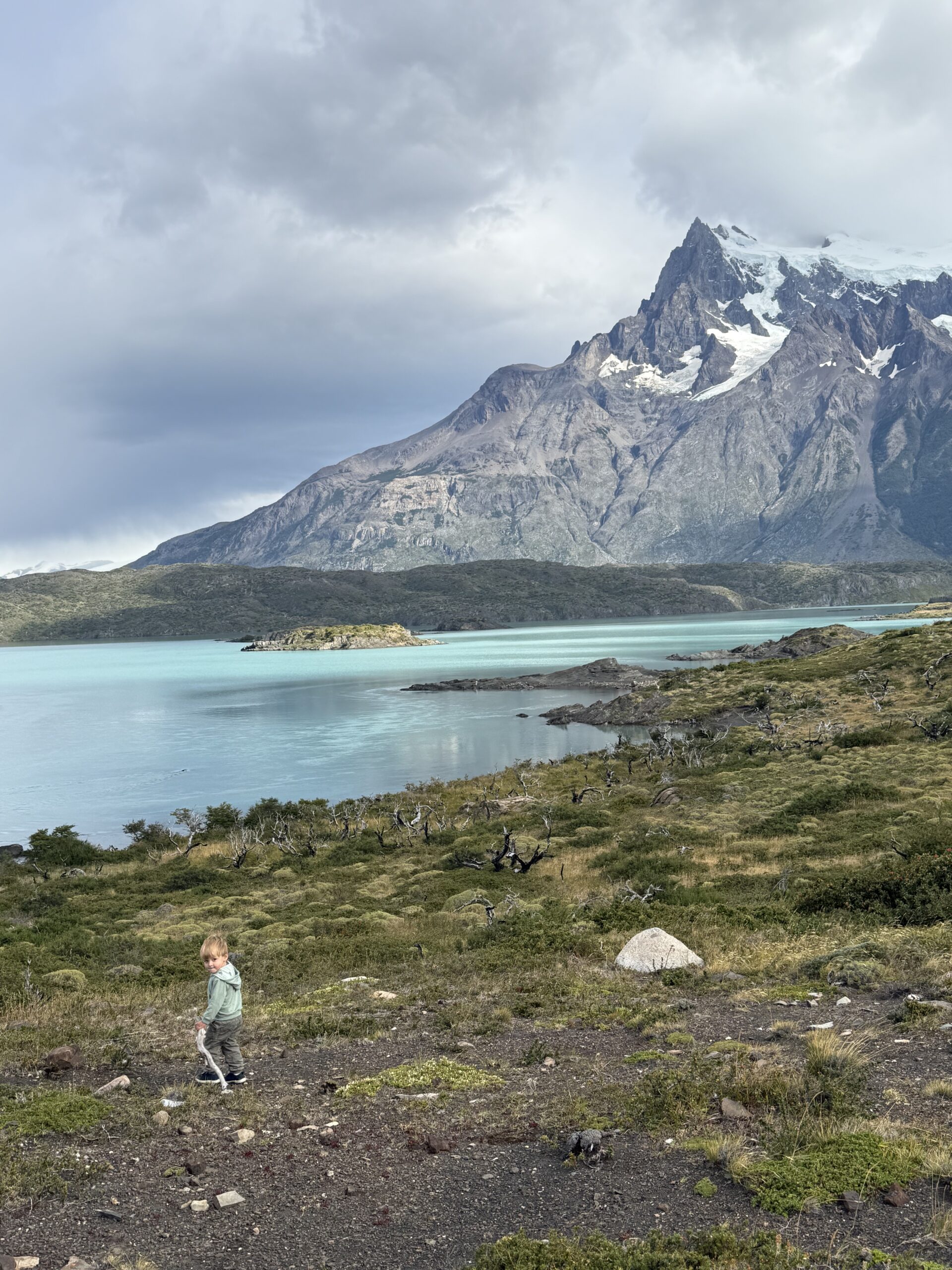
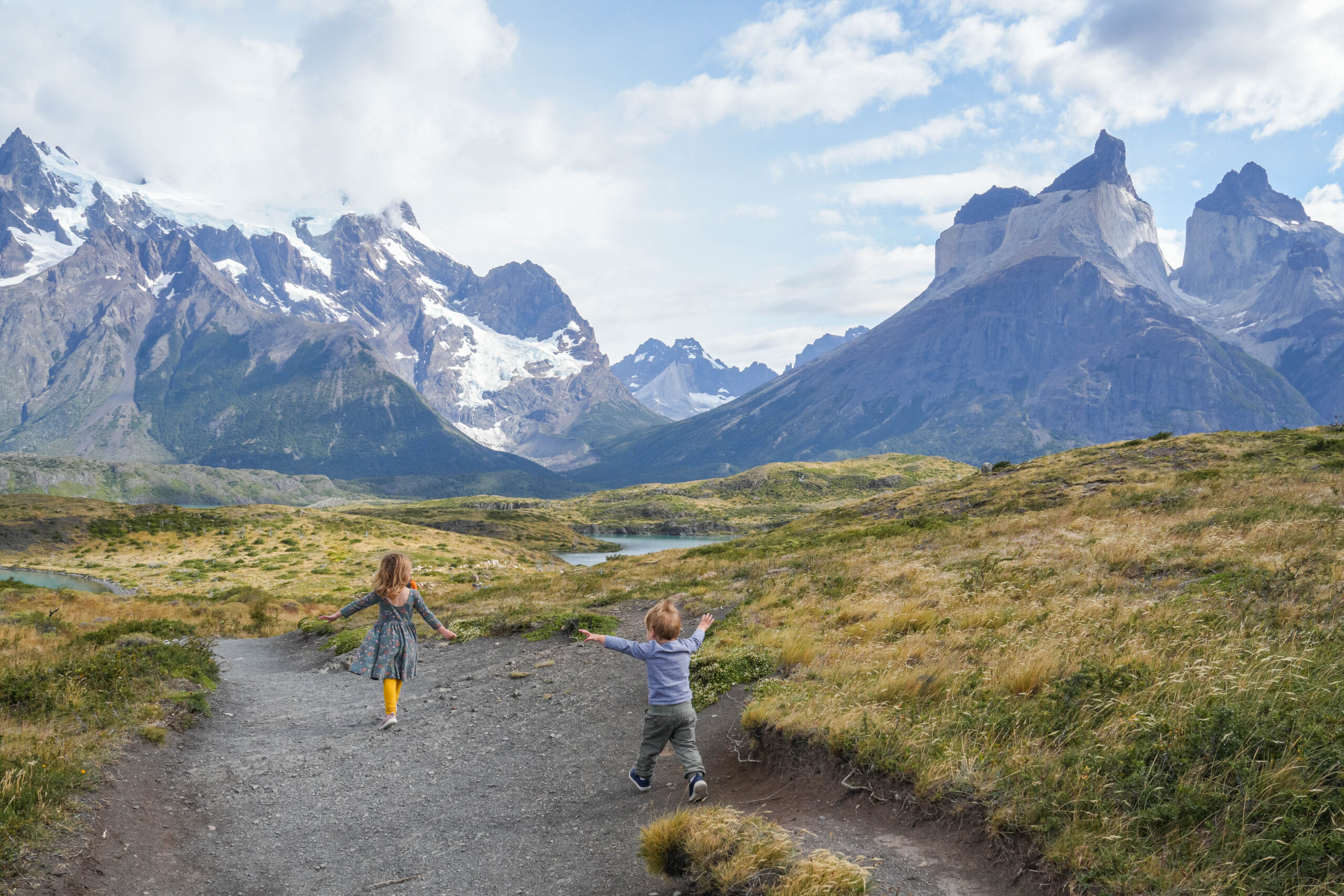
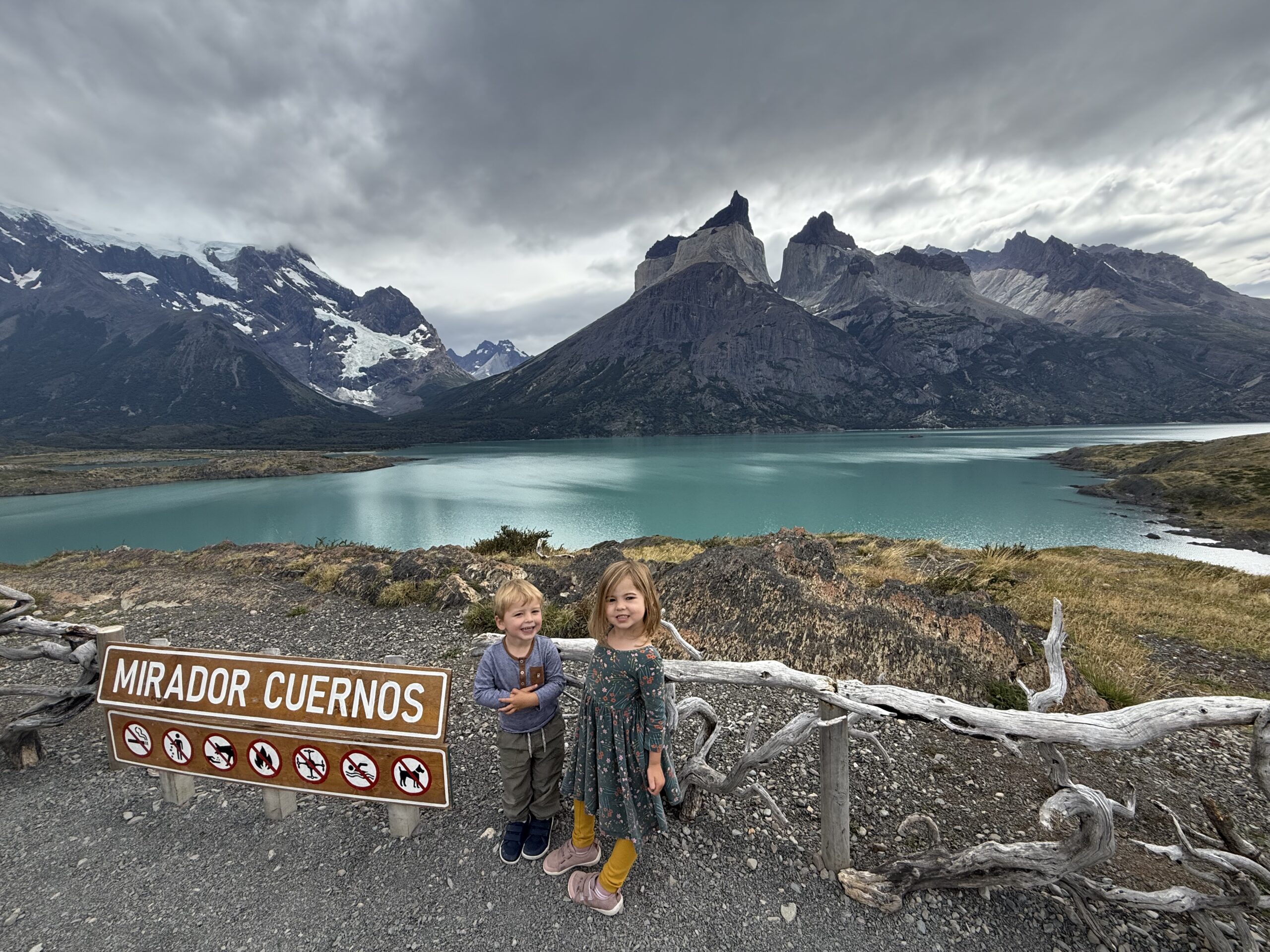
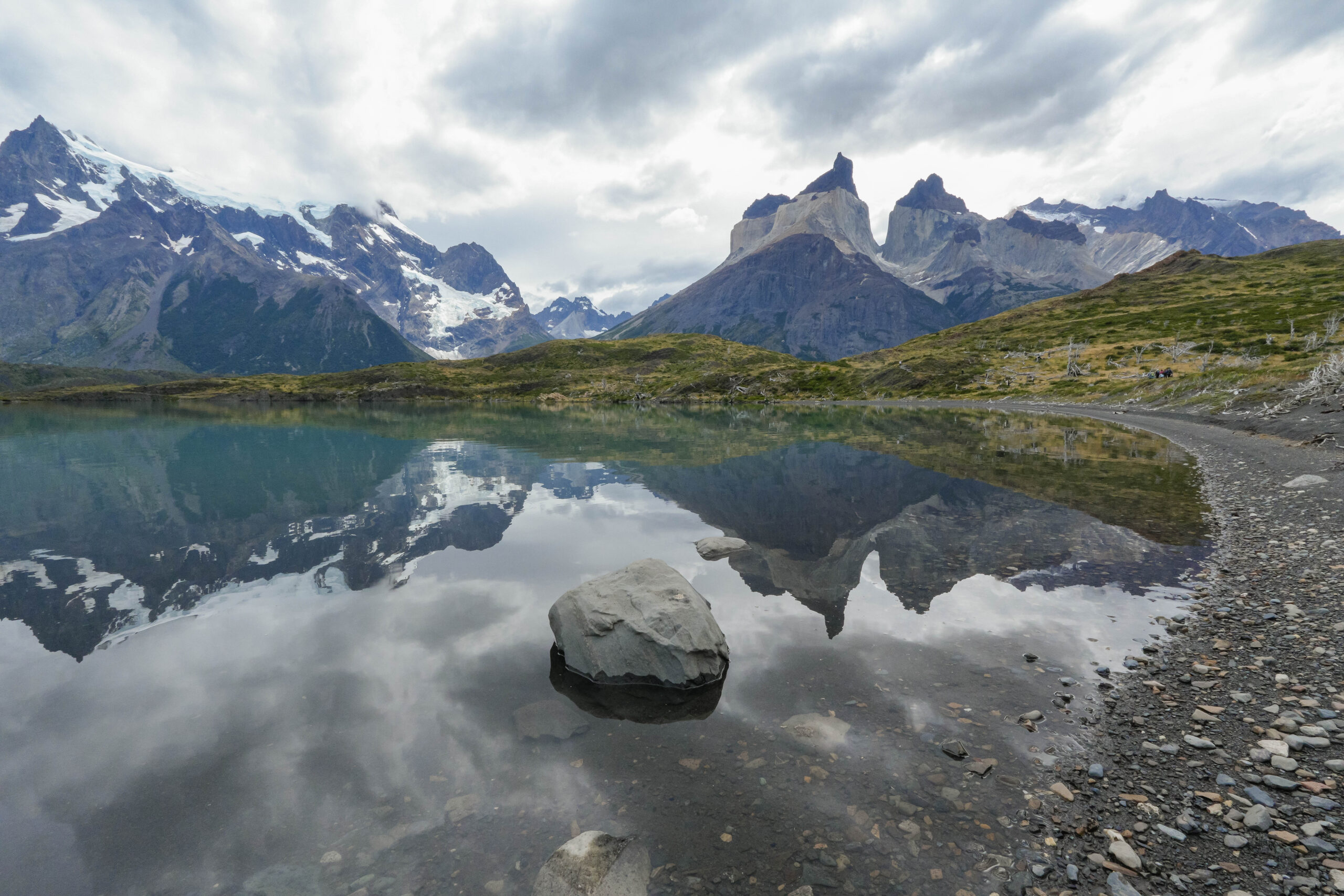
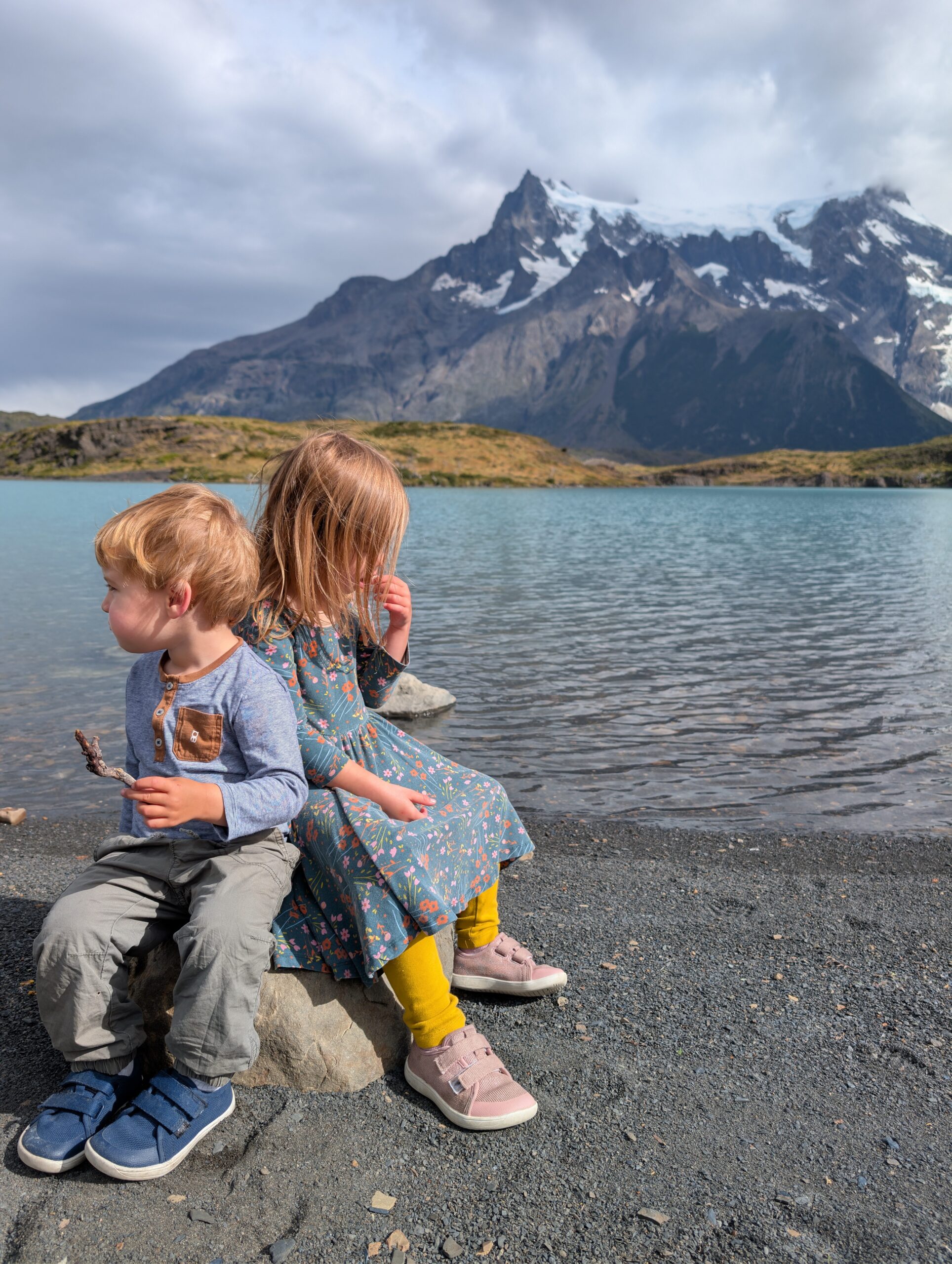
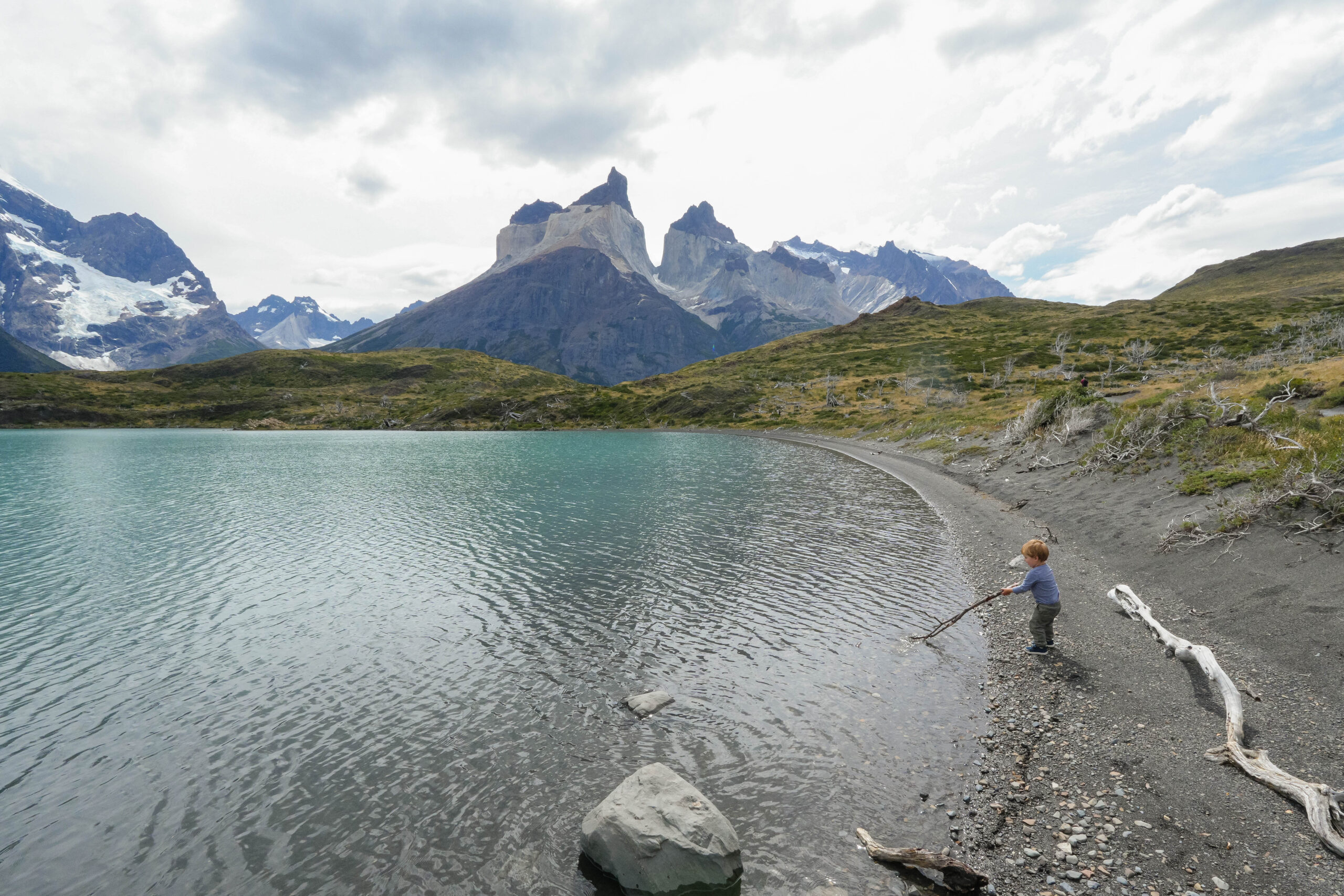
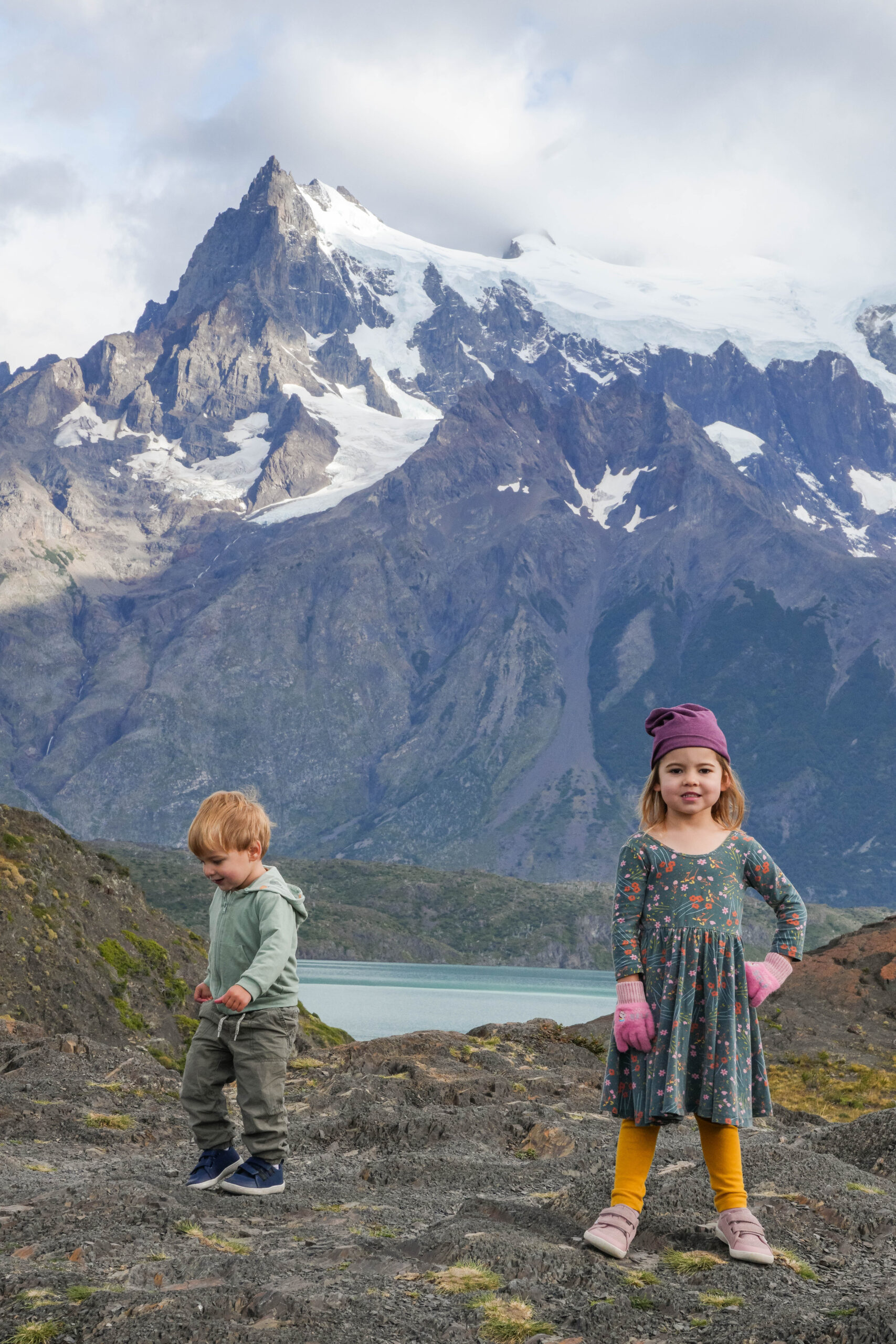
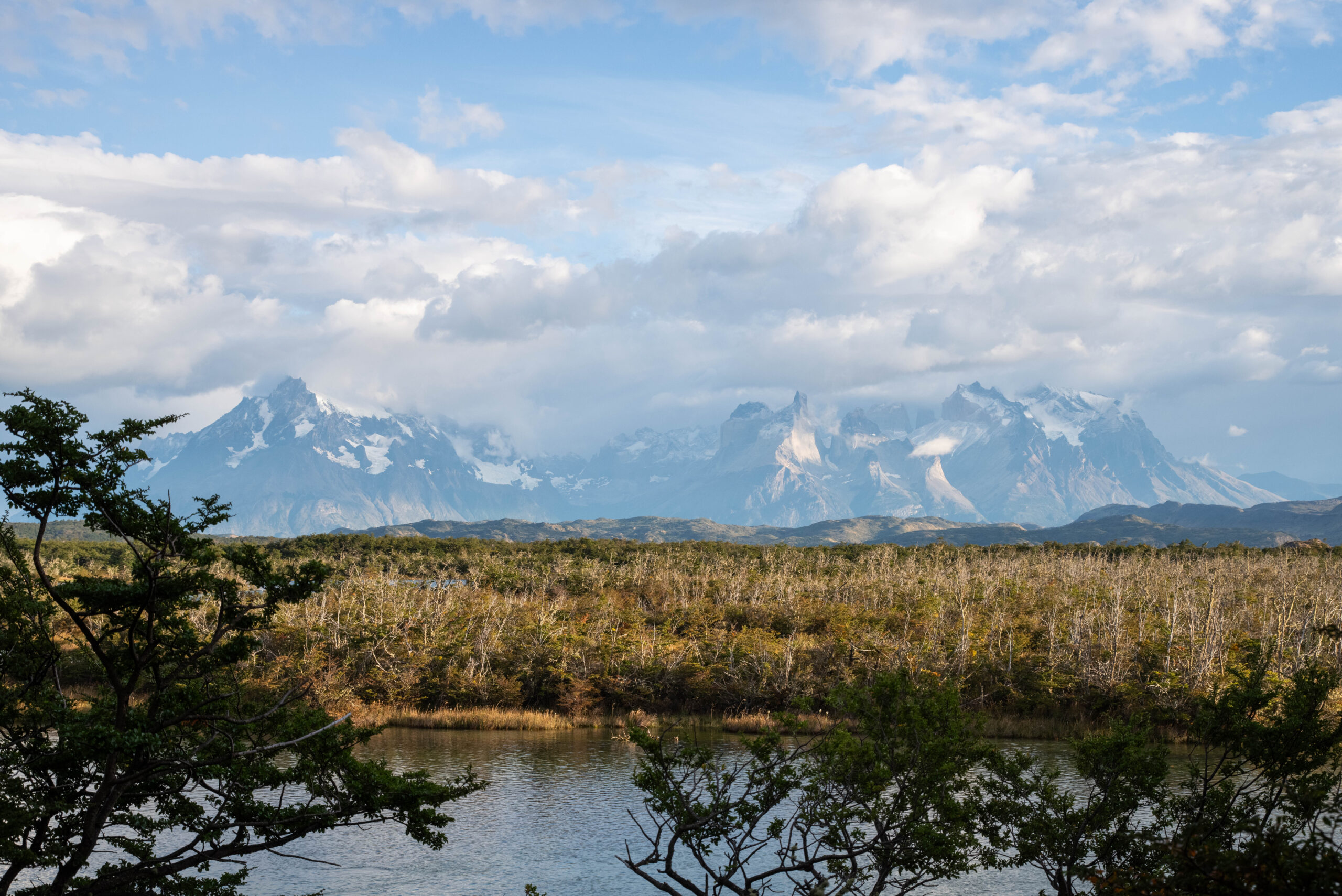
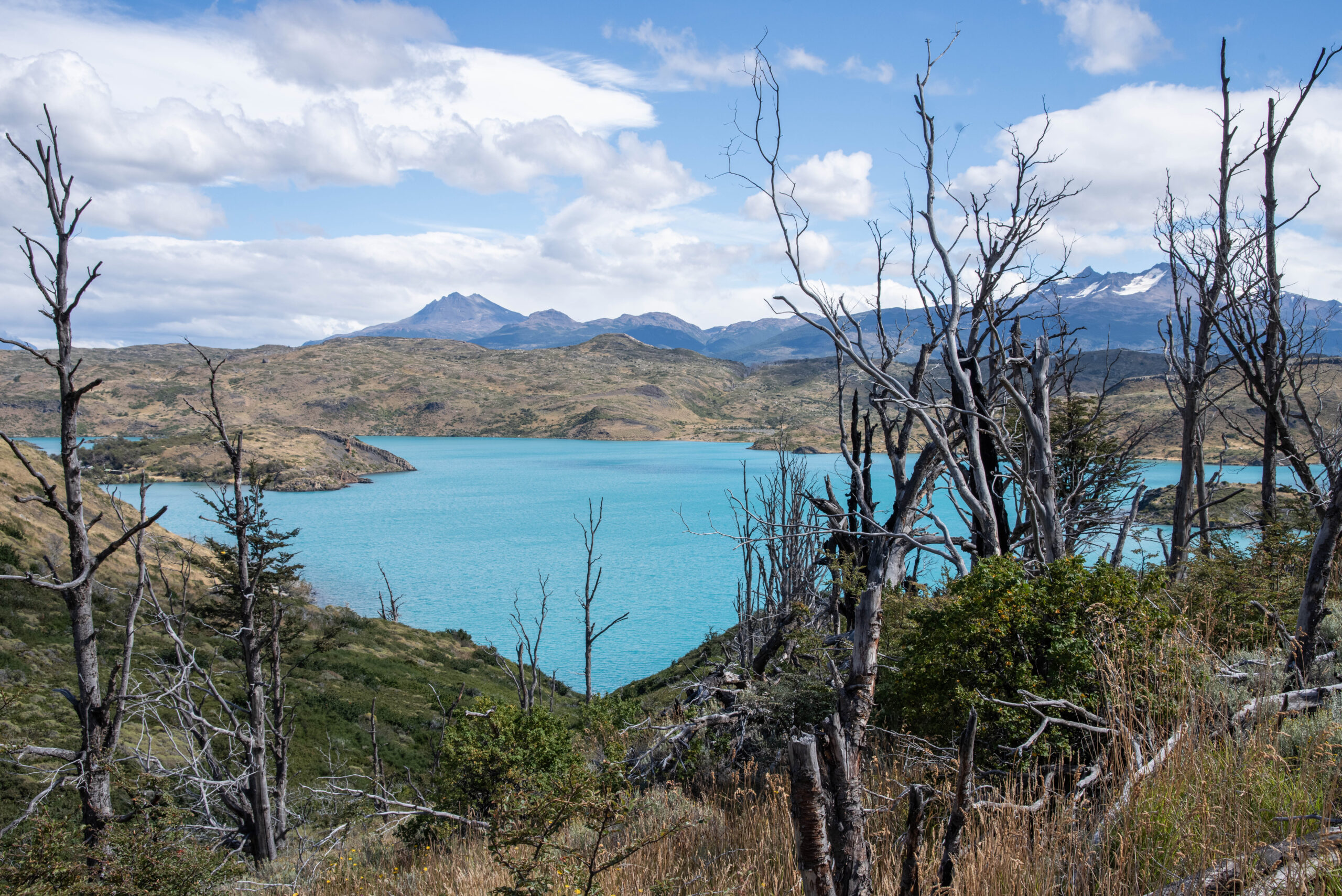
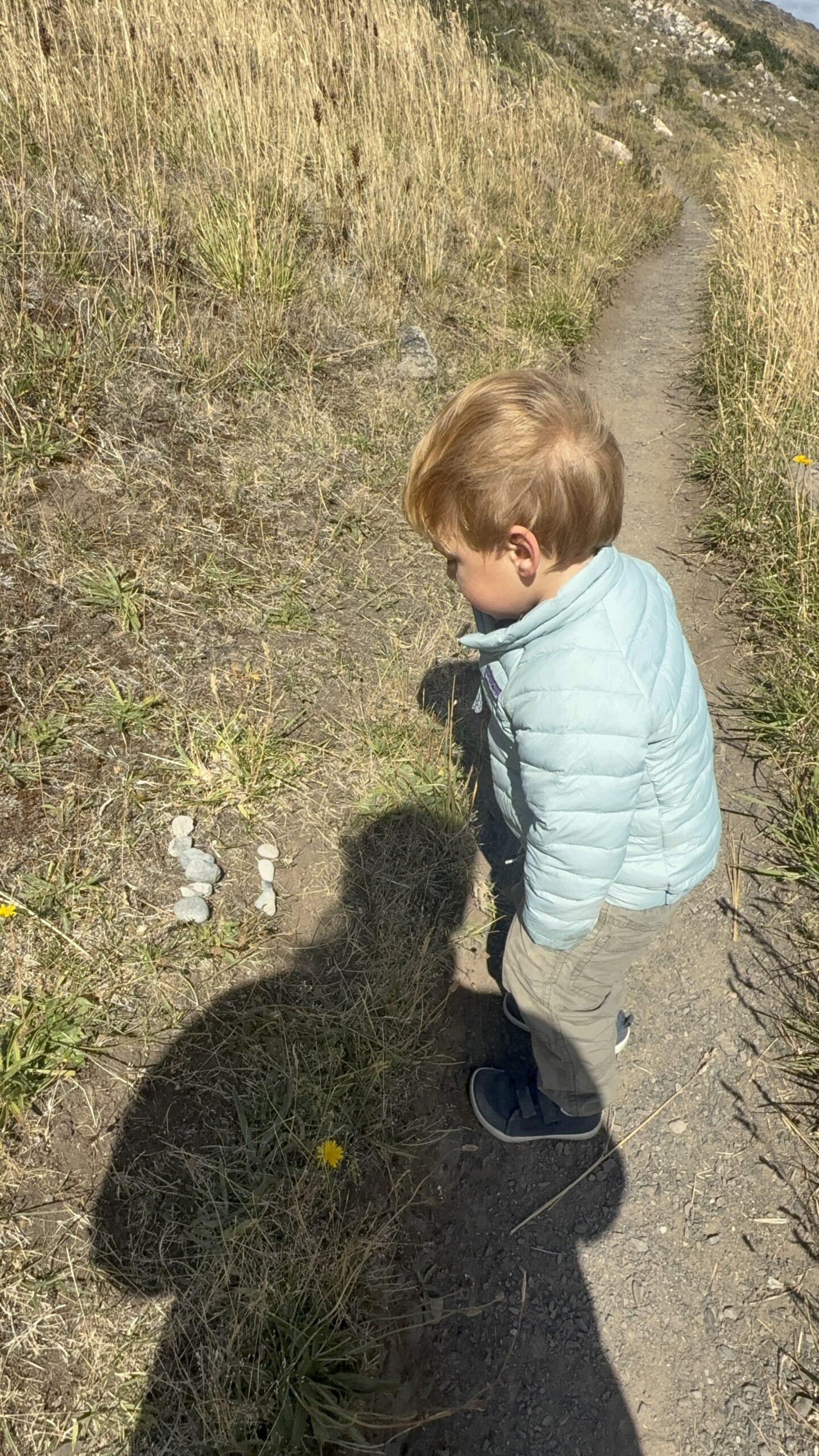
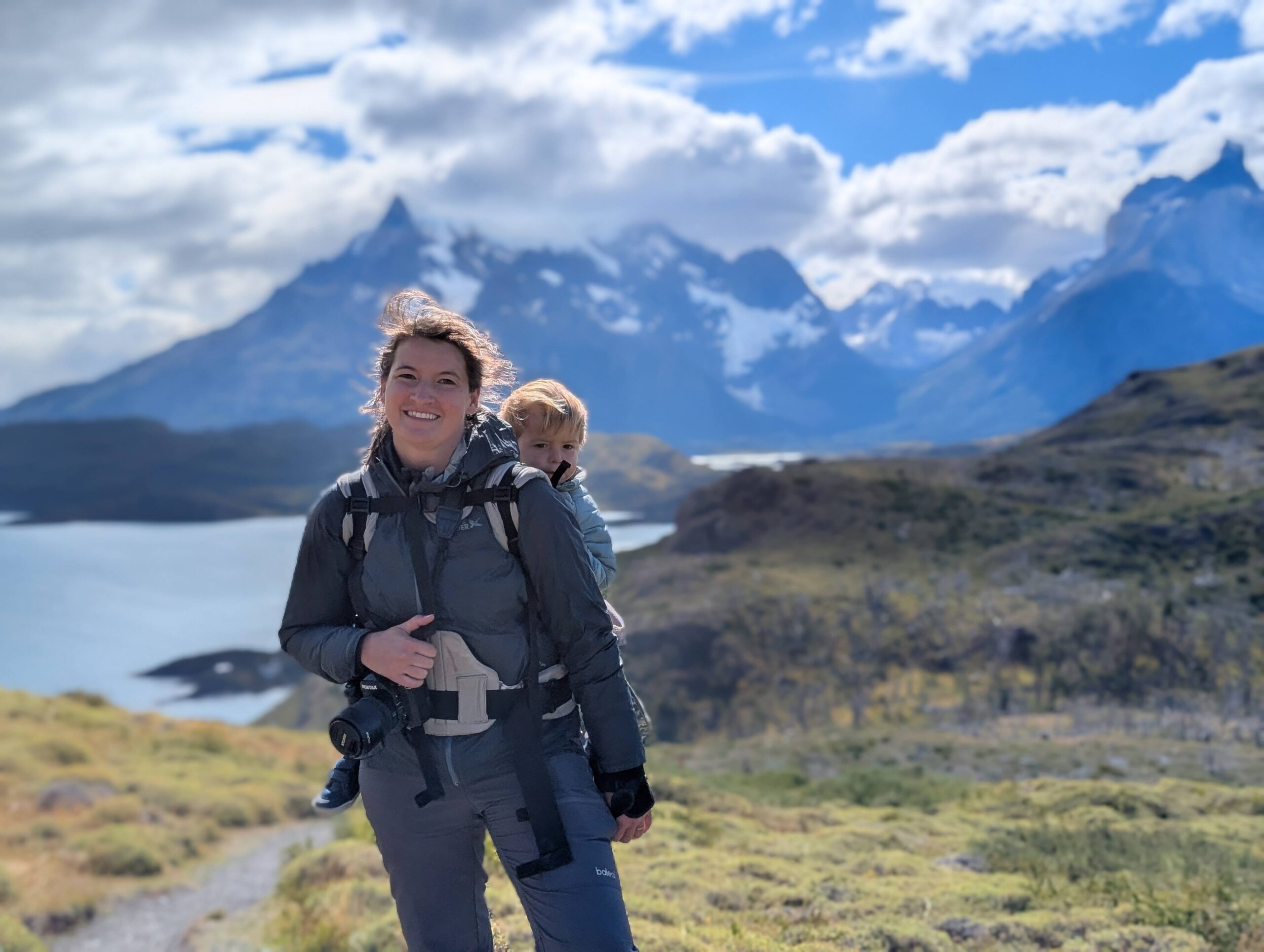
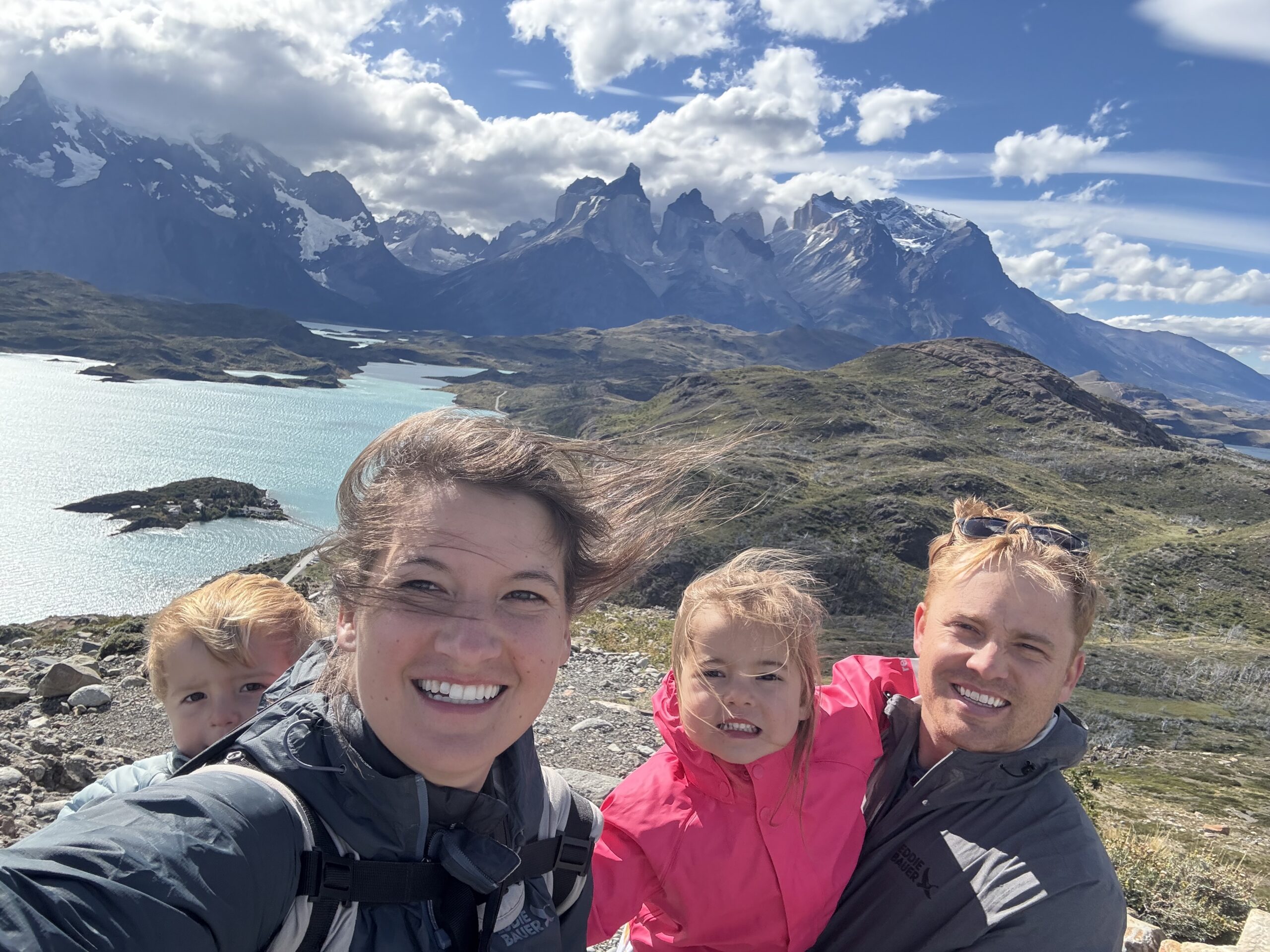
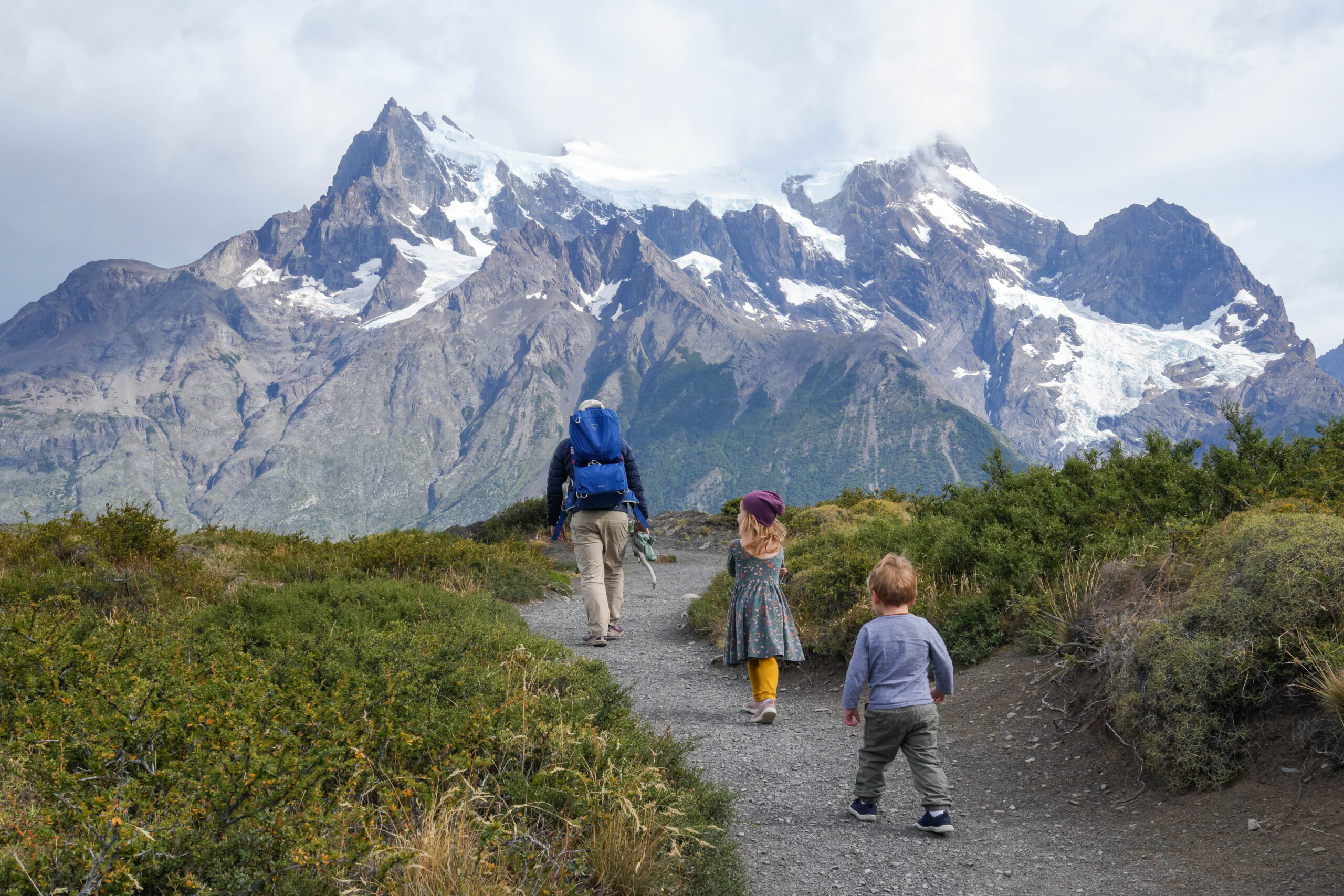
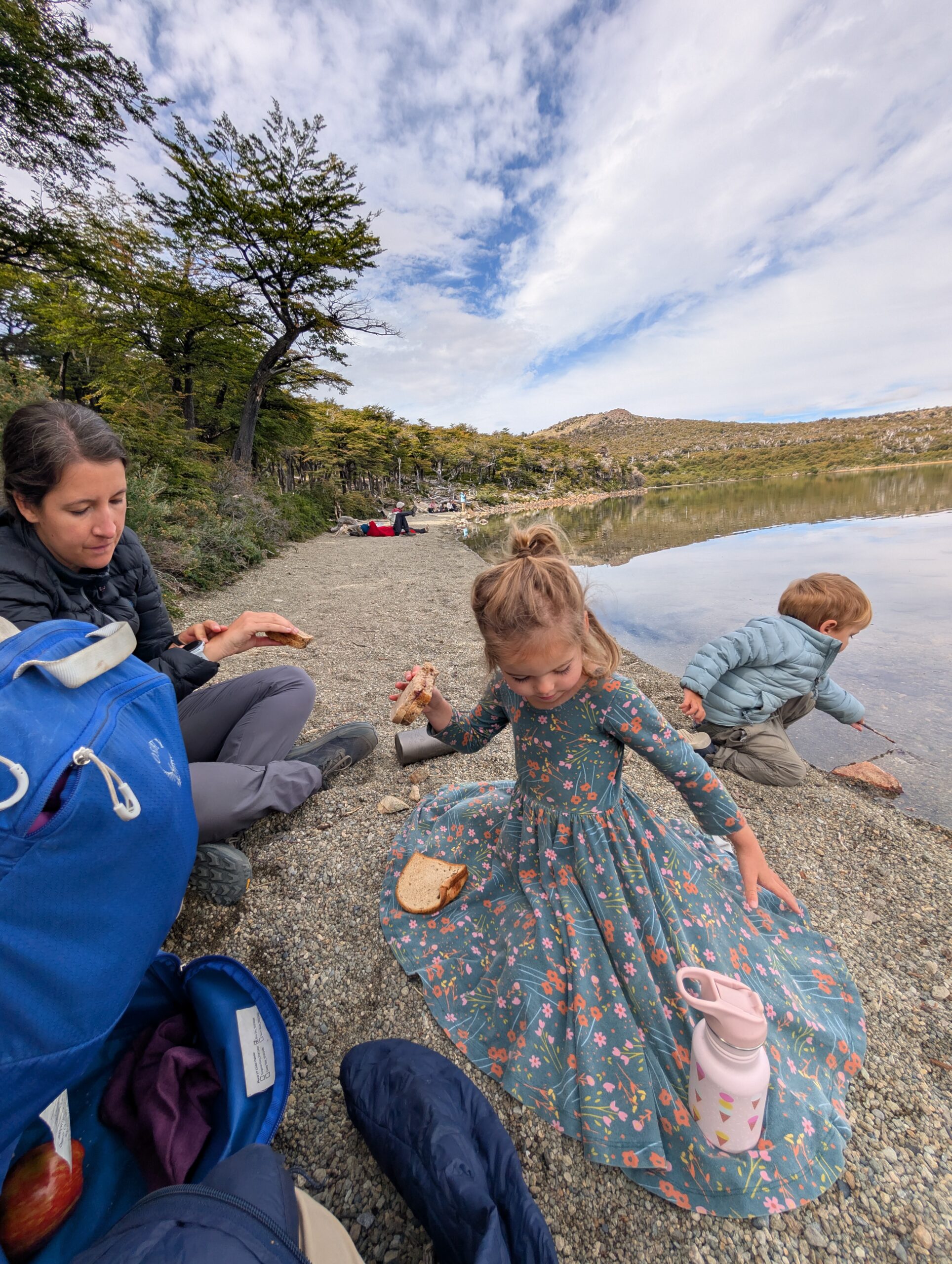
On day one in the park (our nicest weather day) we hiked the Mirador Cuernos Lookout, a 4 mile out-and-back that gives constant postcard views of the Paine Range. We took our time on the hike, stopping to pick up sticks and rocks, often shoved into kid pockets. The kids made the entire hike up with gummy sharks being our “treat-de-jour”. On the way back down we stopped at a sandy beach along one of the glacial lakes and cooled our feet while playing “barky boats” with the sticks we’d found along the trail.
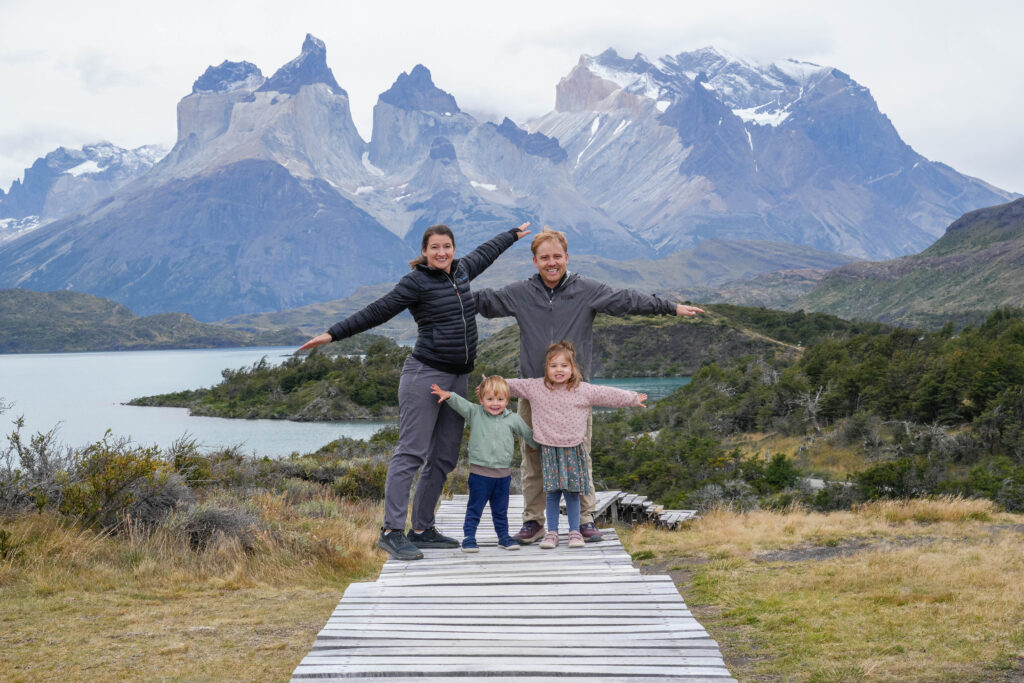
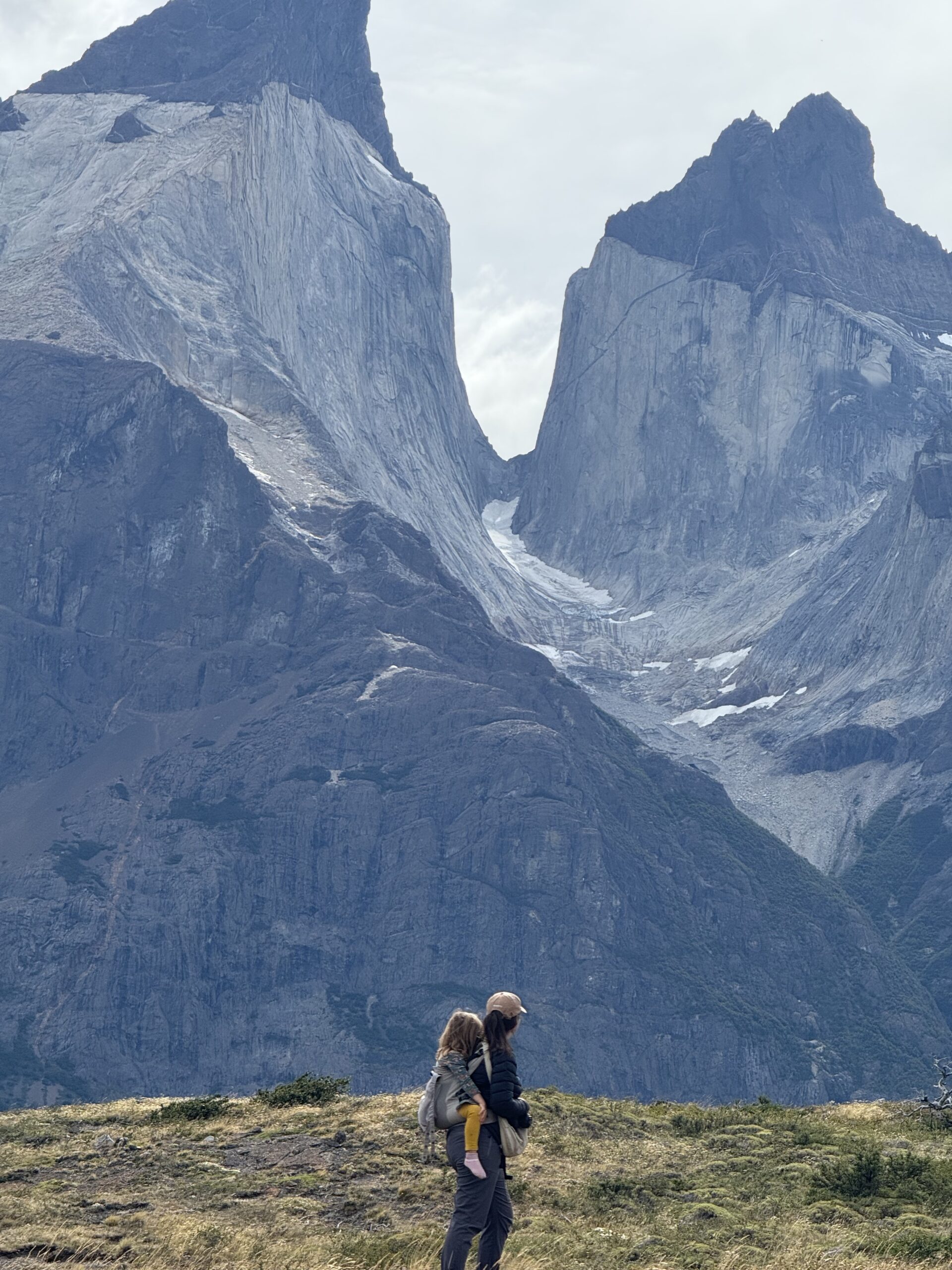
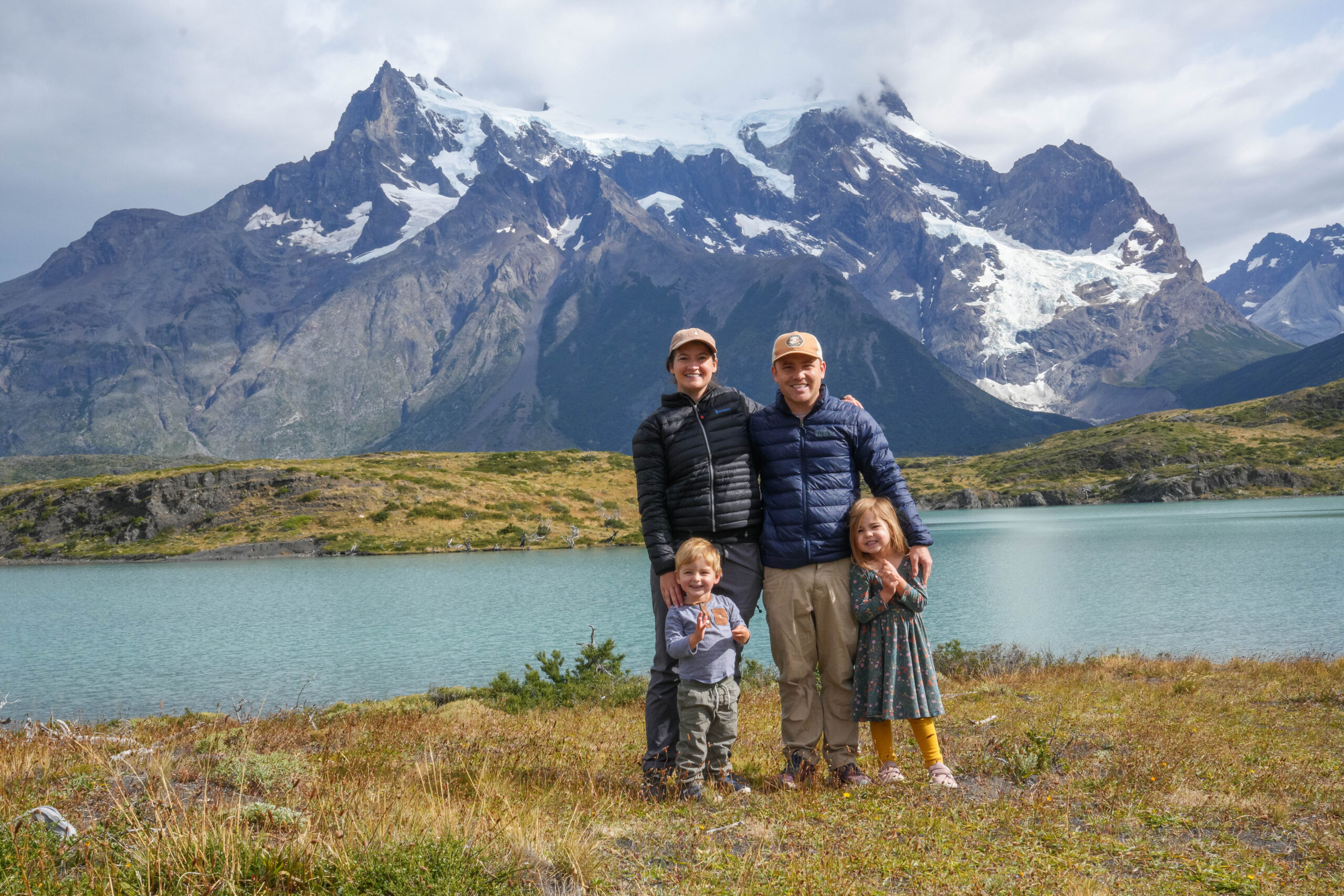
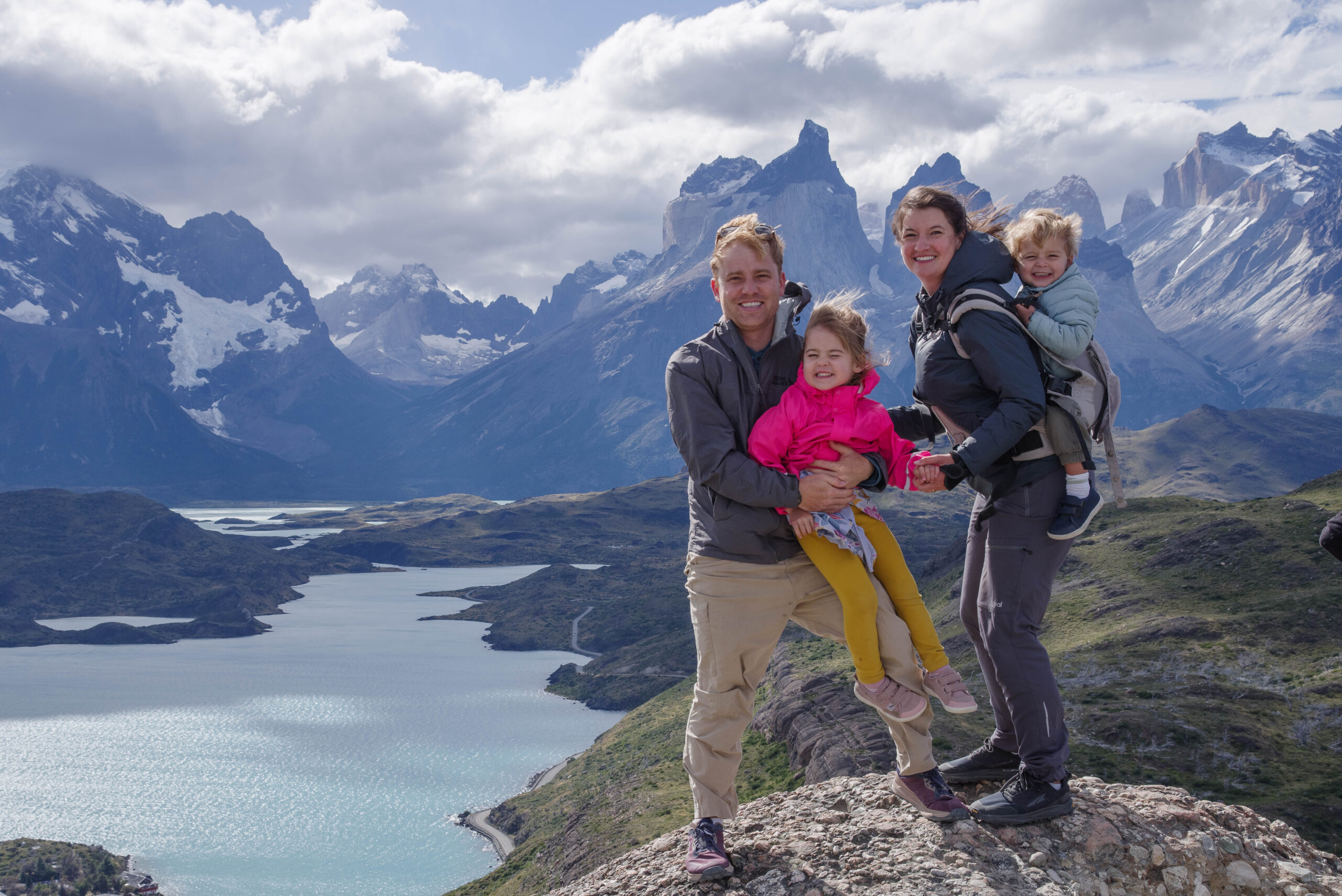
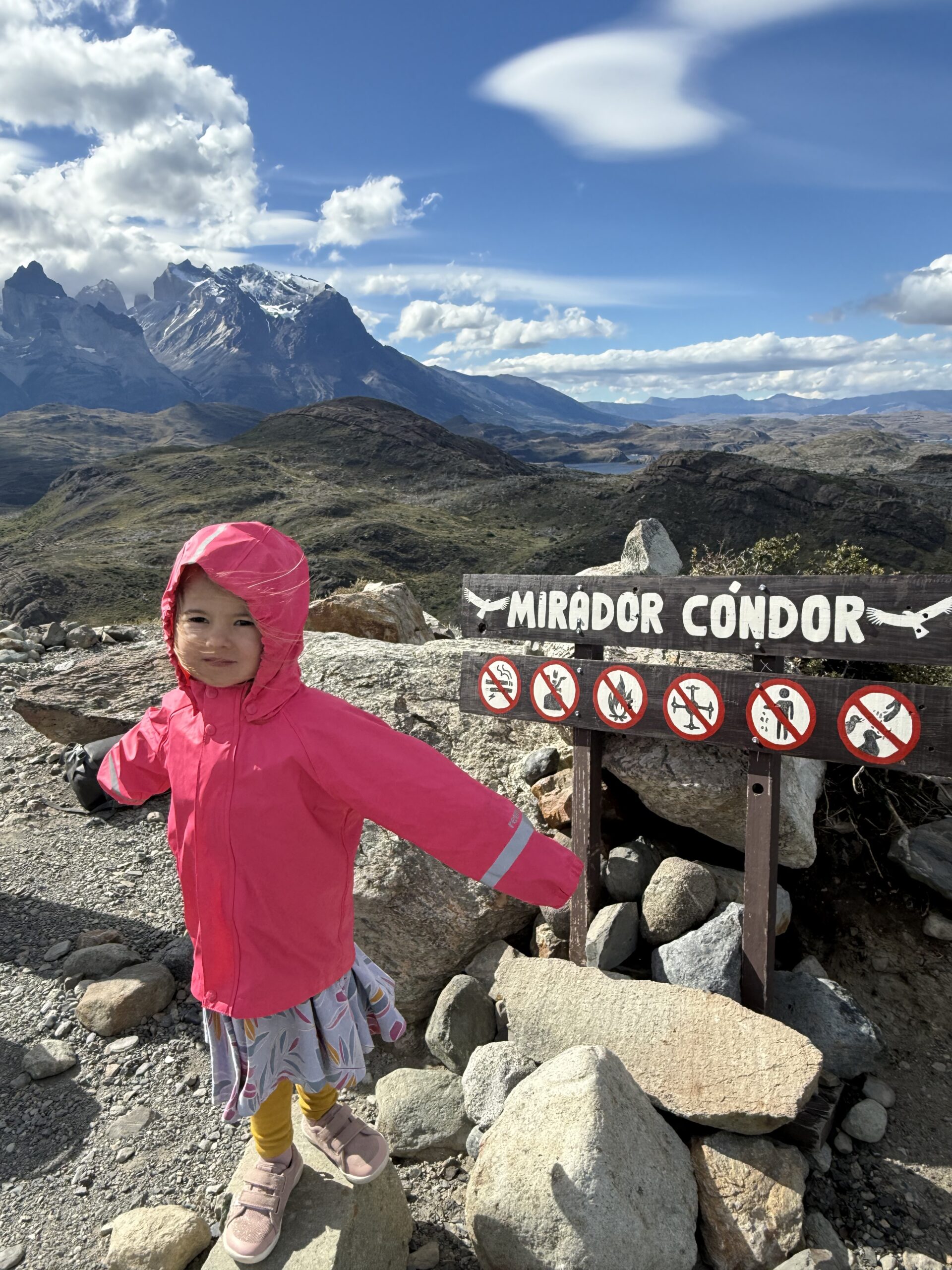
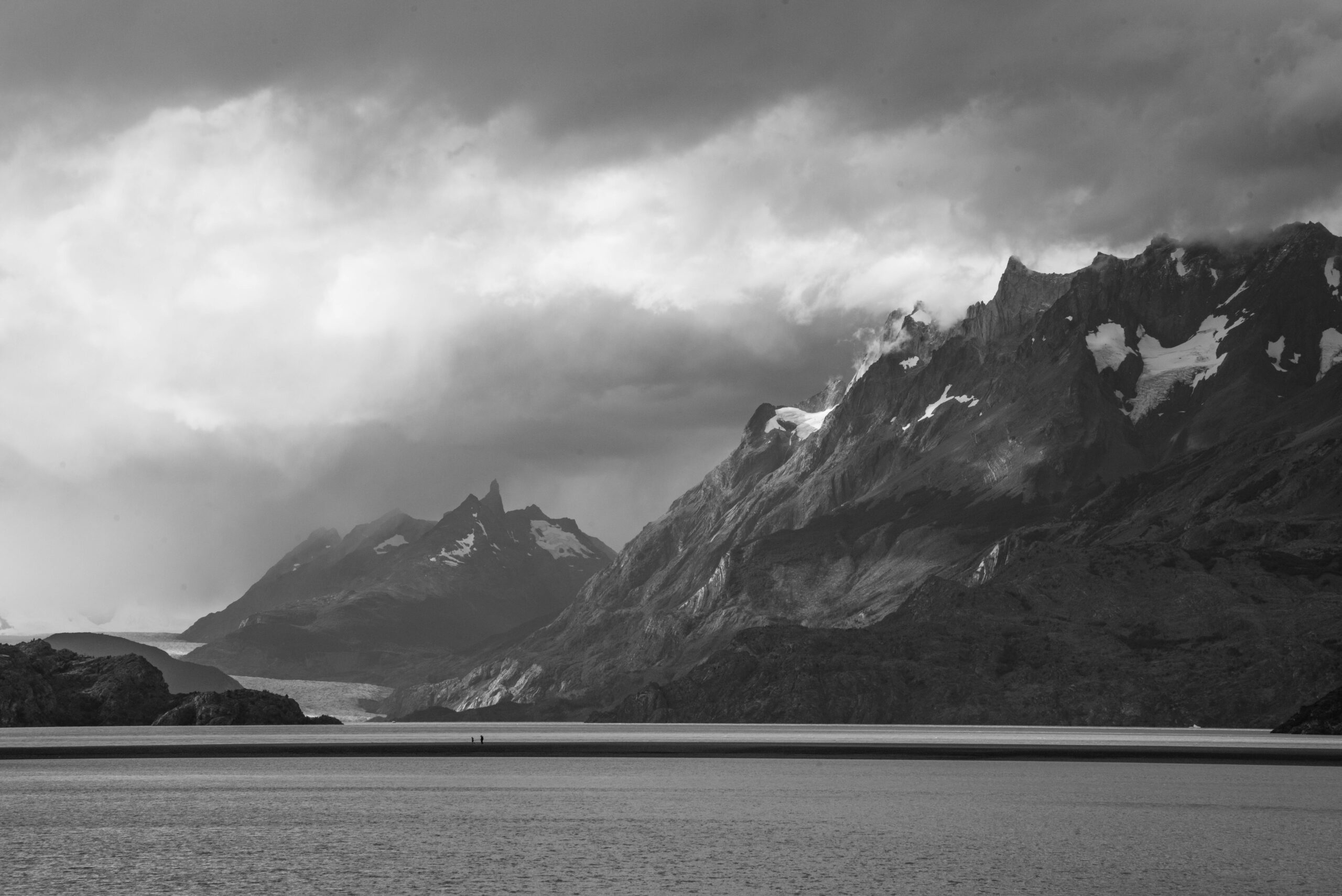
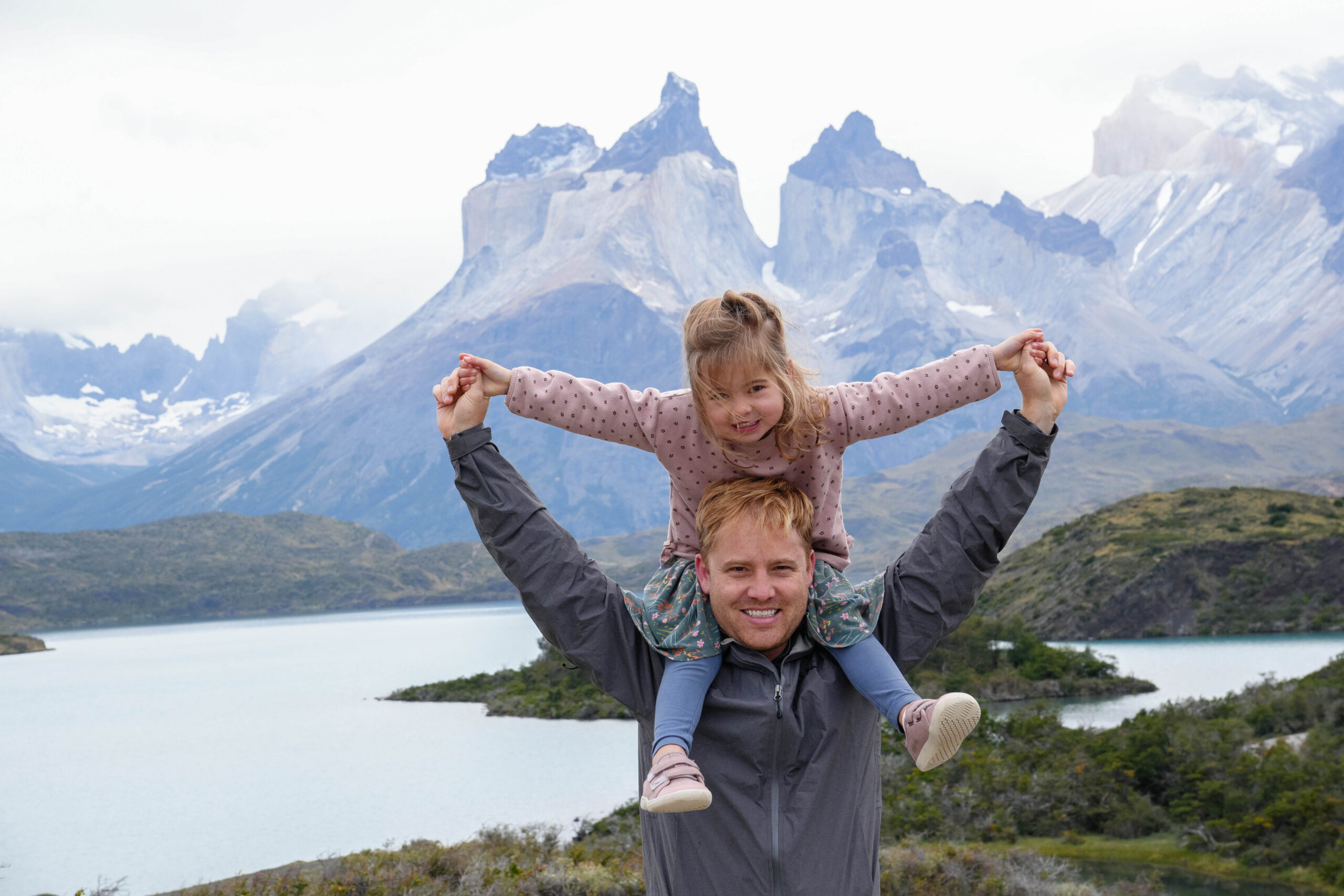
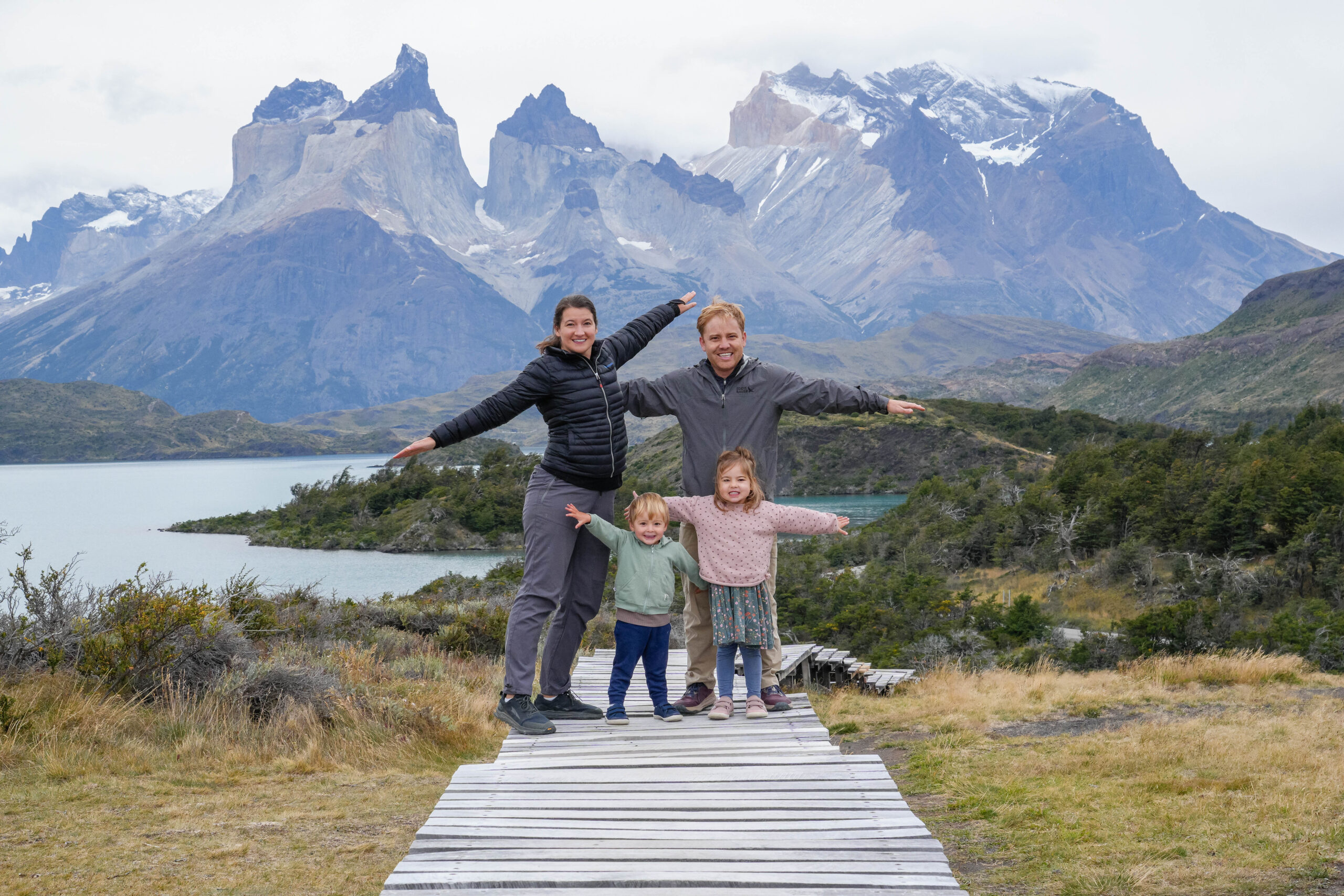
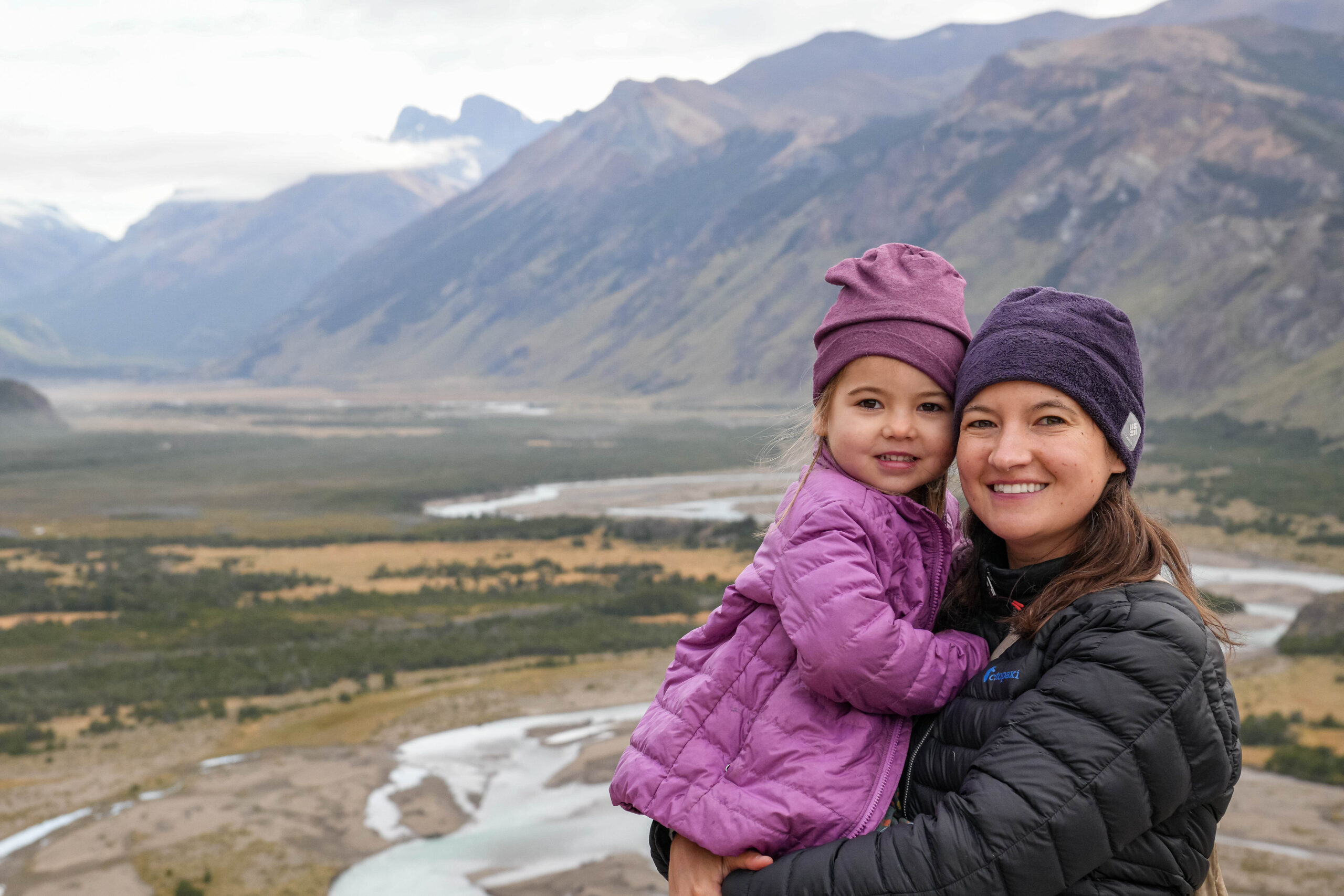
For day two we went on the 2 mile Mirador Condor hike with the hopes of seeing, you guessed it, condors. Unfortunately the winds had picked up and no real birds were flying but the kids made pretty good imitations. More rocks were pocketed, dragging down 2 year old pants and Mae was proudly the leader up the hill. Across the road from the trail is the Explora Hotel with public boardwalks where you can enjoy amazing lake/mountain views. We visited to take some family photos in the perfect photo spot used by the Bucket List Family on their National Geographic book cover. It took a few tries of everyone taking turns pushing the camera button while picking a pose for us to do. “Be a condor!” was the winner this time. Finally, on our way home, we made a short detour to stop at Lago Grey and see the glacier from afar. You can take a boat to get up close, but knowing our future glacier/boat plans, we opted to skip this one.
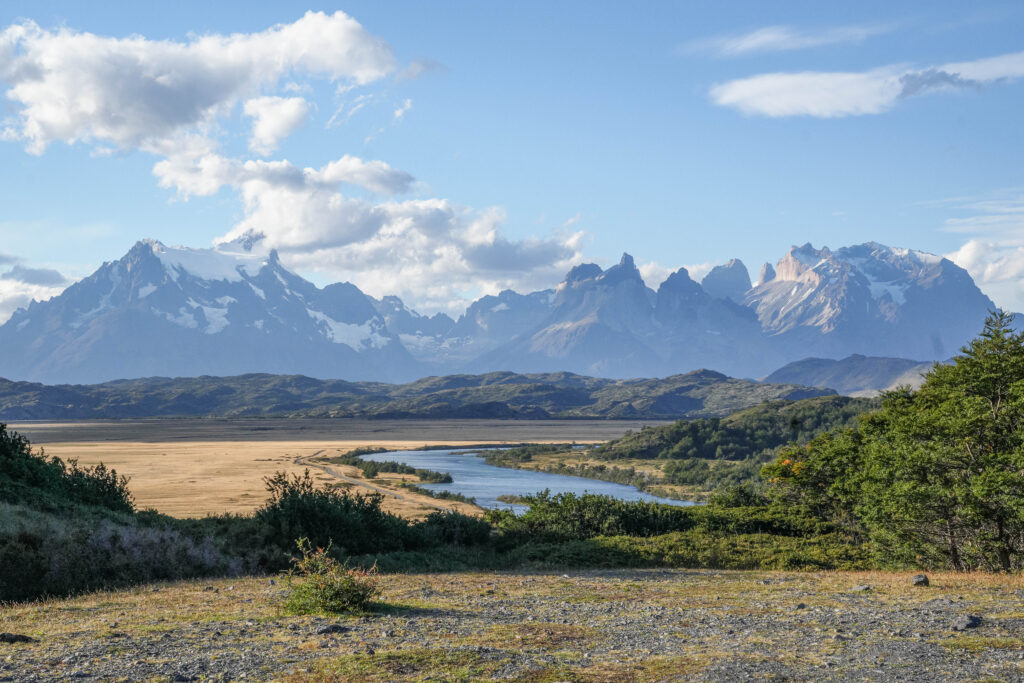
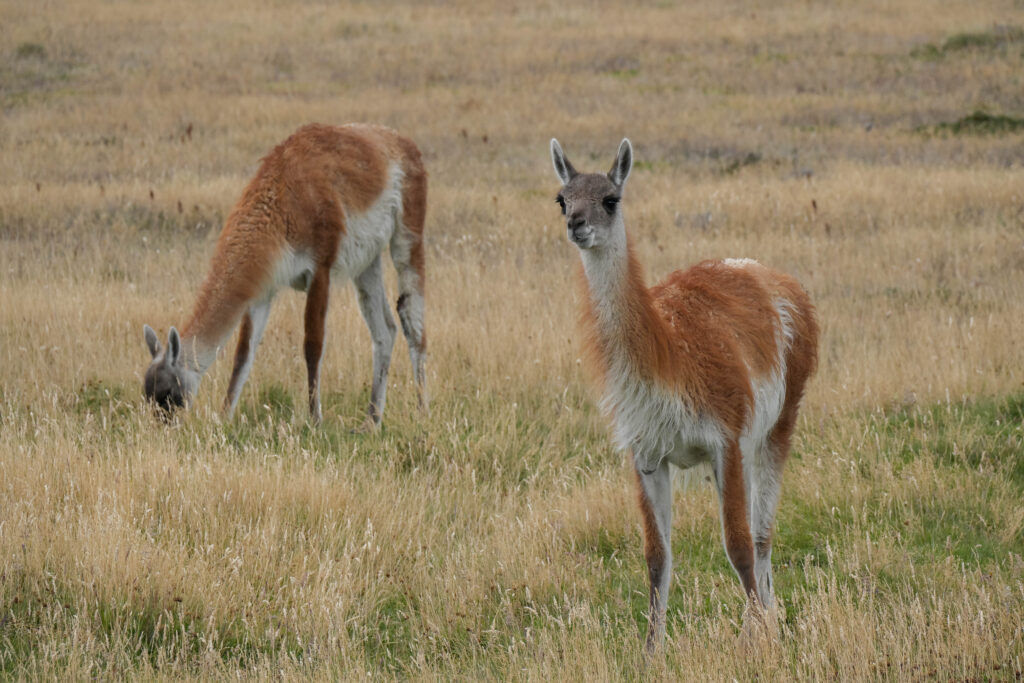
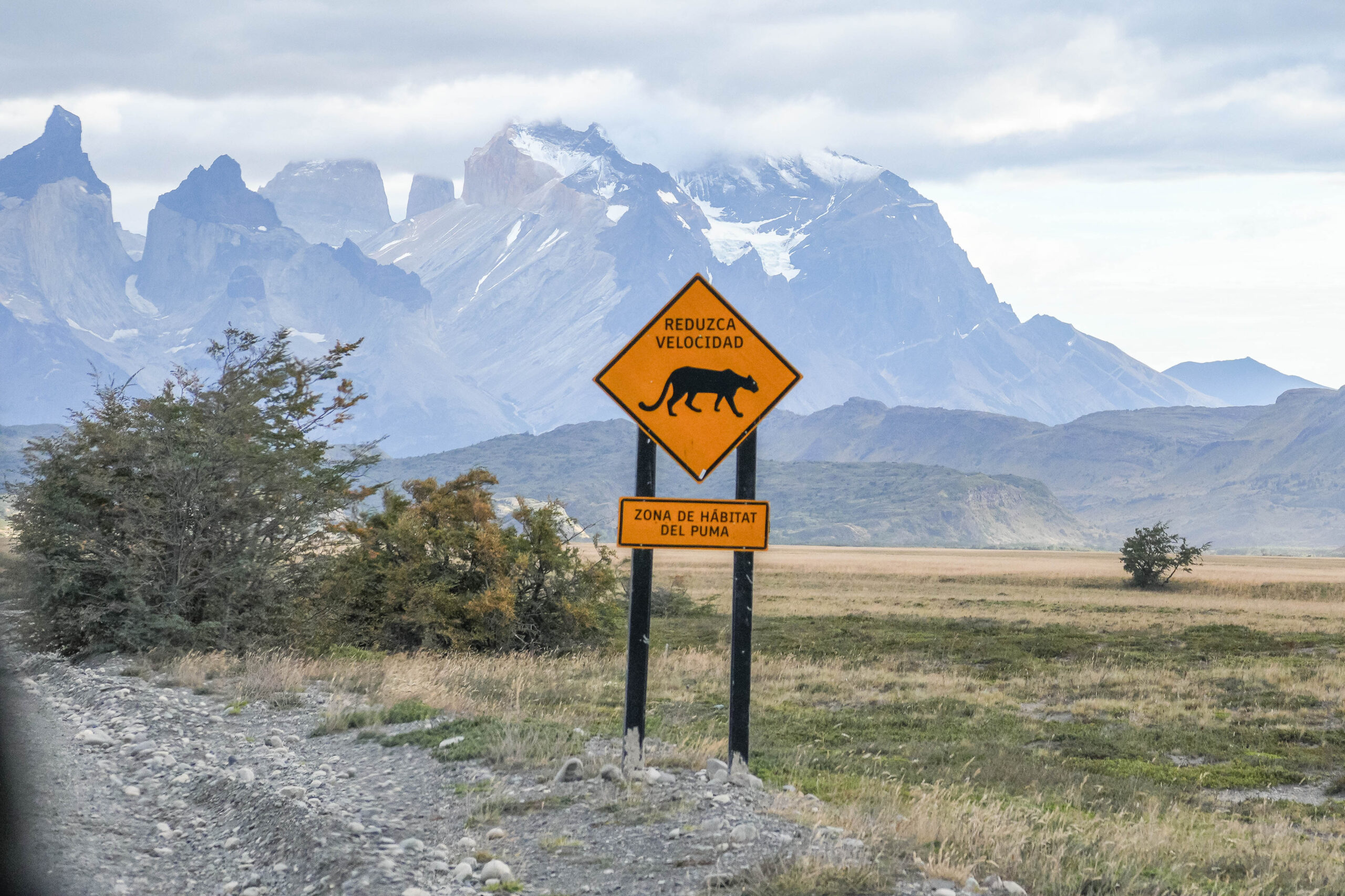
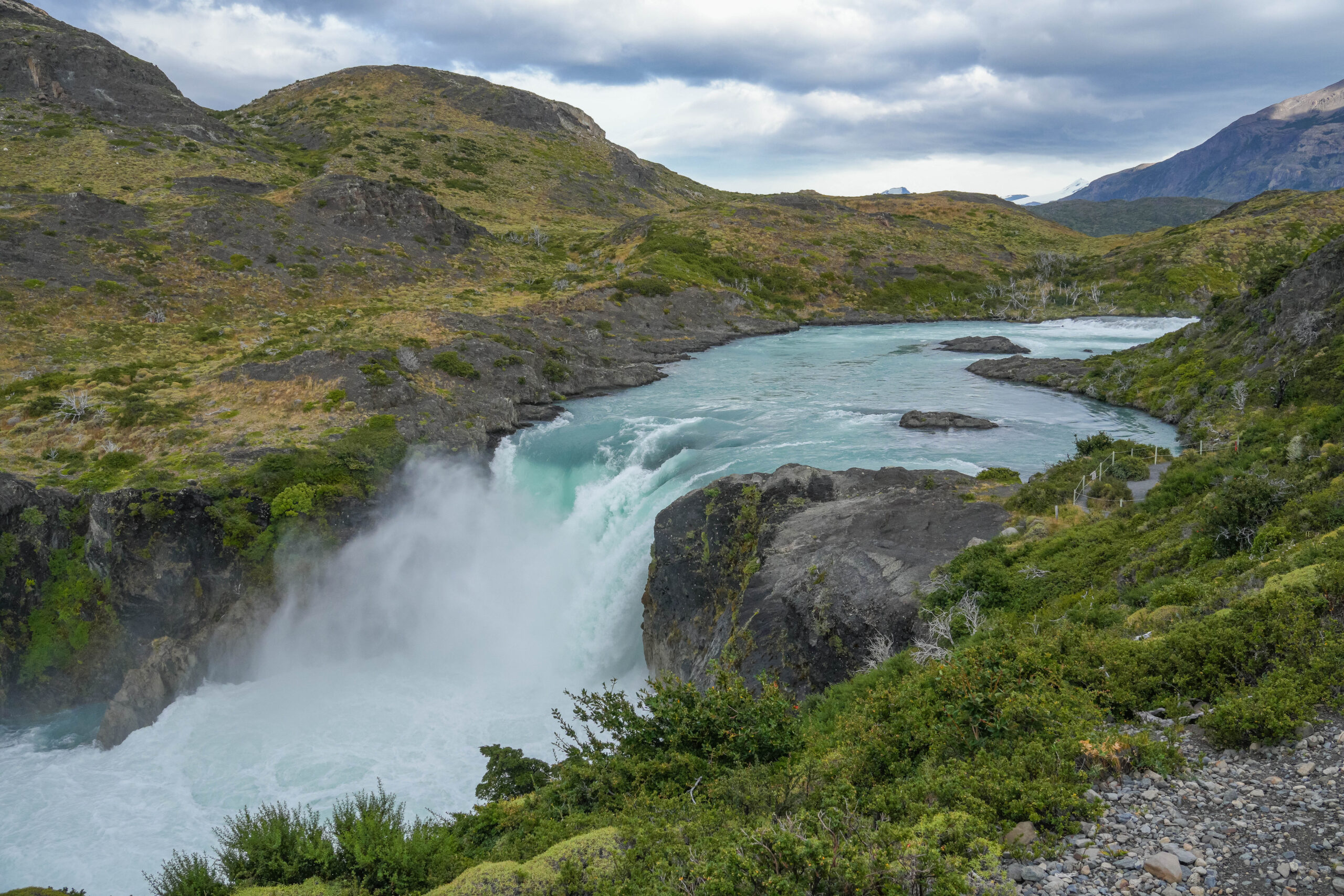
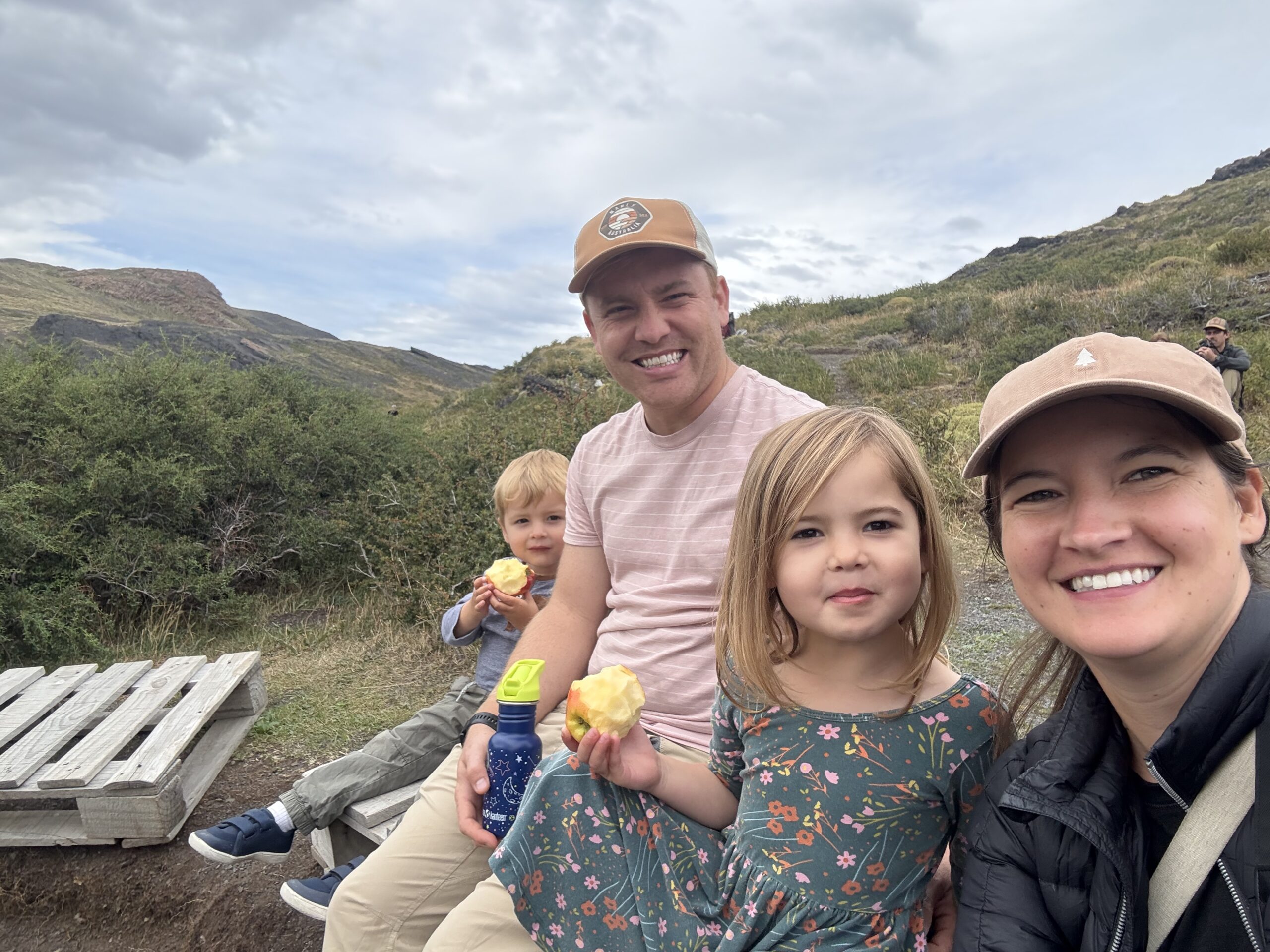
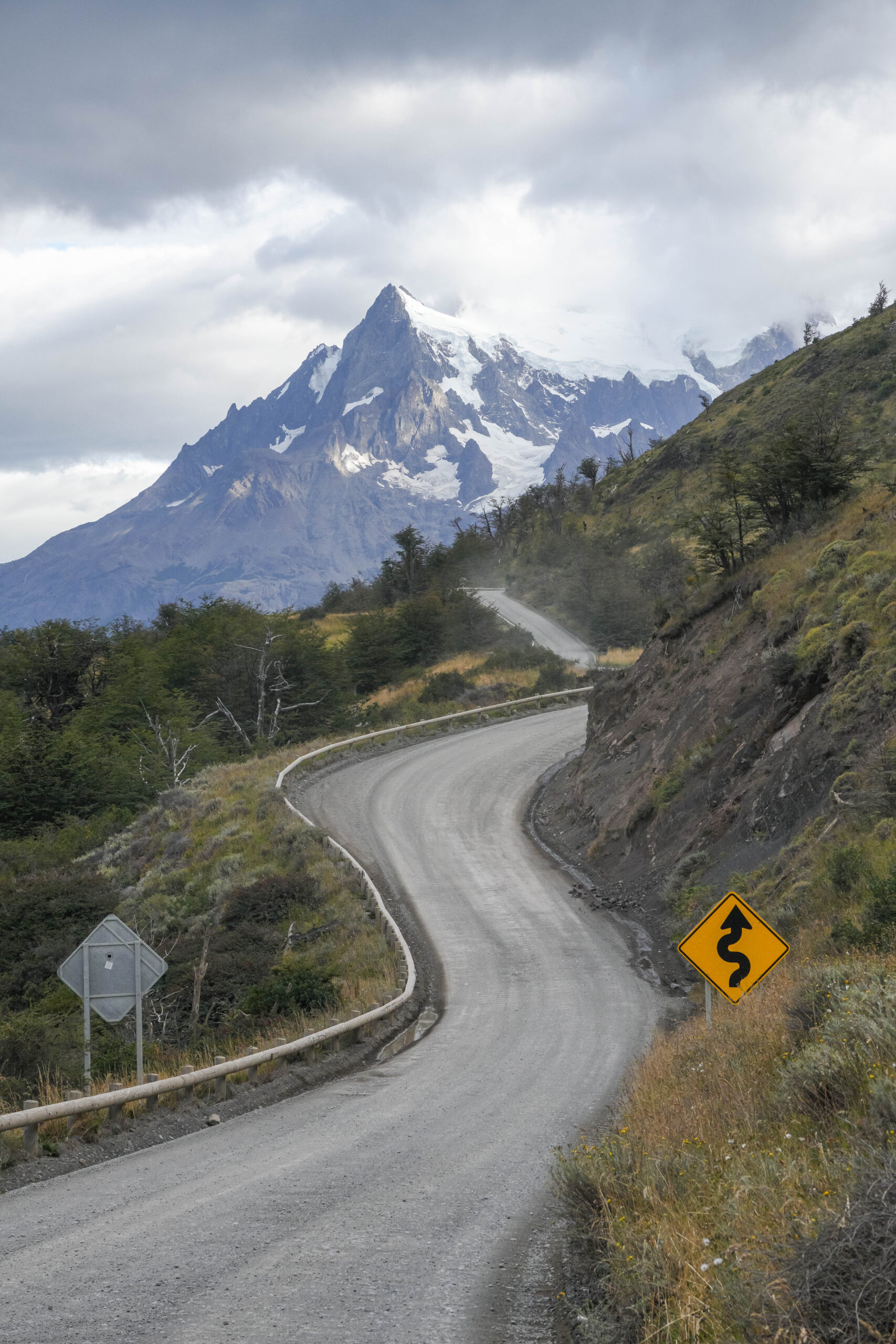
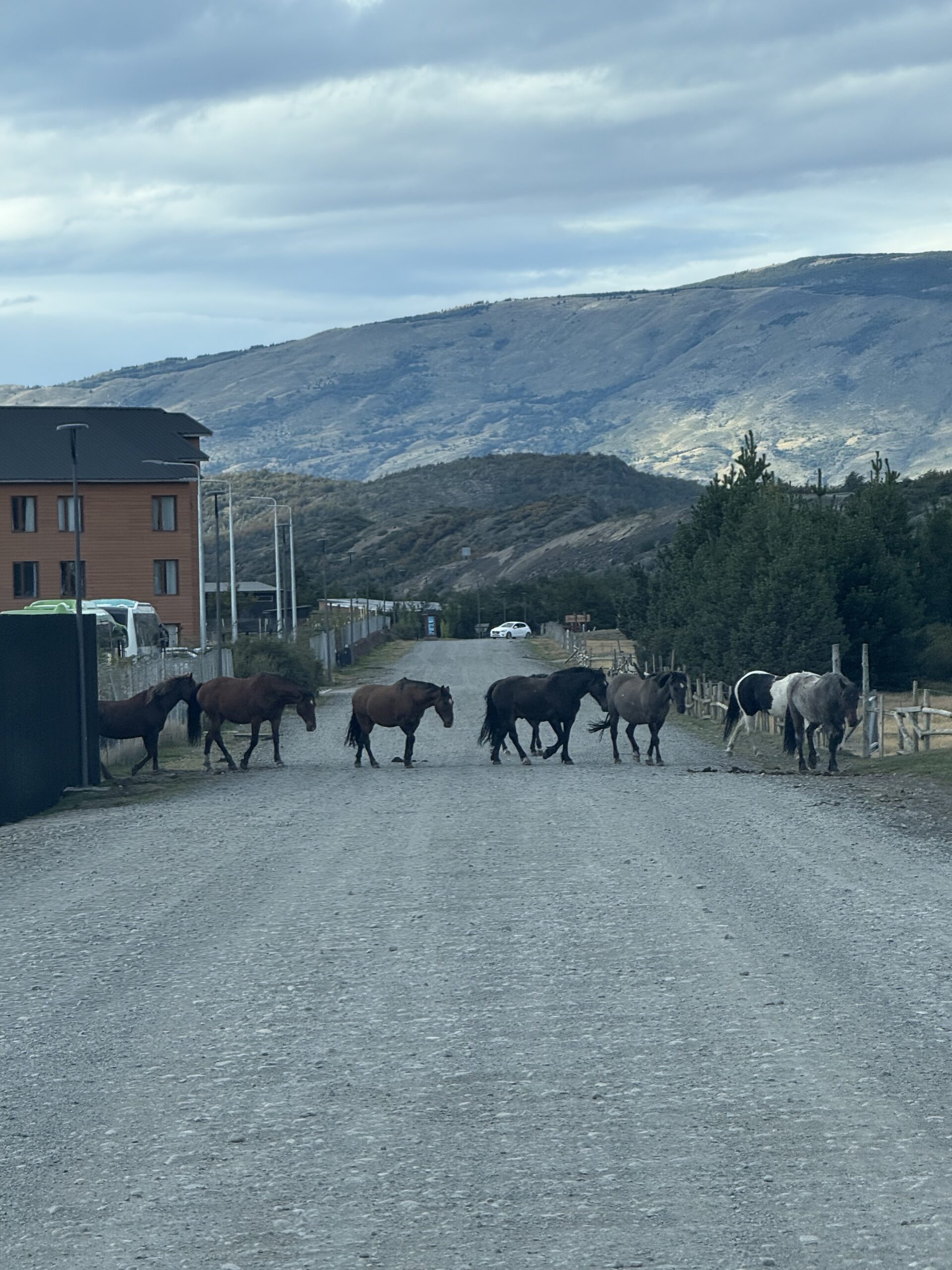
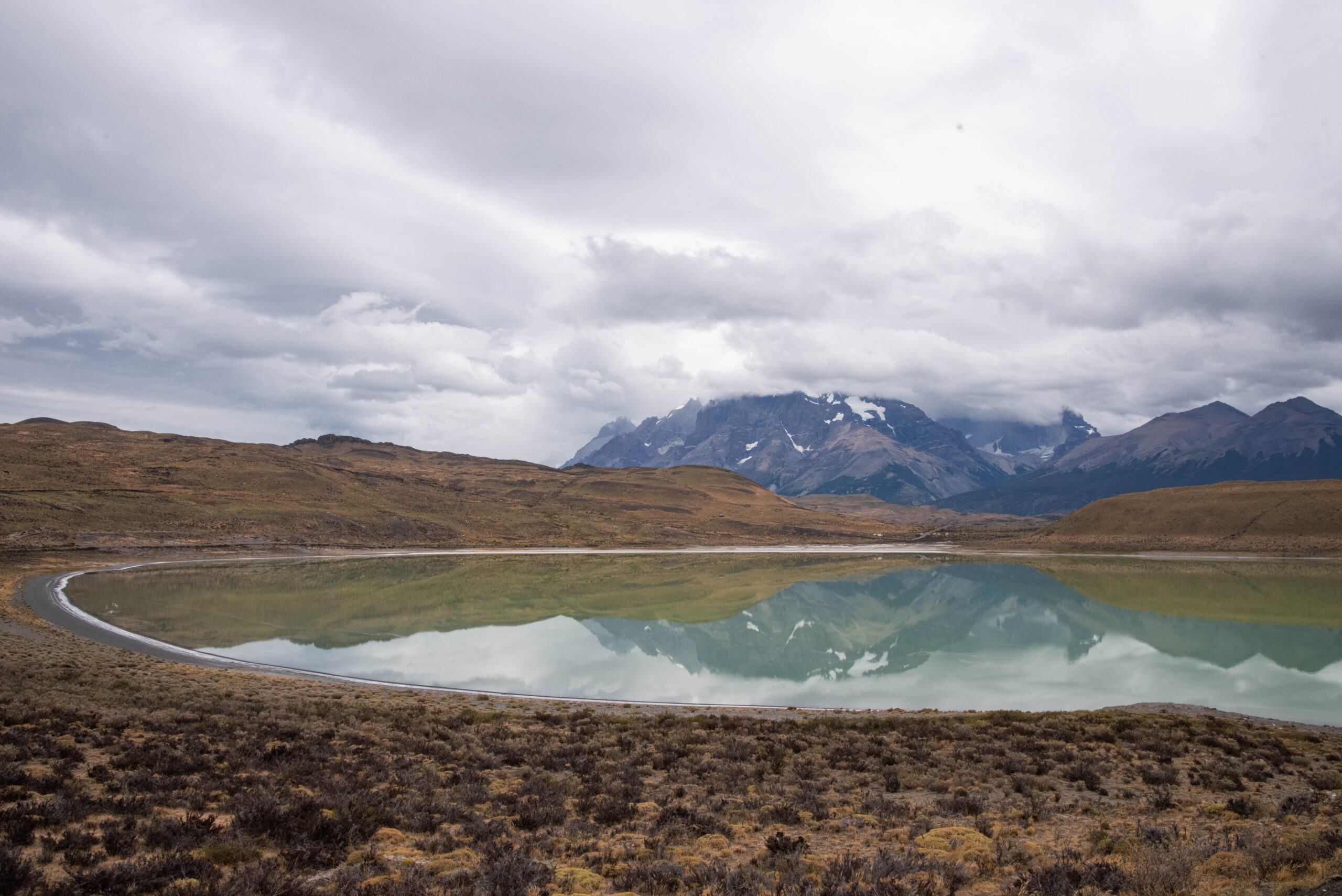
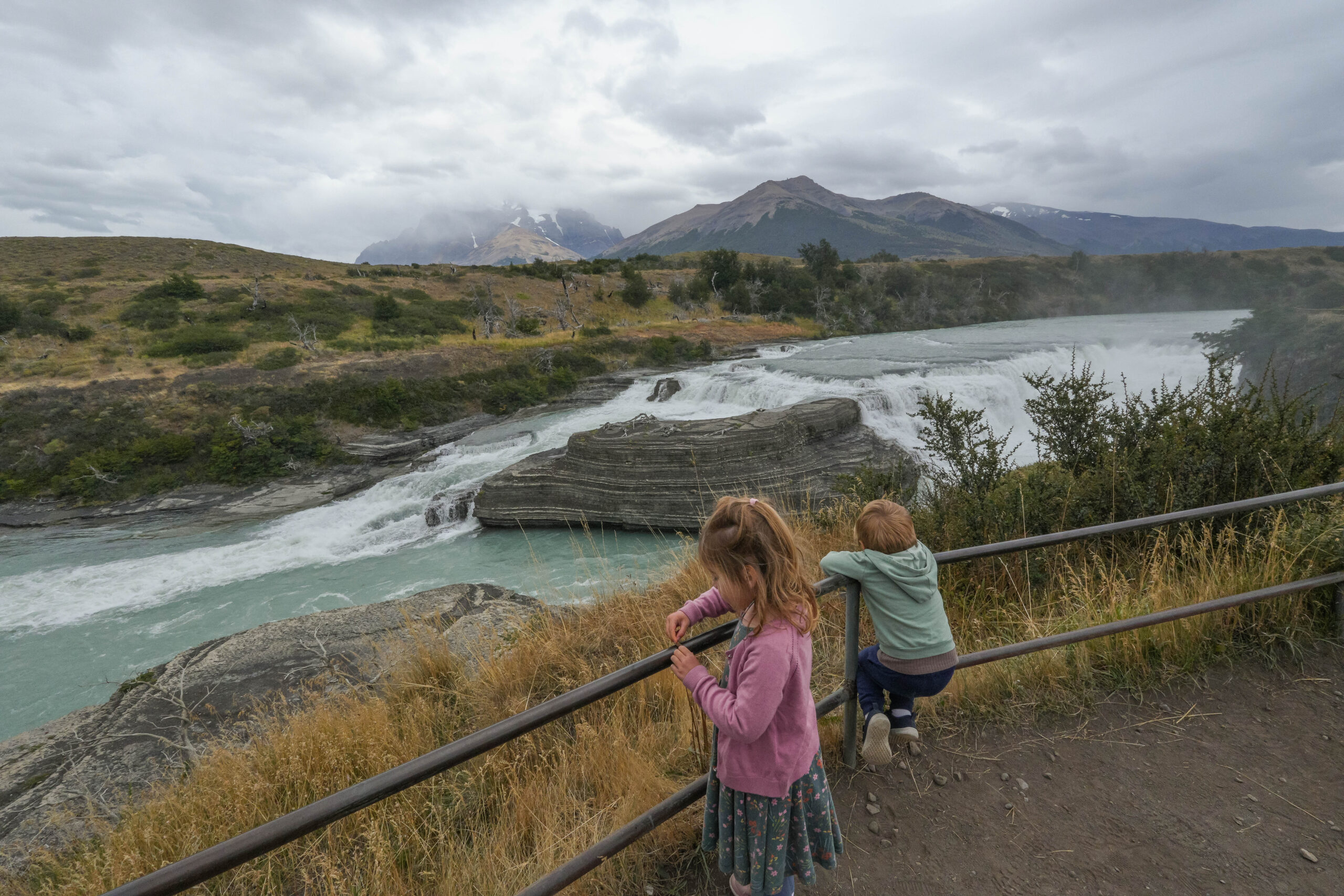
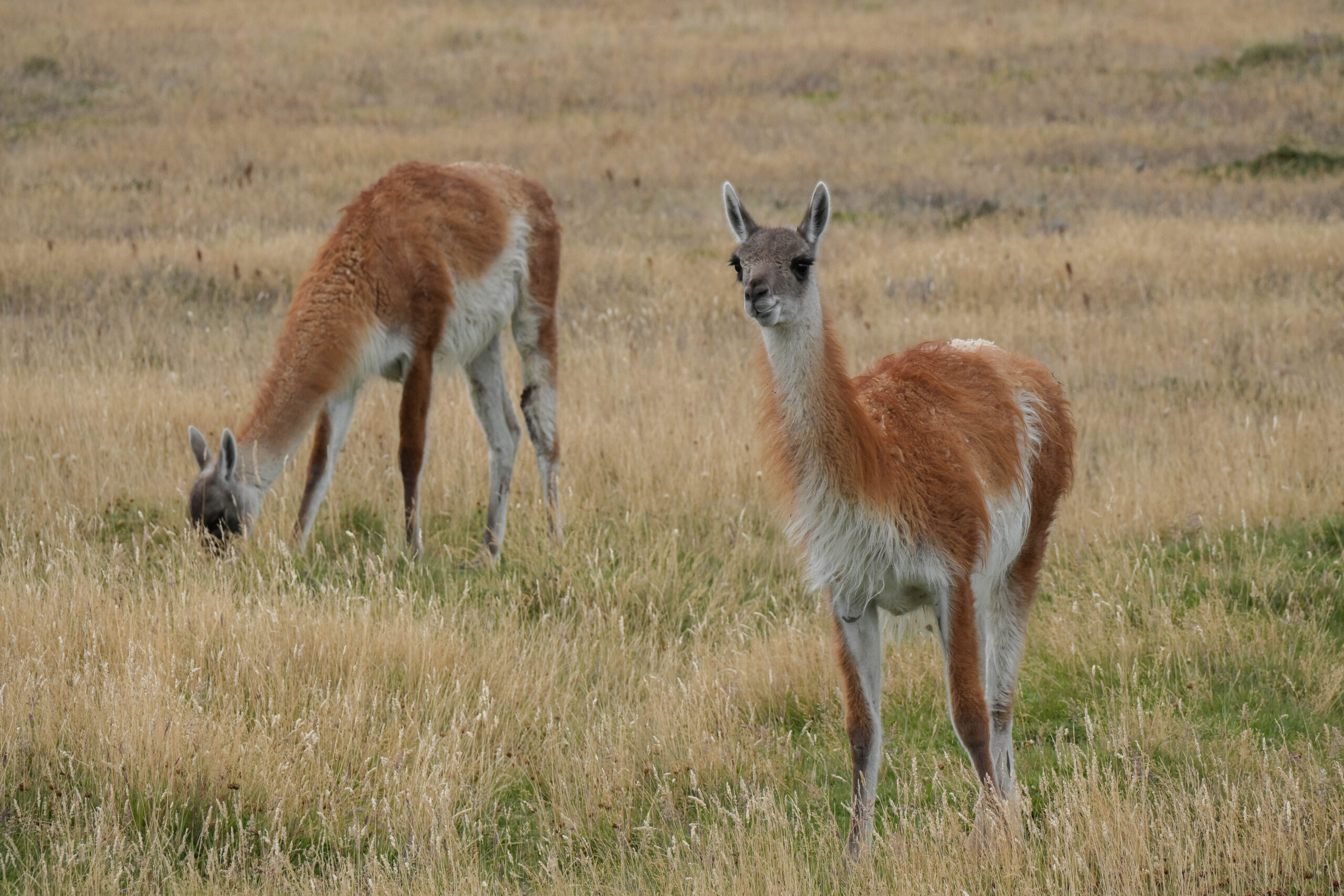
On our departure day we drove through the park, hitting the areas we hadn’t seen yet. We ate our PB&J lunch wraps overlooking the Cascada Rio Paine, before starting on the desolate road back to Puerto Natales. We had some creature-feature sightings on the way back, seeing hundreds of flamingos on lakes and the clueless guanacos, the wild version of a llama, standing around munching grass way too close to the highway.

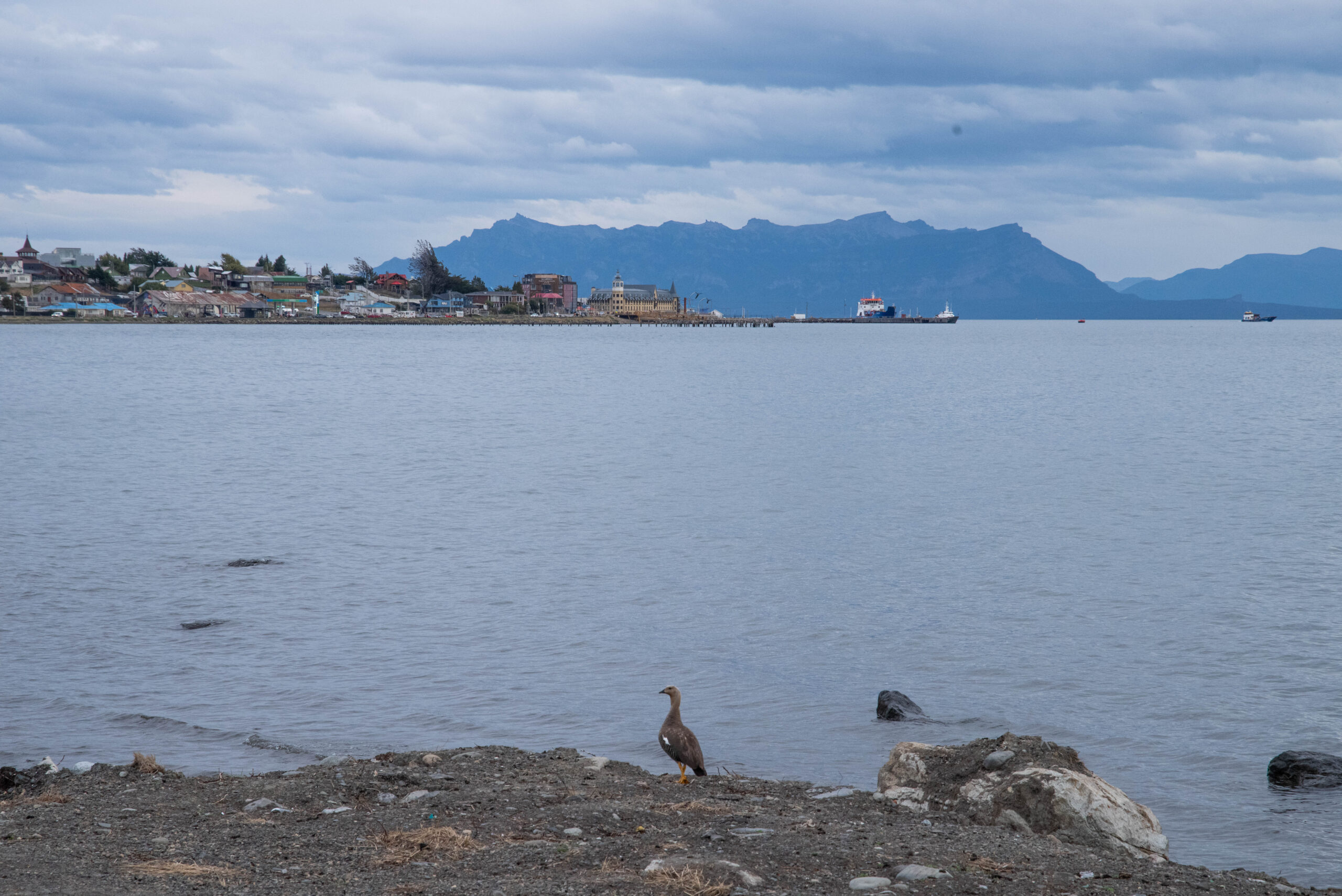
Puerto Natales, Chile
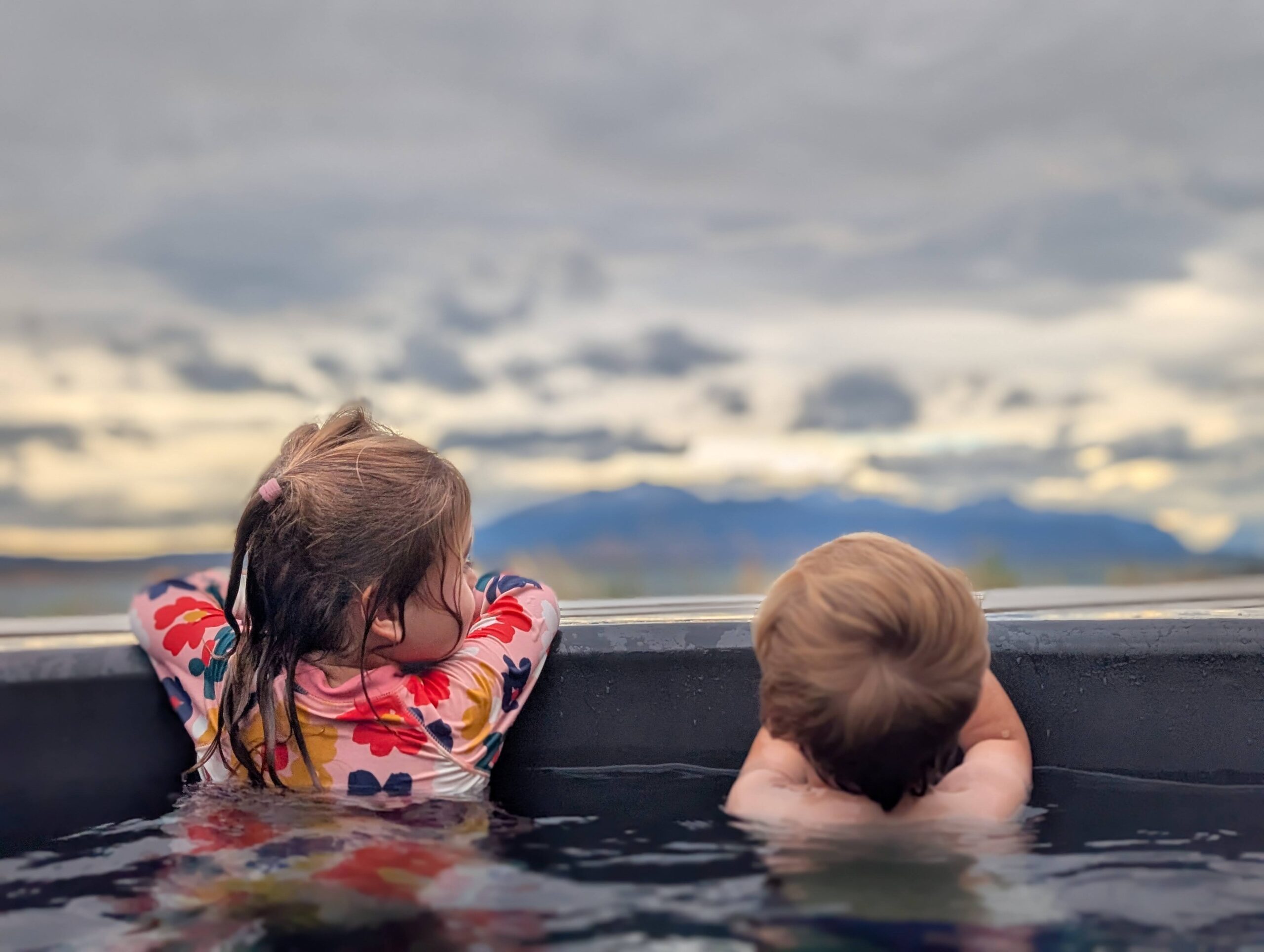
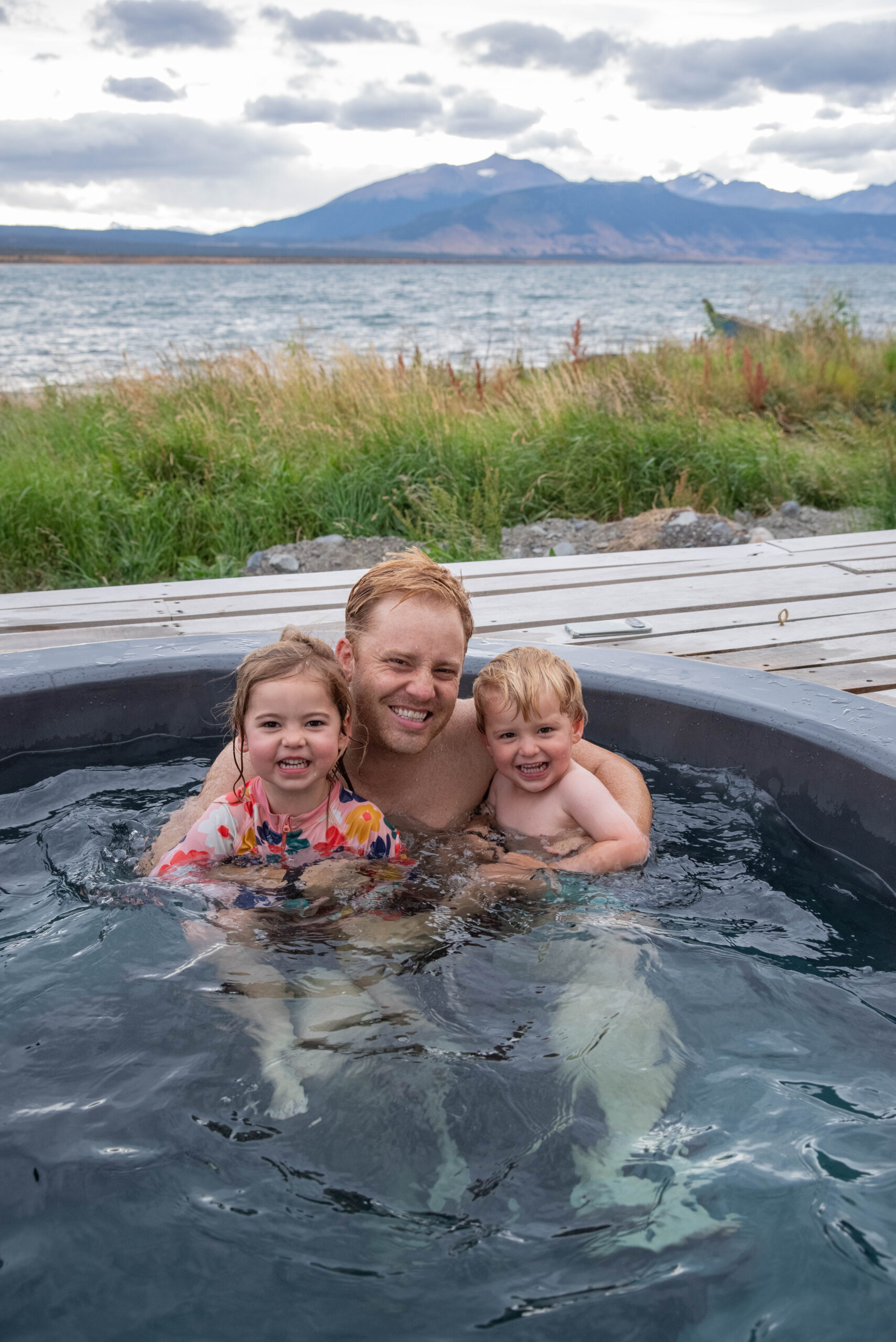
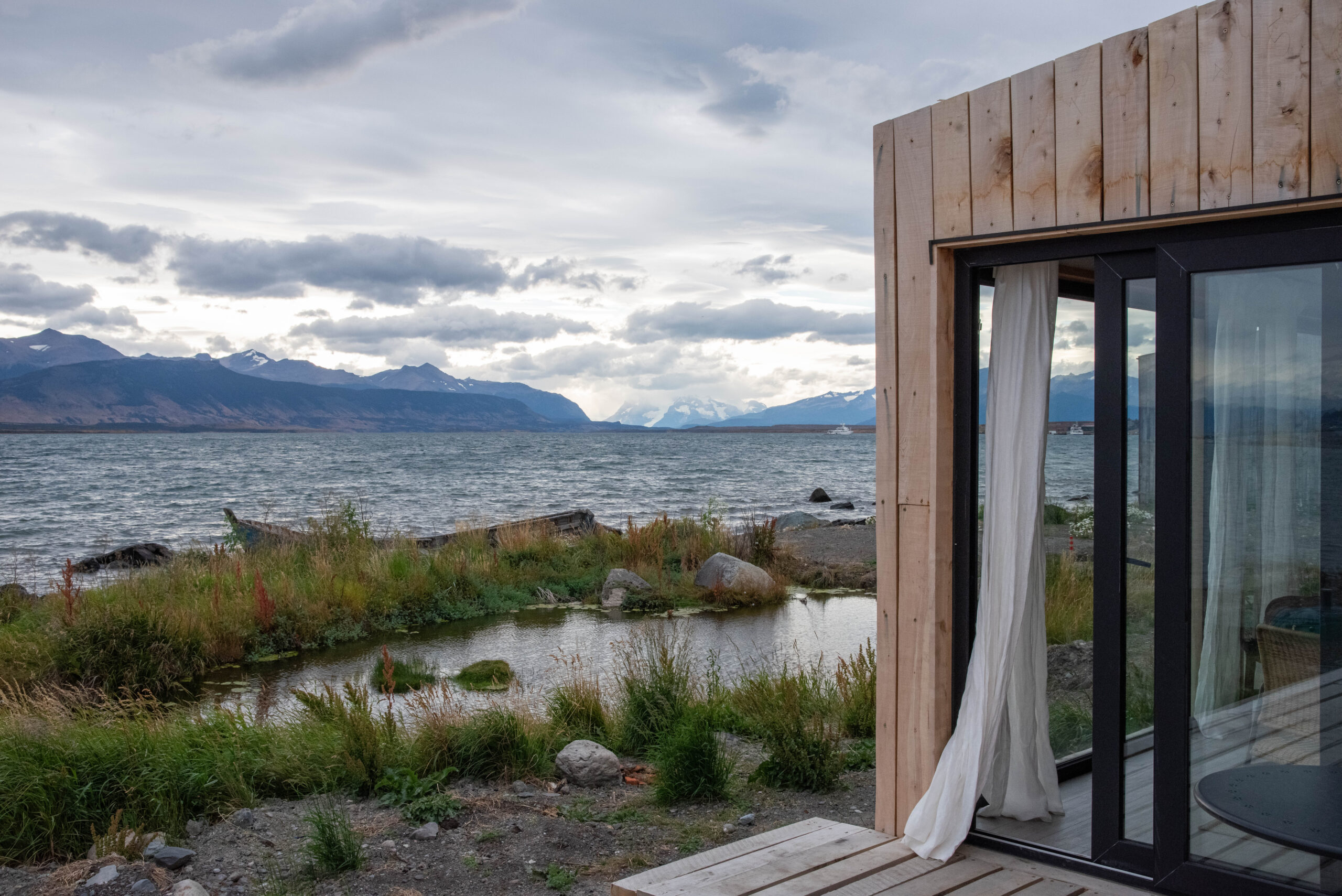
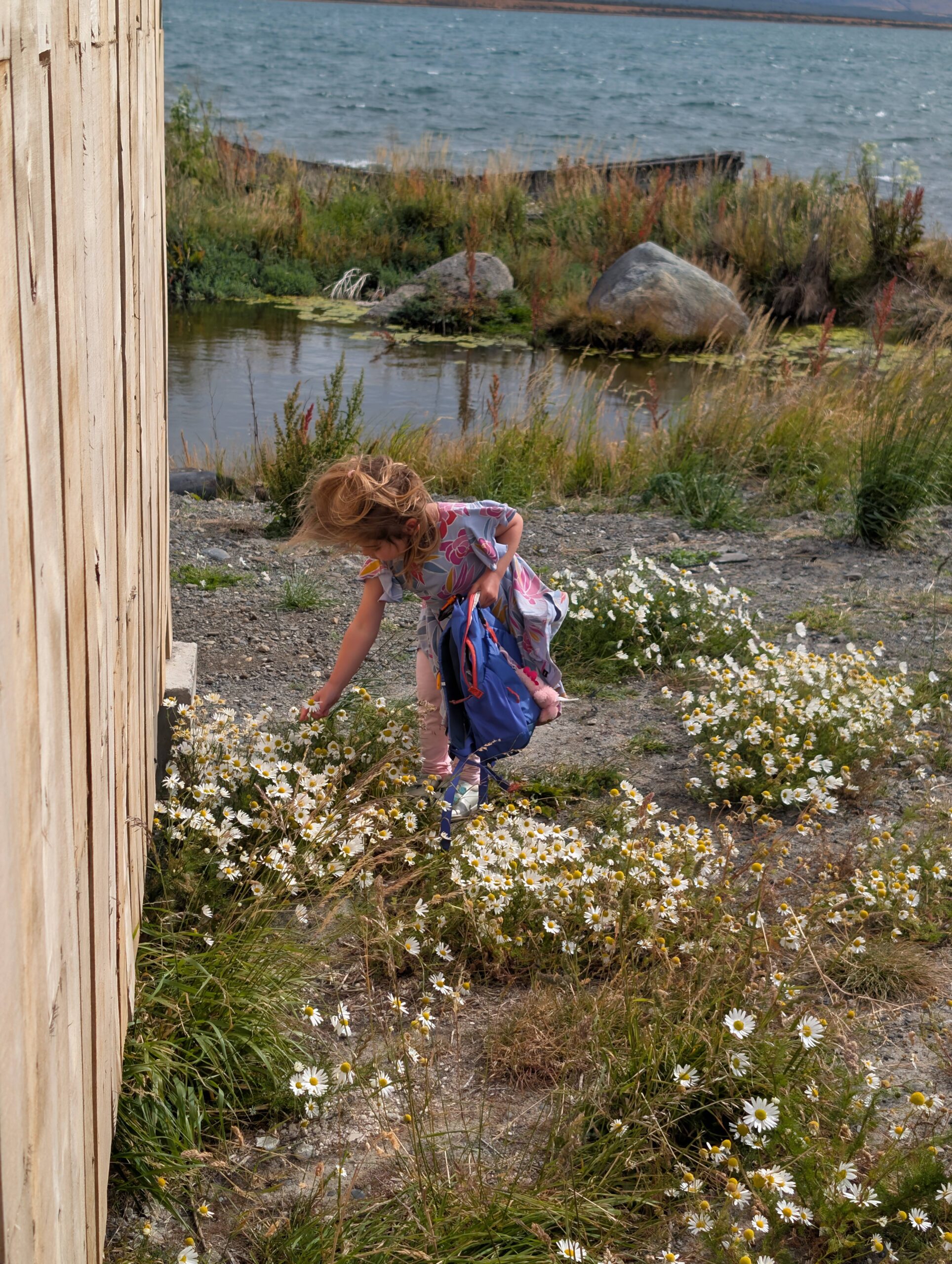
In Puerto Natales we stayed at an Airbnb on the outskirts of town with phenomenal views over the water up towards the Park. It was a lucky find: much less expensive with floor to ceiling windows and some room to stretch out after our teeny bunkhouse. The best part was the patio hot tub, which got a ton of use by kid and adult alike.
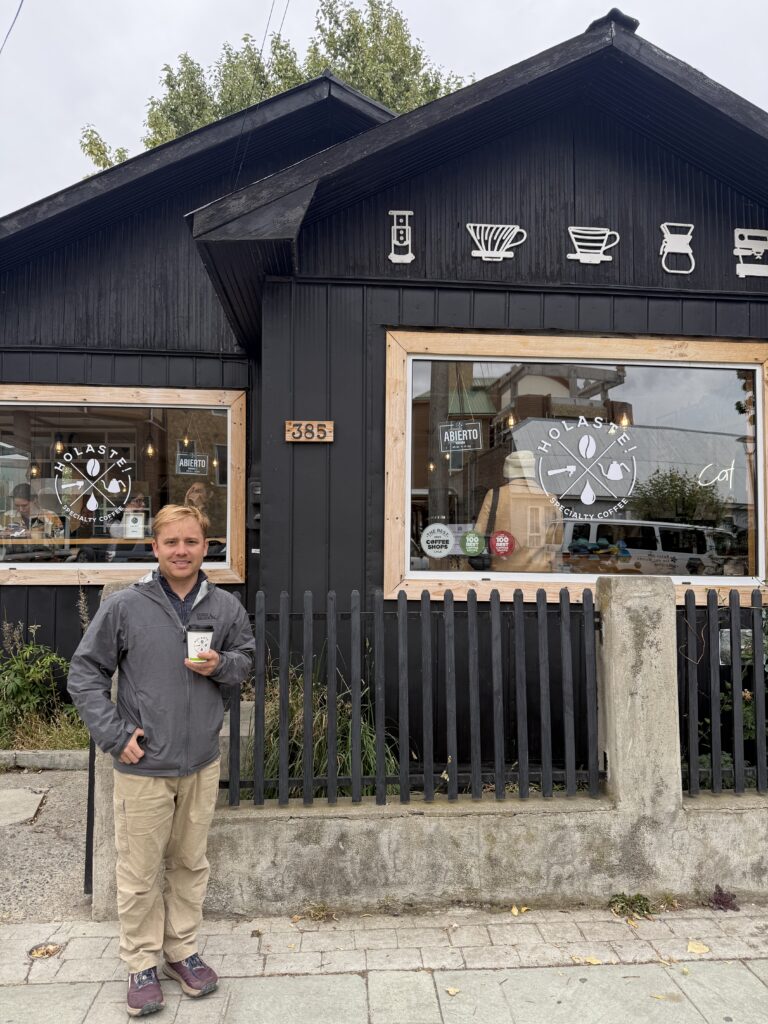
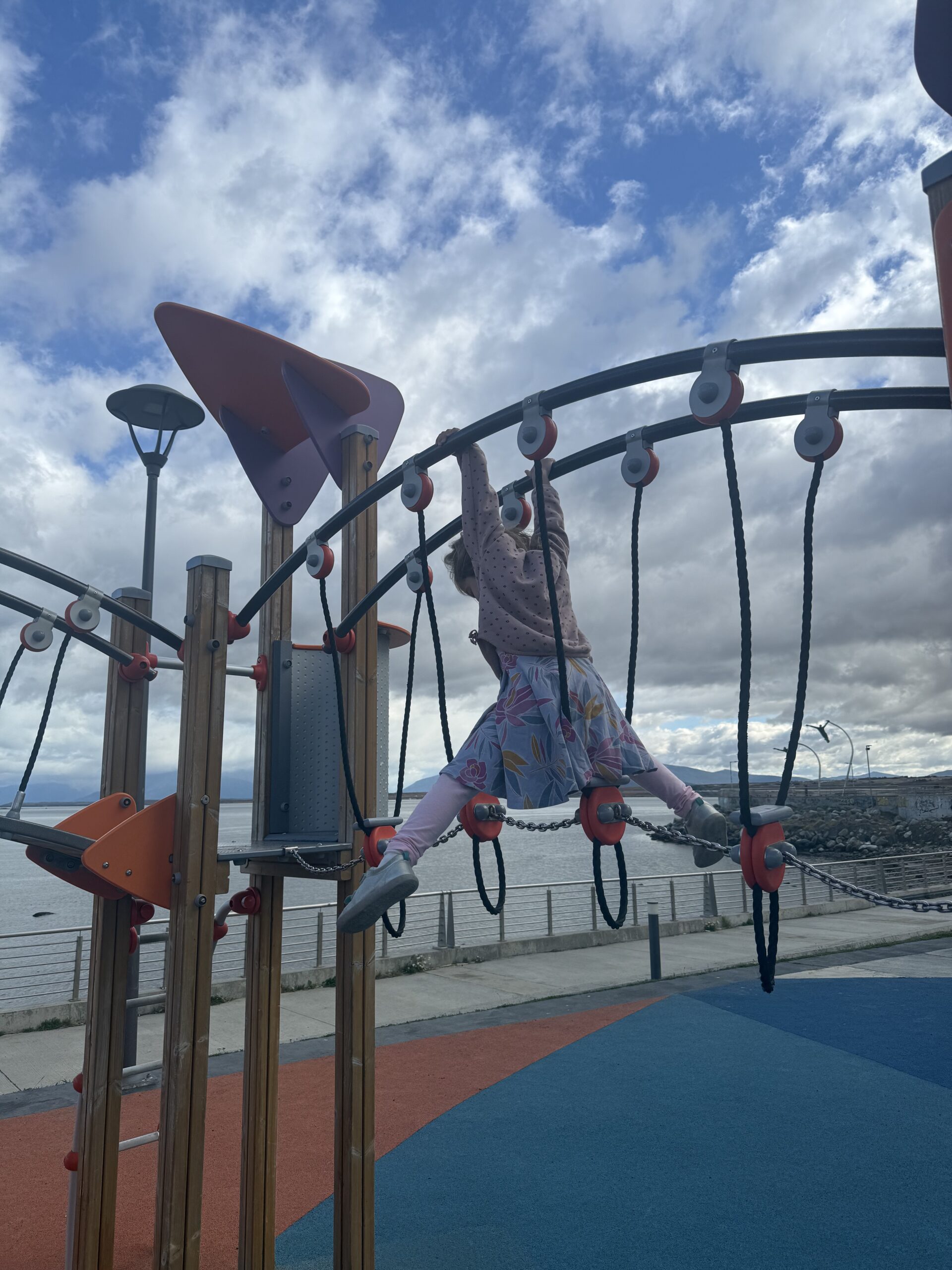
The town itself was cute and walkable, with a mix of tourist, artisanal shops and local daily life items. We were most surprised to see 7 (yes, 7!) playgrounds on our short drive to the grocery store. Suffering from good coffee withdrawals from Australia, I was excited to find Holaste! Specialty Coffee and the kids were happy with the double marshmallow included in their hot chocolates. Restaurants were plentiful, but we ended up cooking in to feel cozy in the rainy weather. We got pretty creative with our several meal combos of black beans, cheese, and tomatoes.
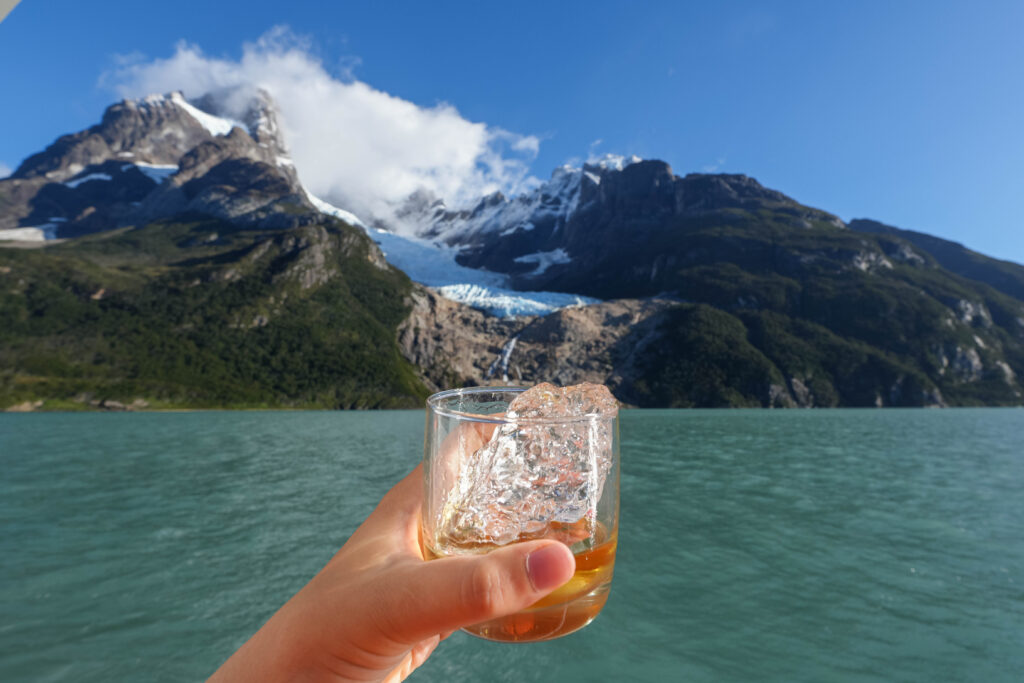
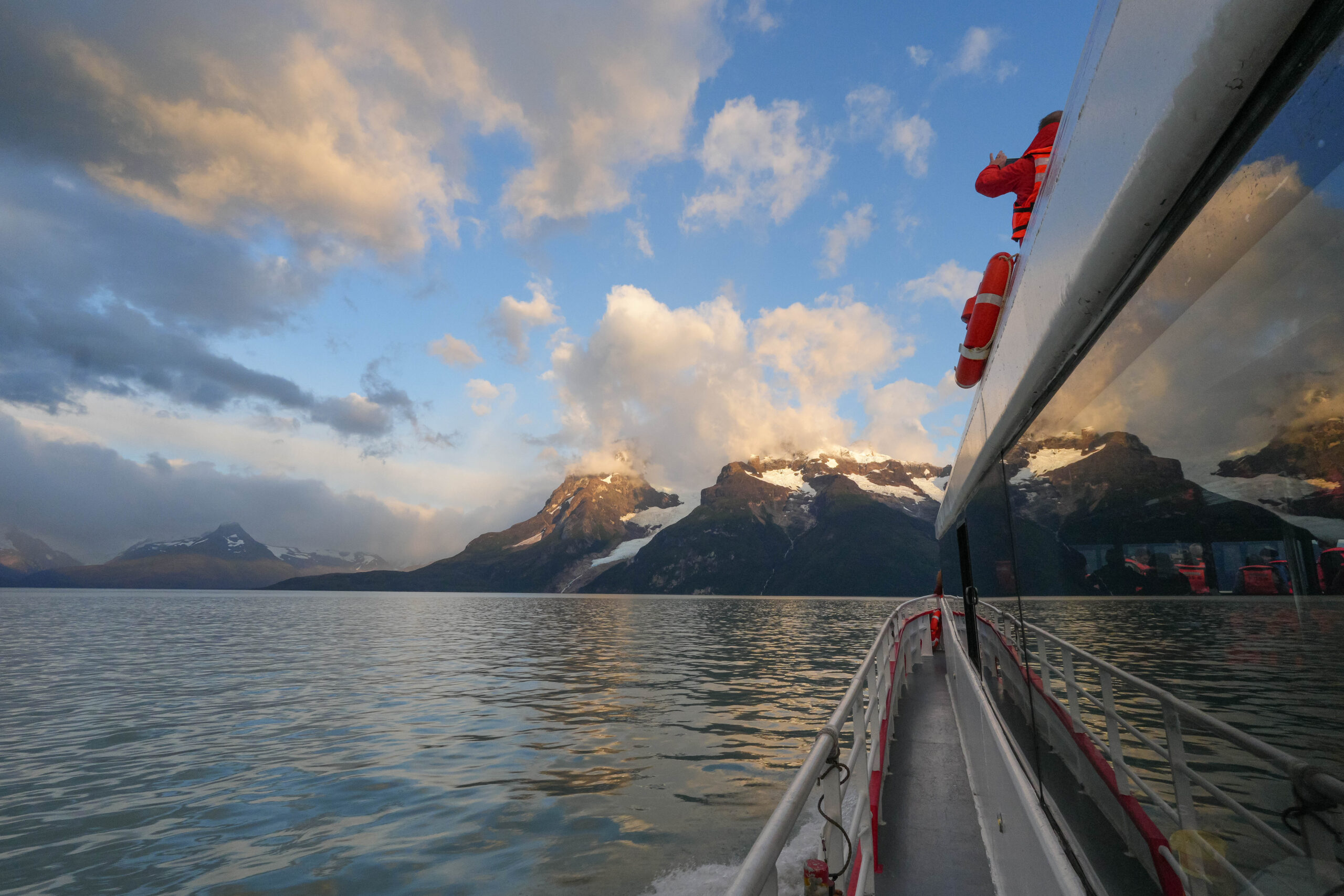
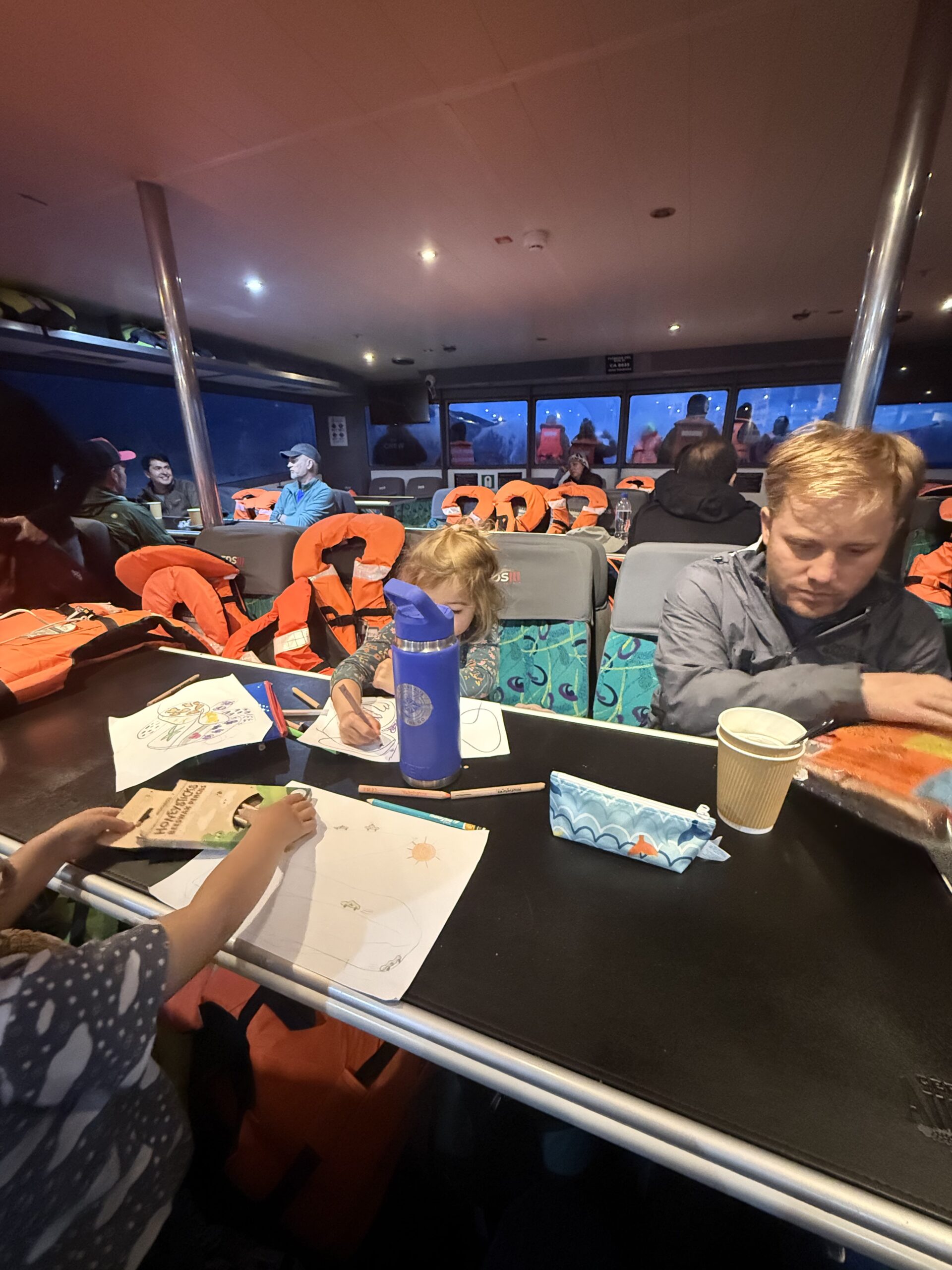
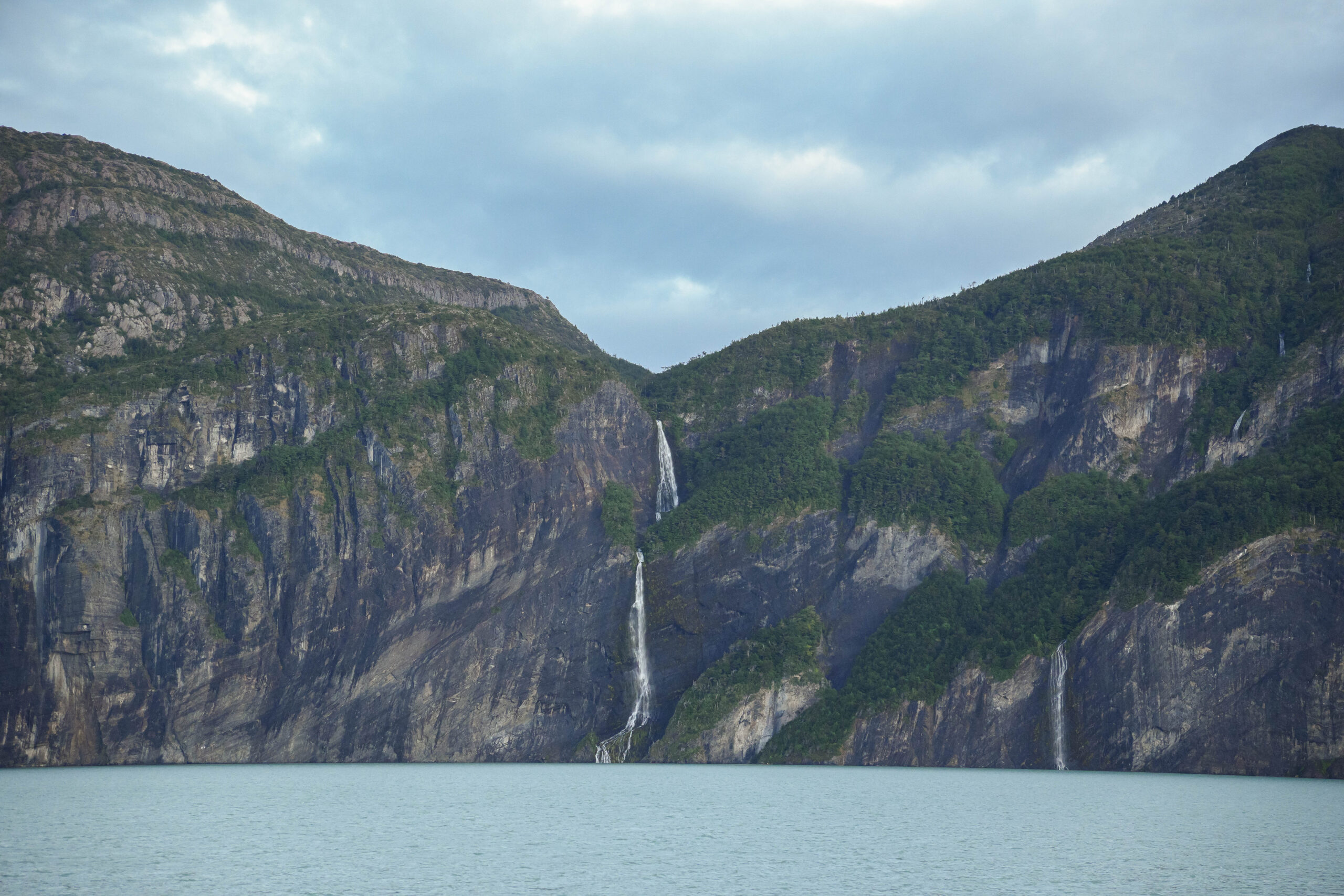
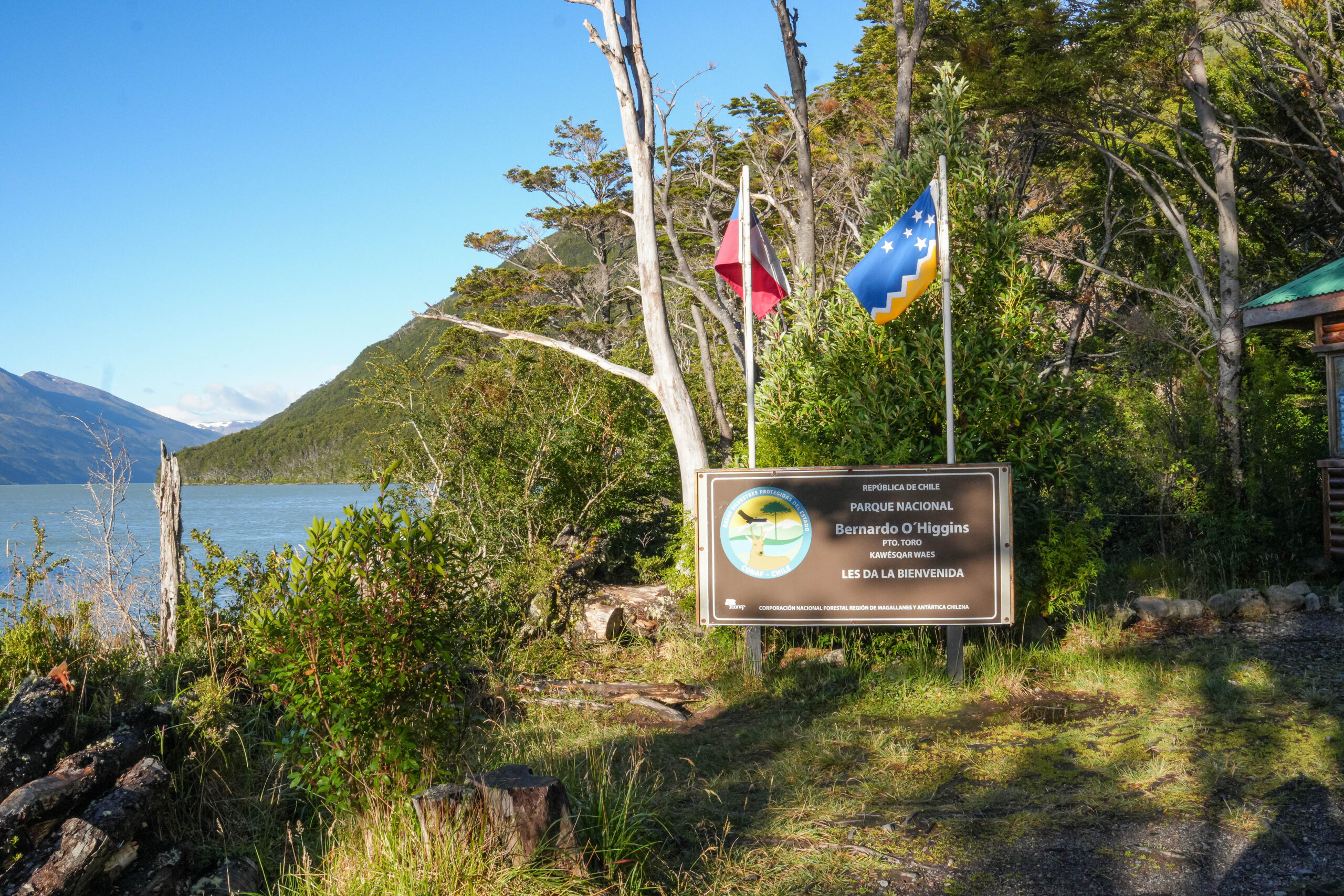
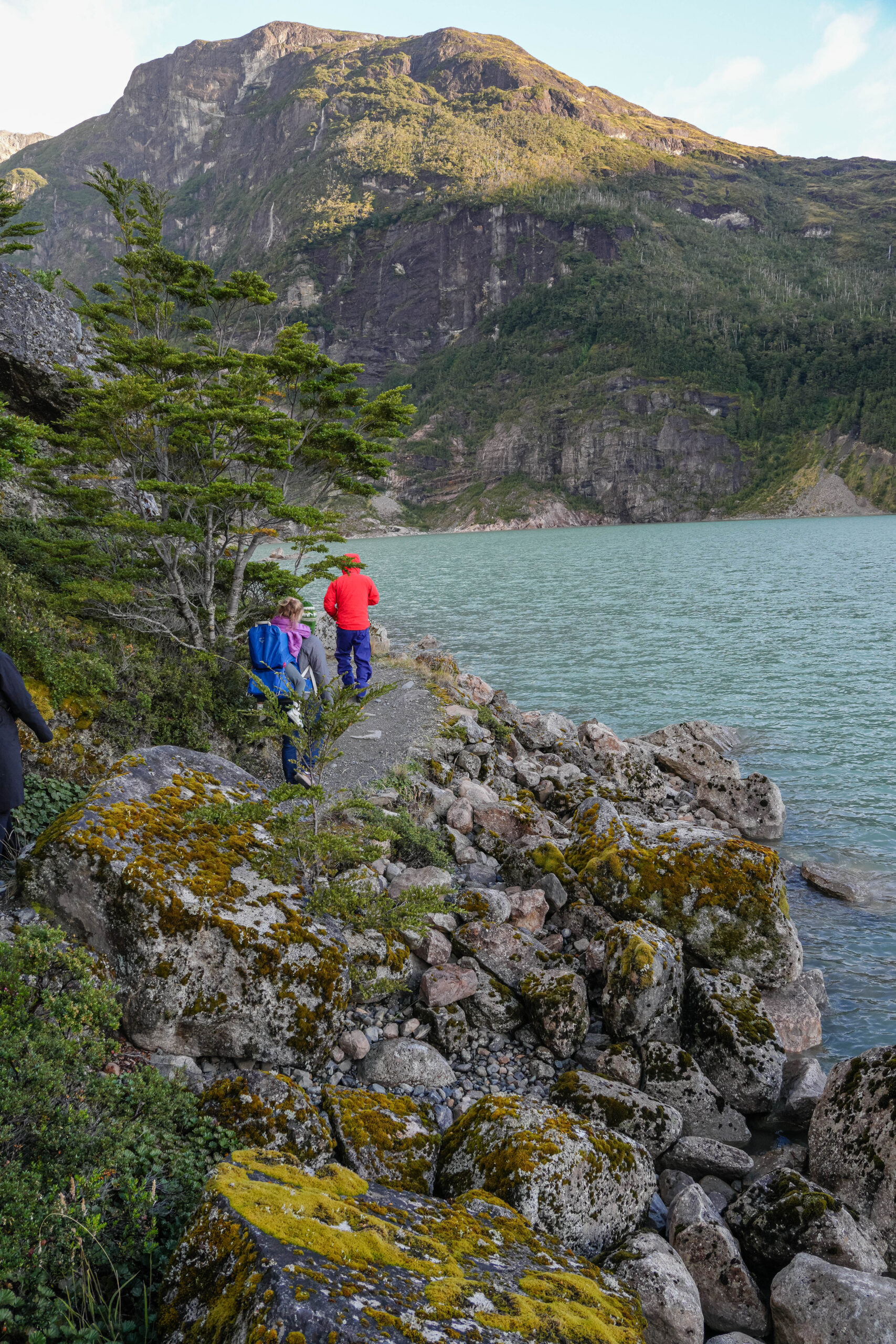
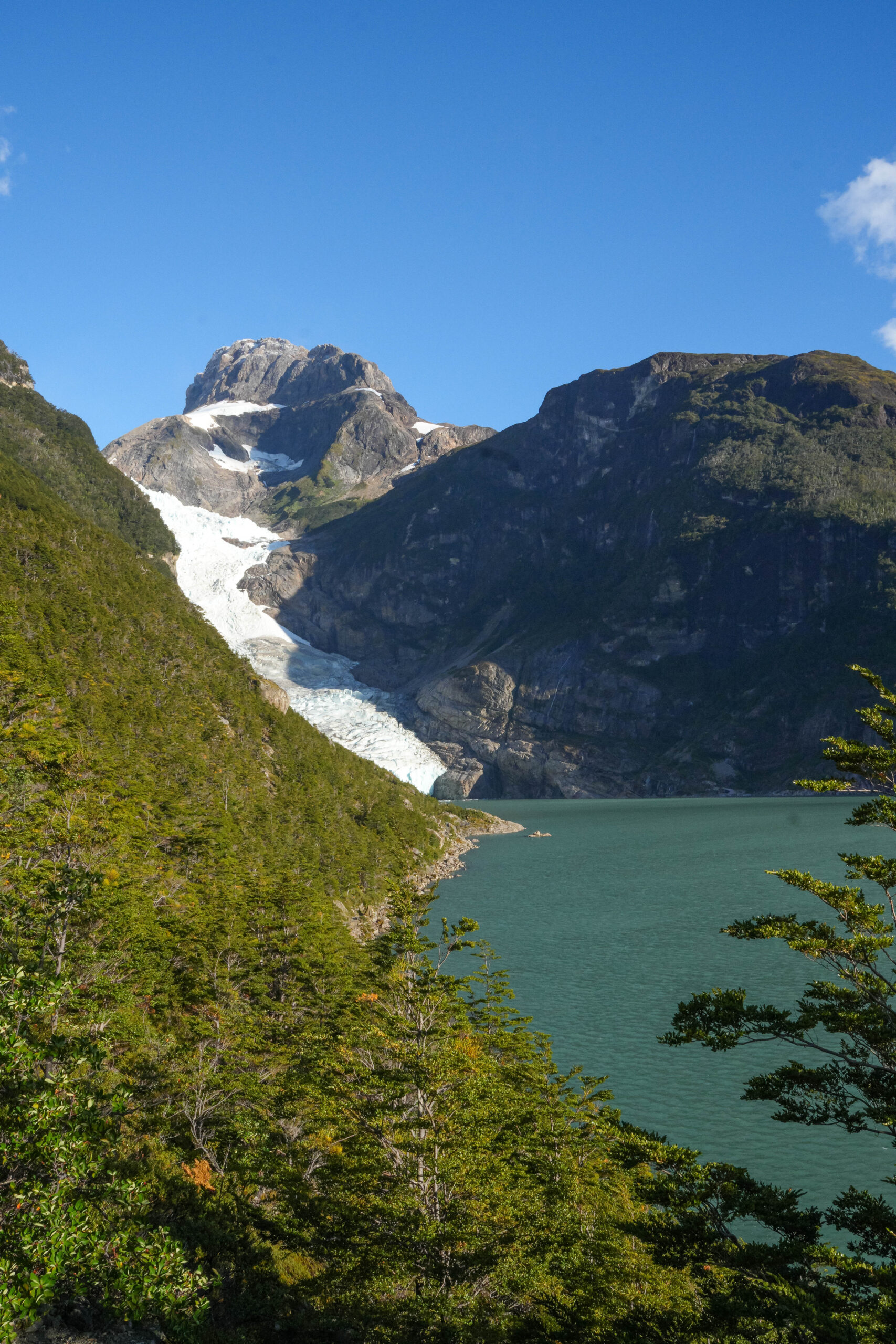
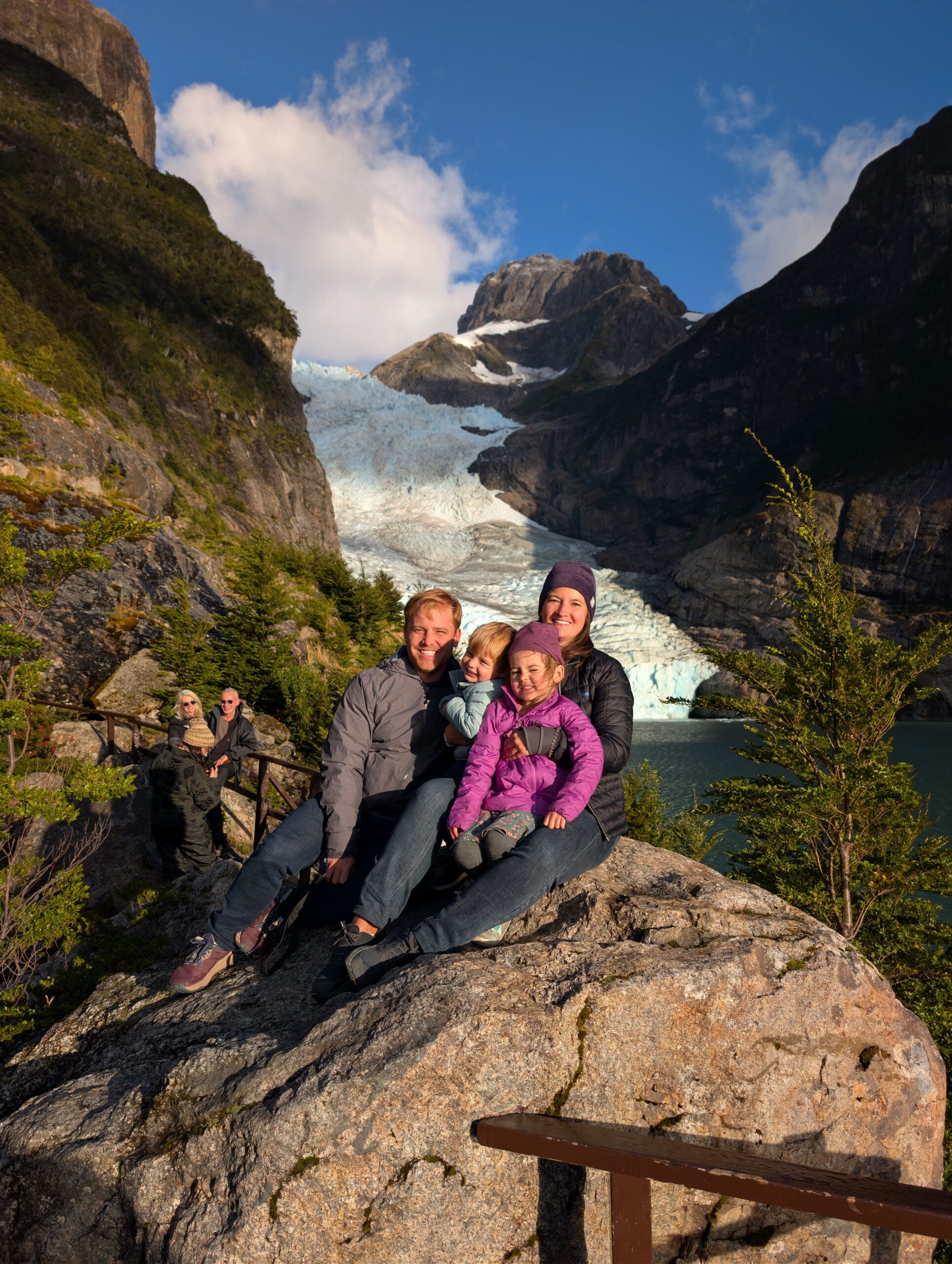
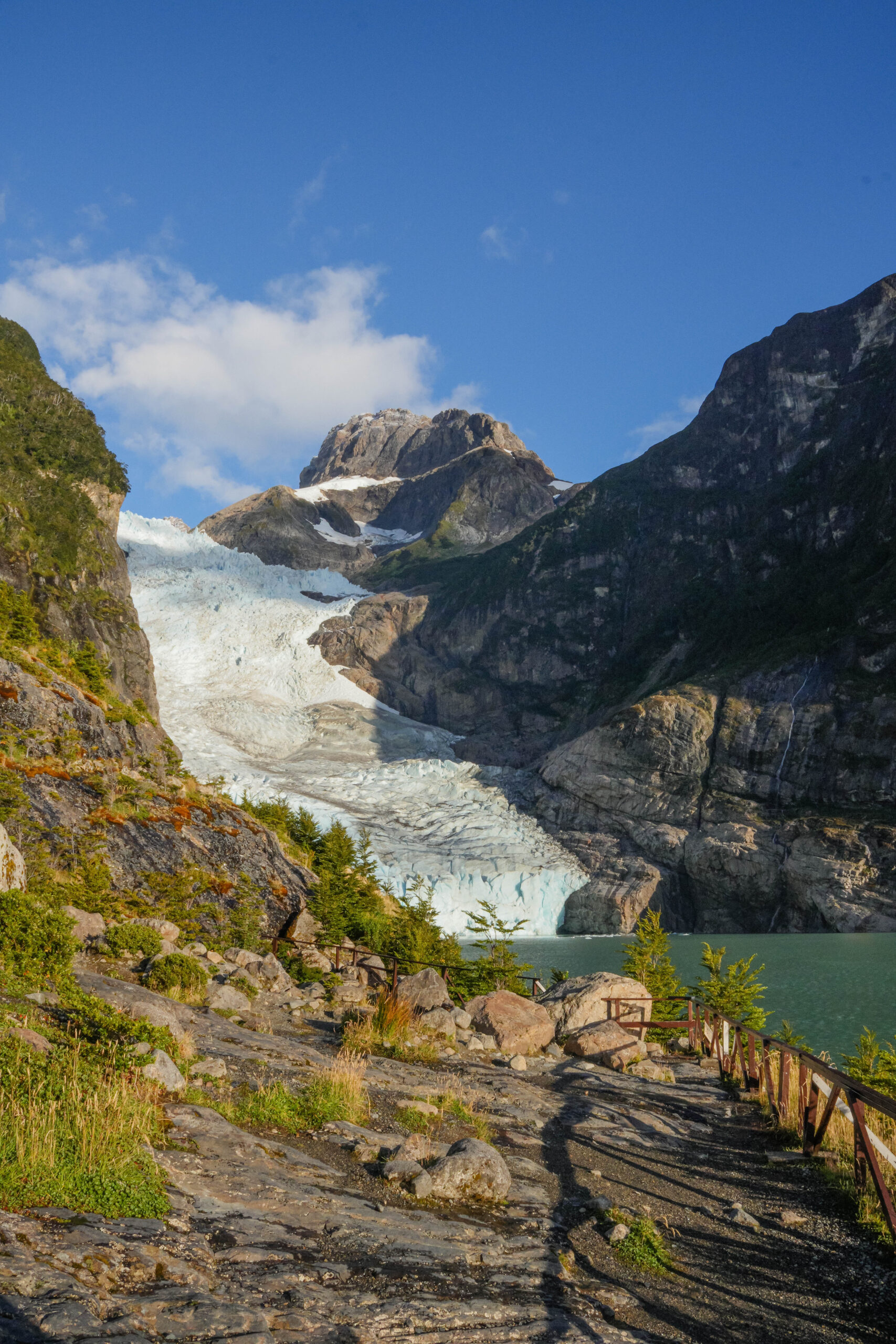
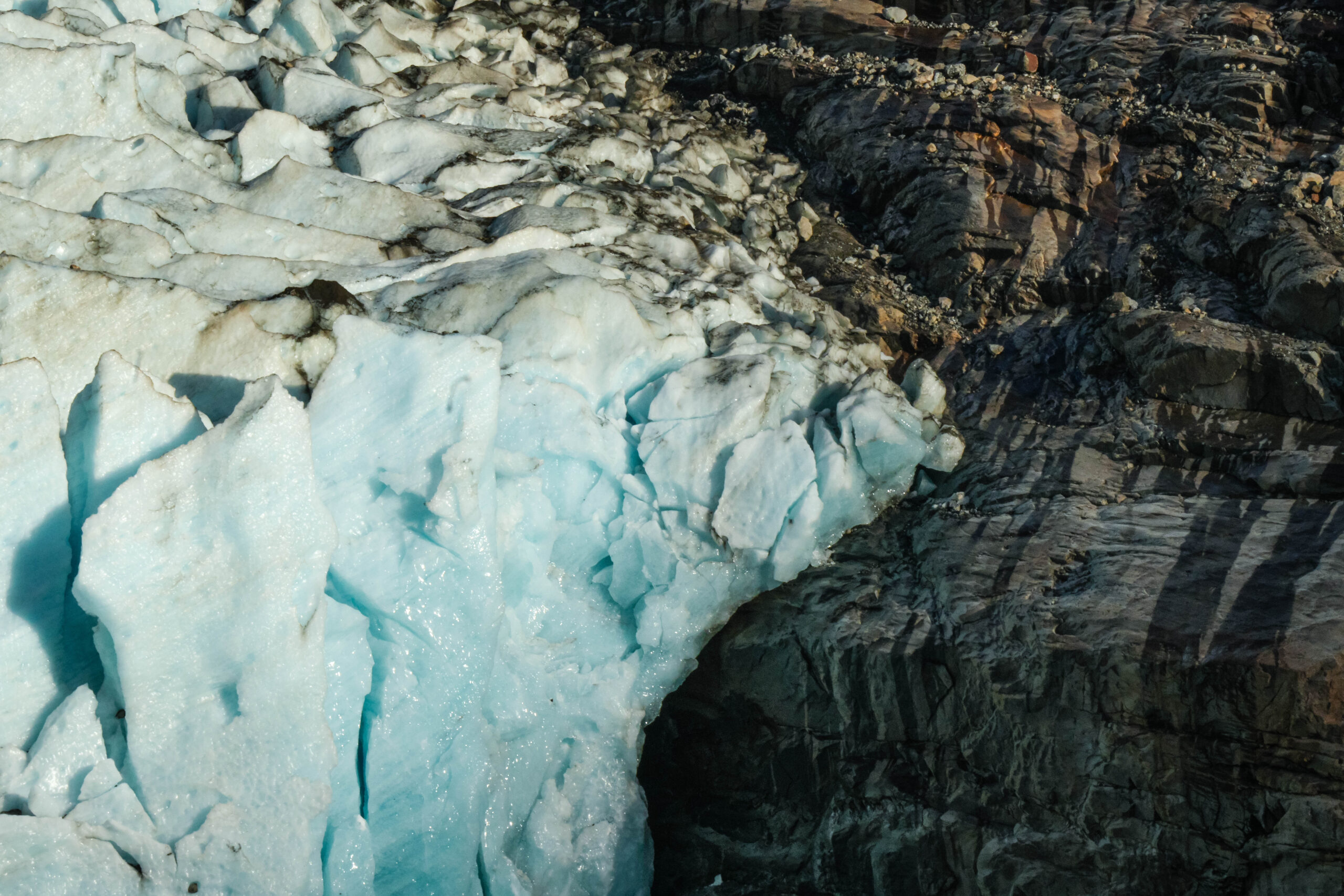
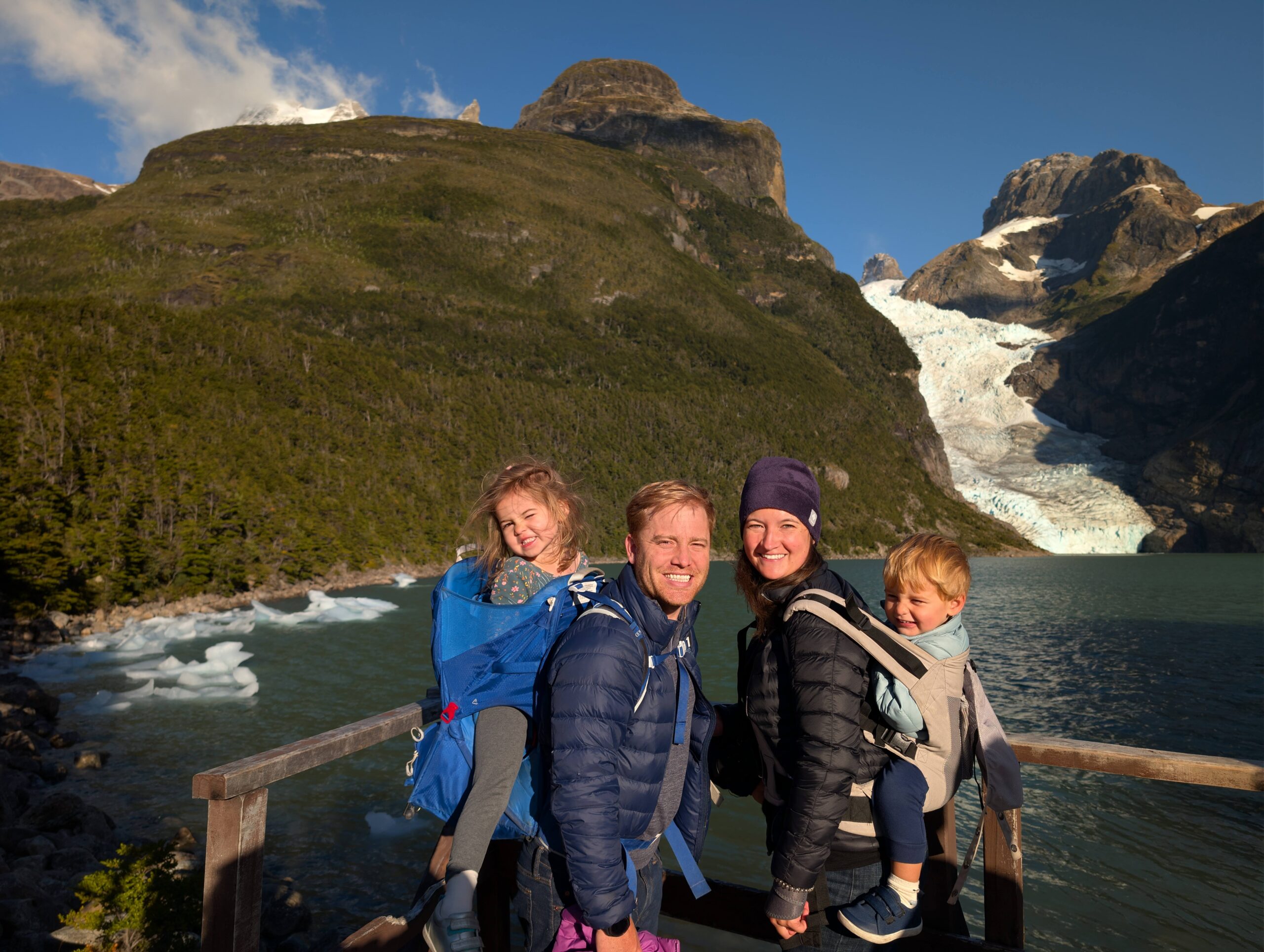
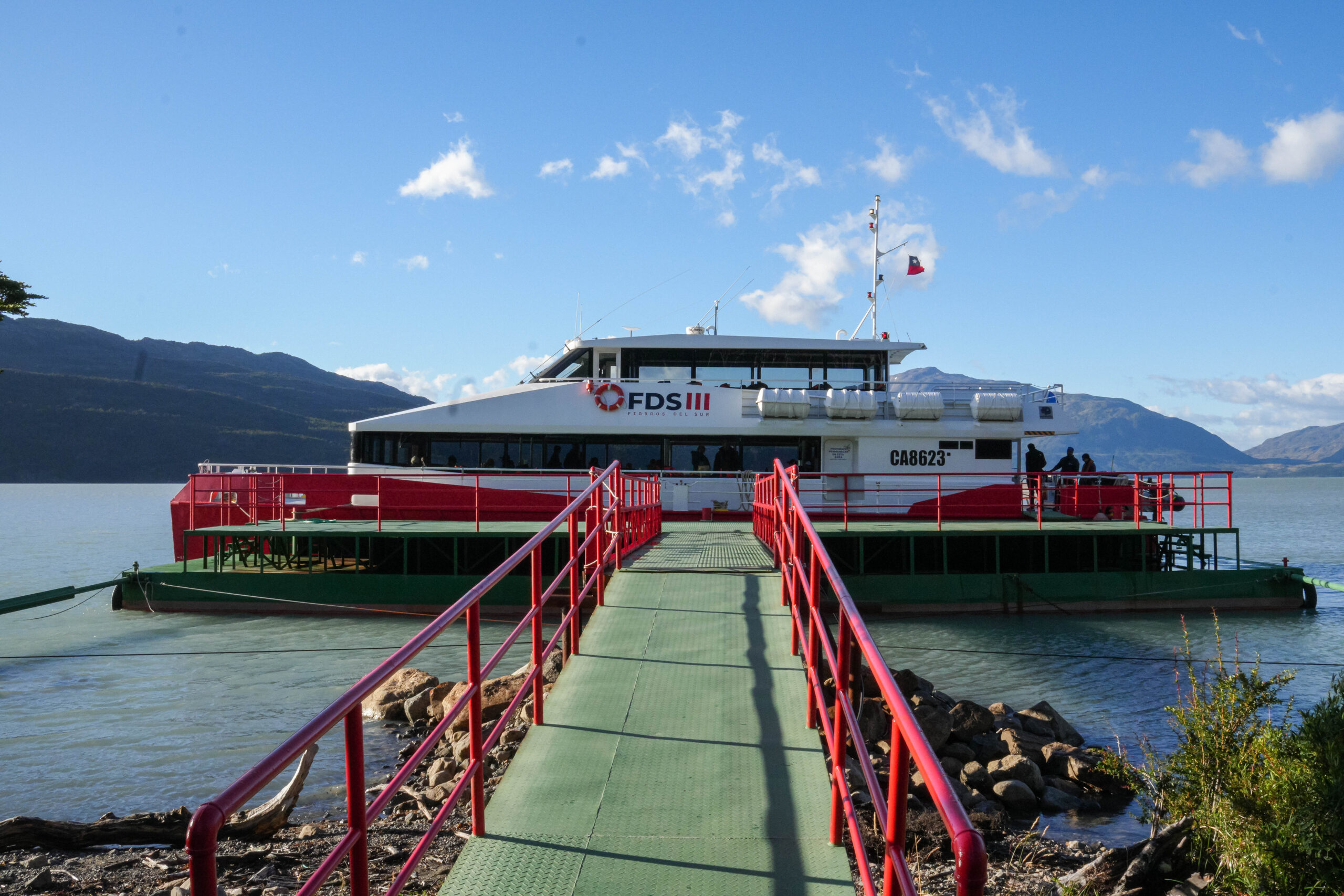
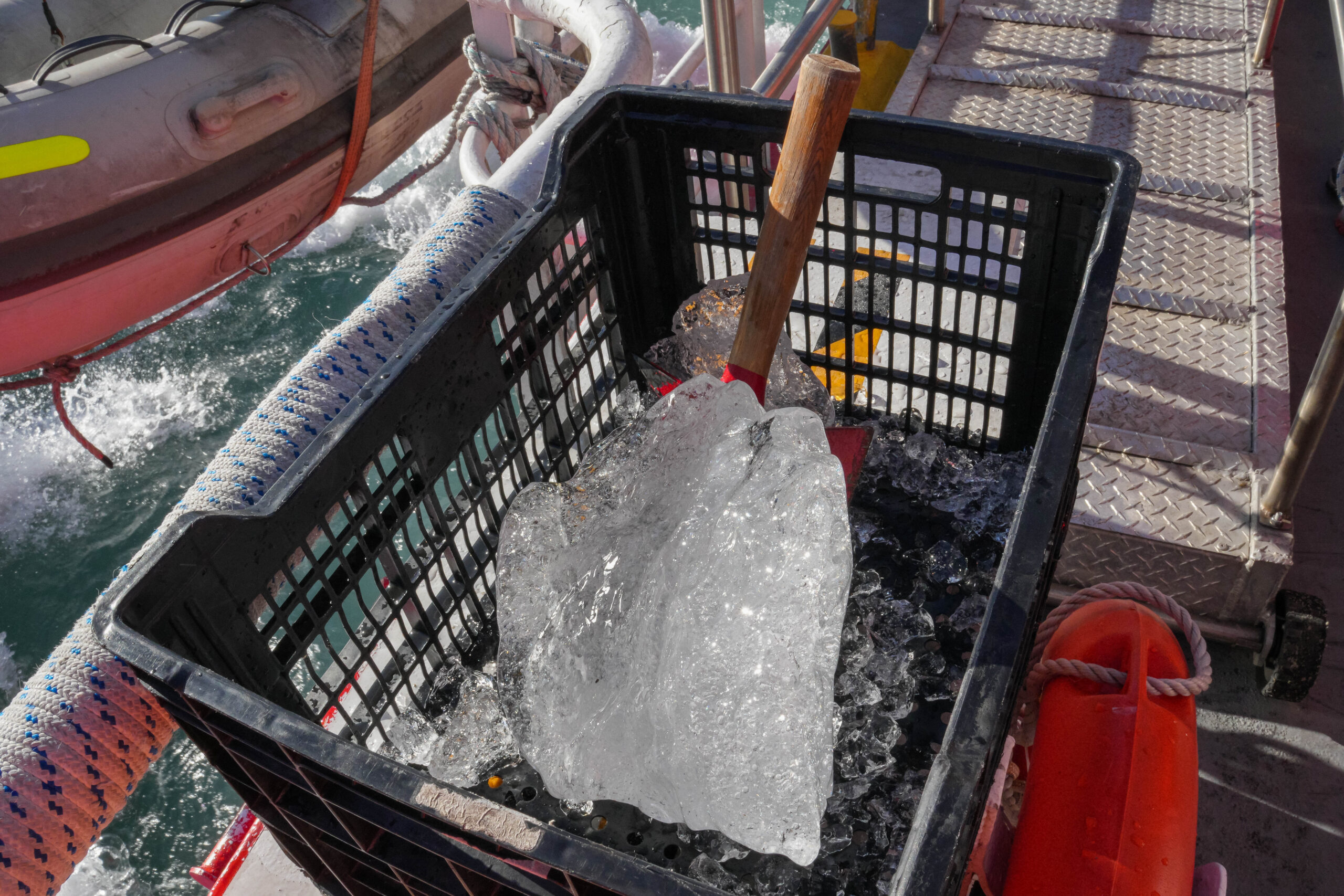
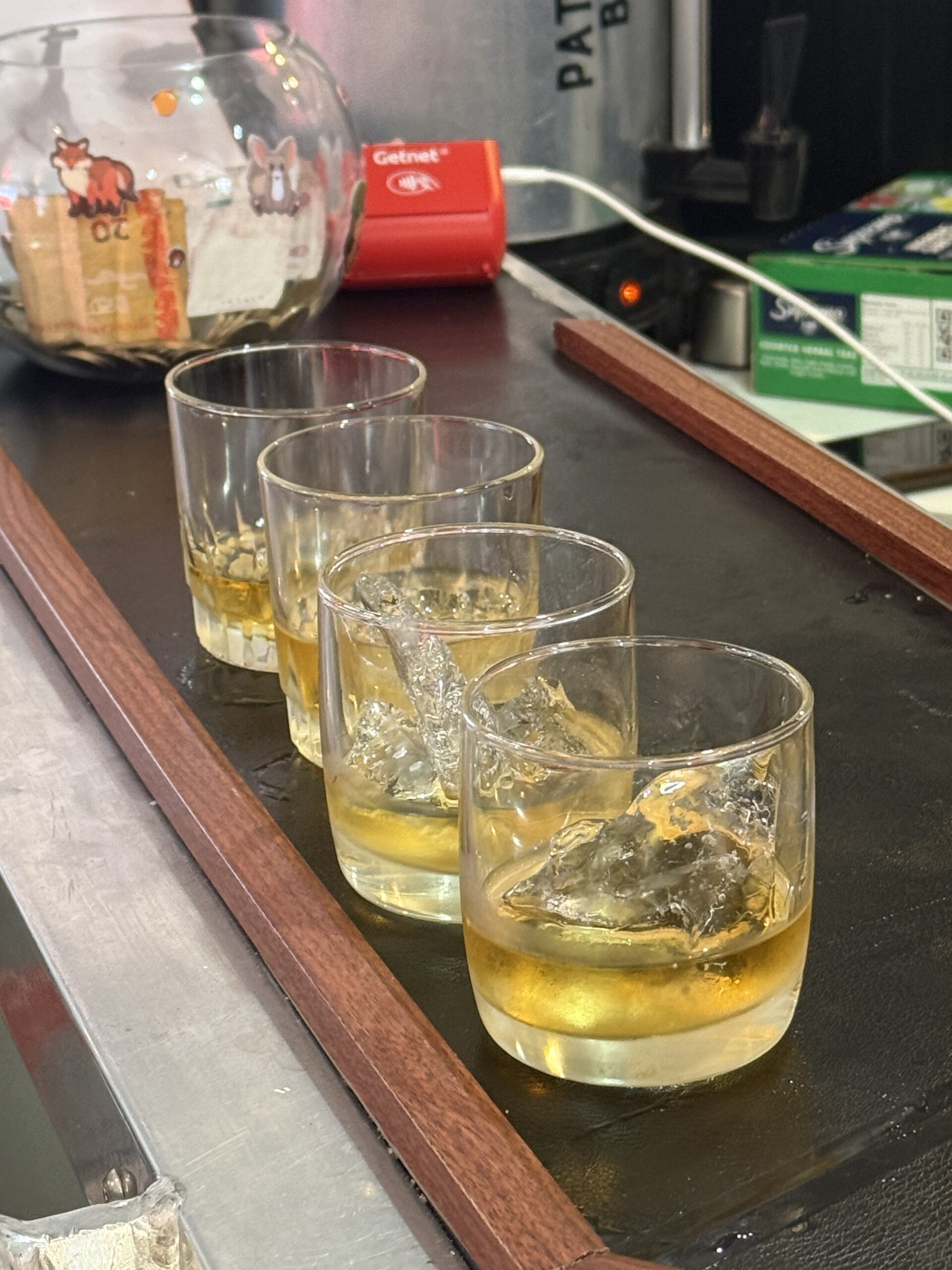
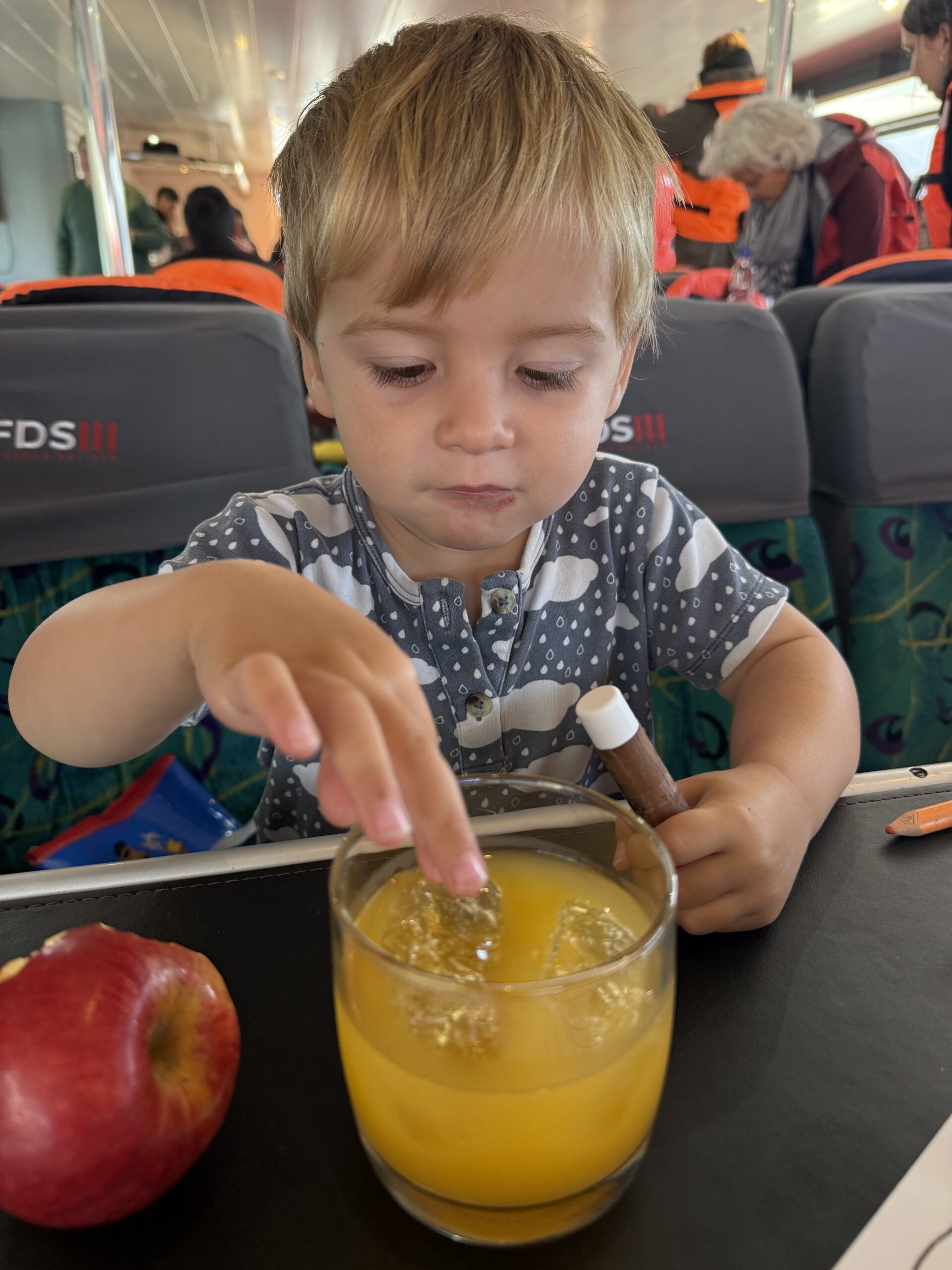
Our main event was the Balmaceda & Serrano Glacier tour with Fiordos Del Sur. This boat excursion left early, like 6am early, and visited 2 glaciers in the Bernardo O’Higgins National Park. Armed with a backpack full of activities and snacks, we boarded the boat for our six hour roundtrip tour. Our first stop was at the Balmaceda Glacier, where we departed the boat for a 30 minute hike up to a closer viewing point. This was our first close glacier experience and the kids were rightly impressed with the blue colors of the ice and cracking sounds from the shifting snow. On the way back, we went by the Serrano Glacier where the crew fished a small iceberg from the water and gave us whisky or juice with glacier ice in it. I swore it tasted colder than normal ice, but there could be some ambiance effect going on there.
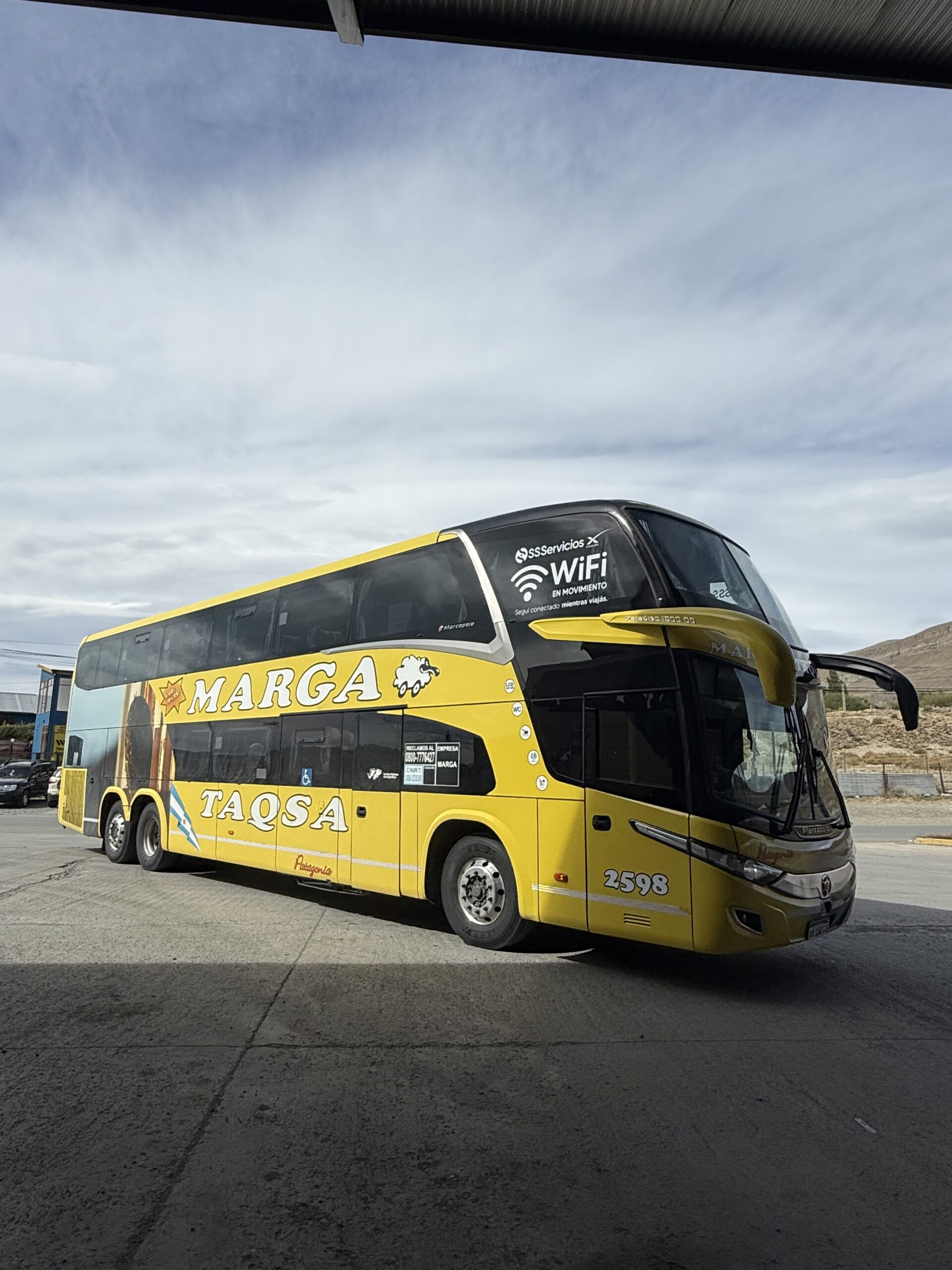
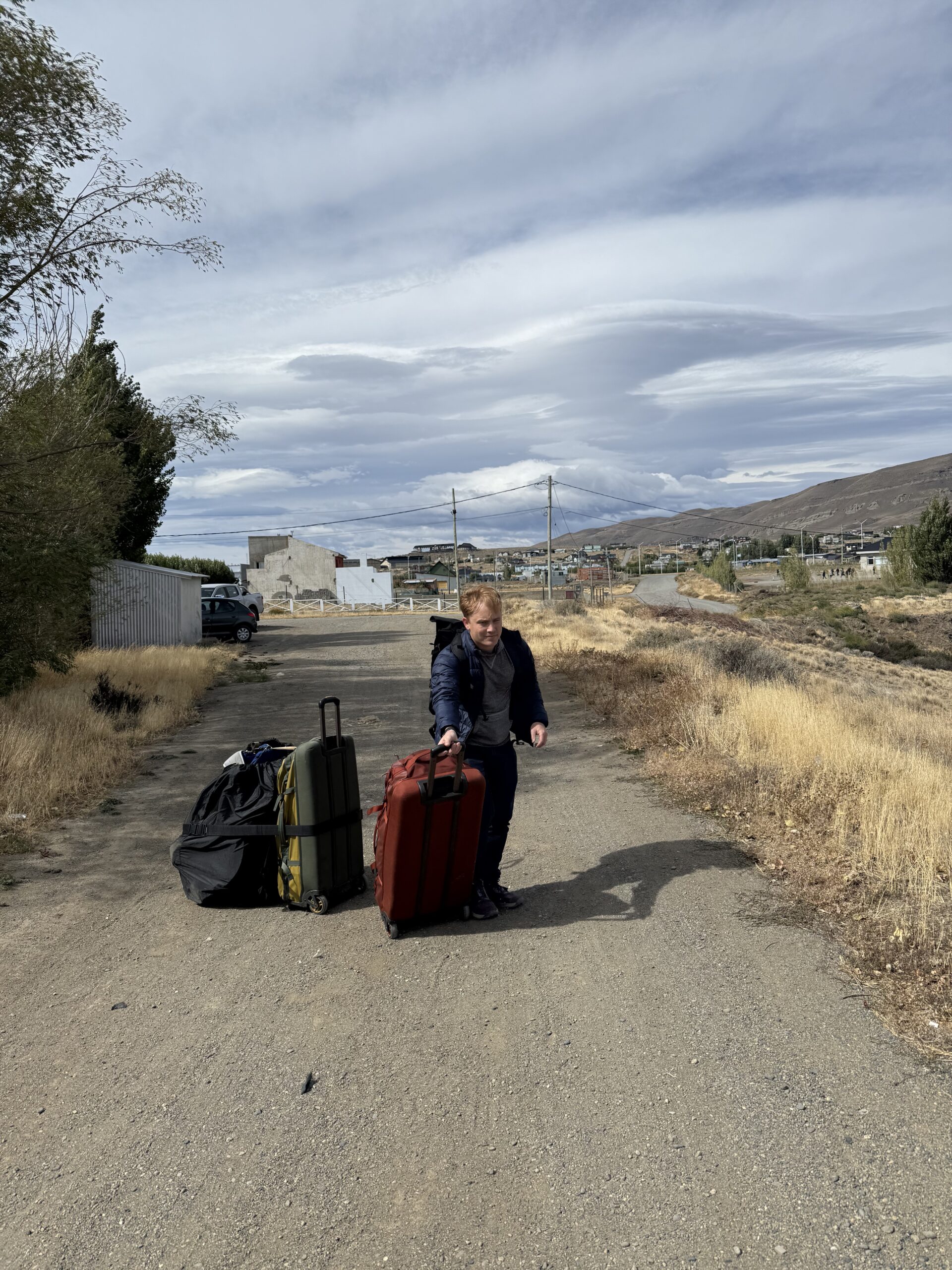
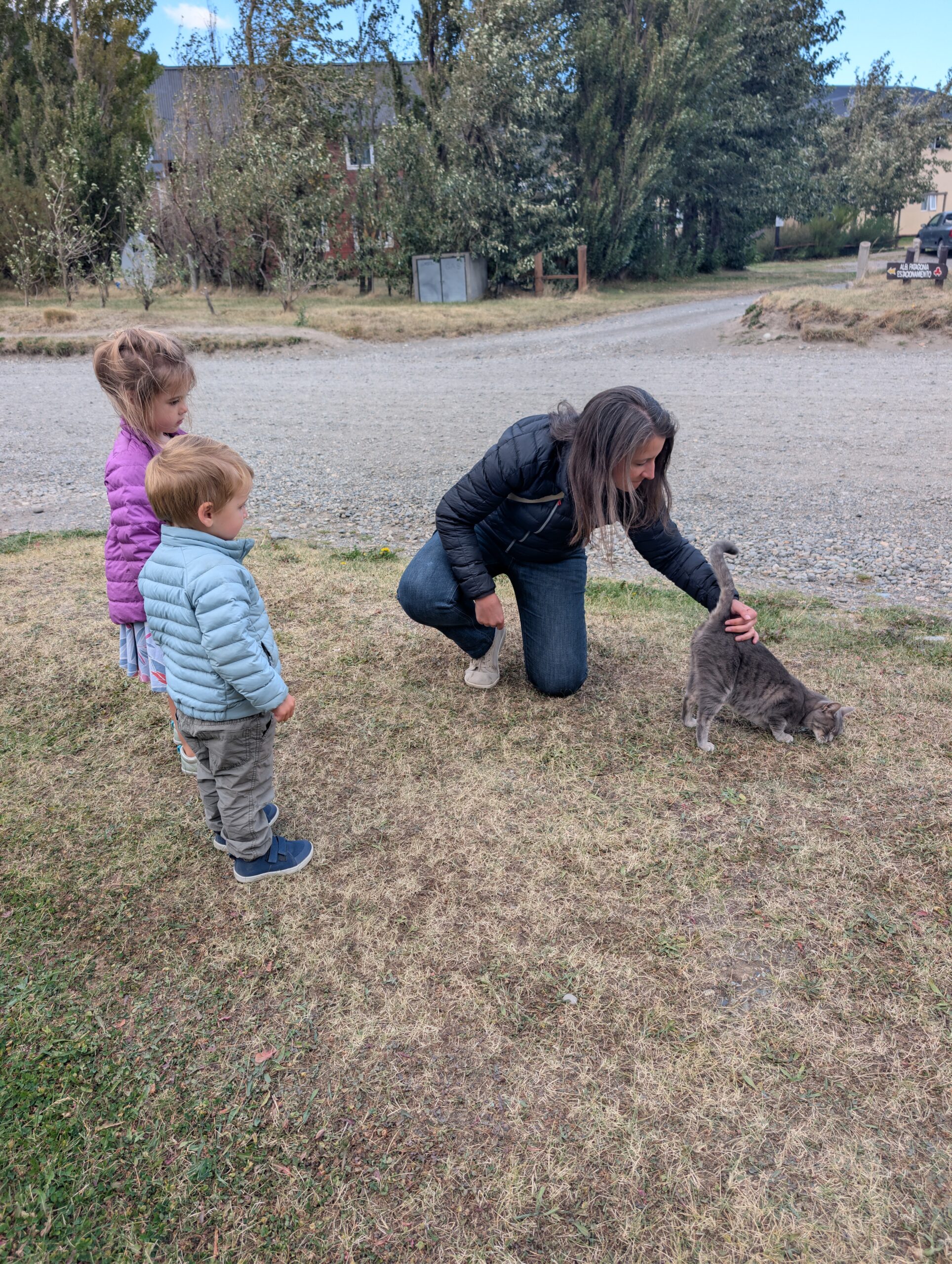
After three quick days we bid farewell to Chile and caught our 5 hour bus to Argentina. The signage was good and we soon found ourselves on board a bright yellow, double-decker bus heading for the border. The crossing went smoothly. Both the Chilean and Argentinian side graciously let us go in the priority line with our younger kids, though they were content to watch the sleeping cats sprawled over the open seats throughout customs & immigration. Shortly after that, the novelty of being on a double-decker bus wore off as the winds picked up and the amplified sway of the top deck made us all a bit queasy. A few hours later we arrived in El Calafate and pulled our luggage begrudgingly along the half-kilometer dirt roads to our next stay. I was pretty grumpy by the end of it.
El Calafate, Argentina
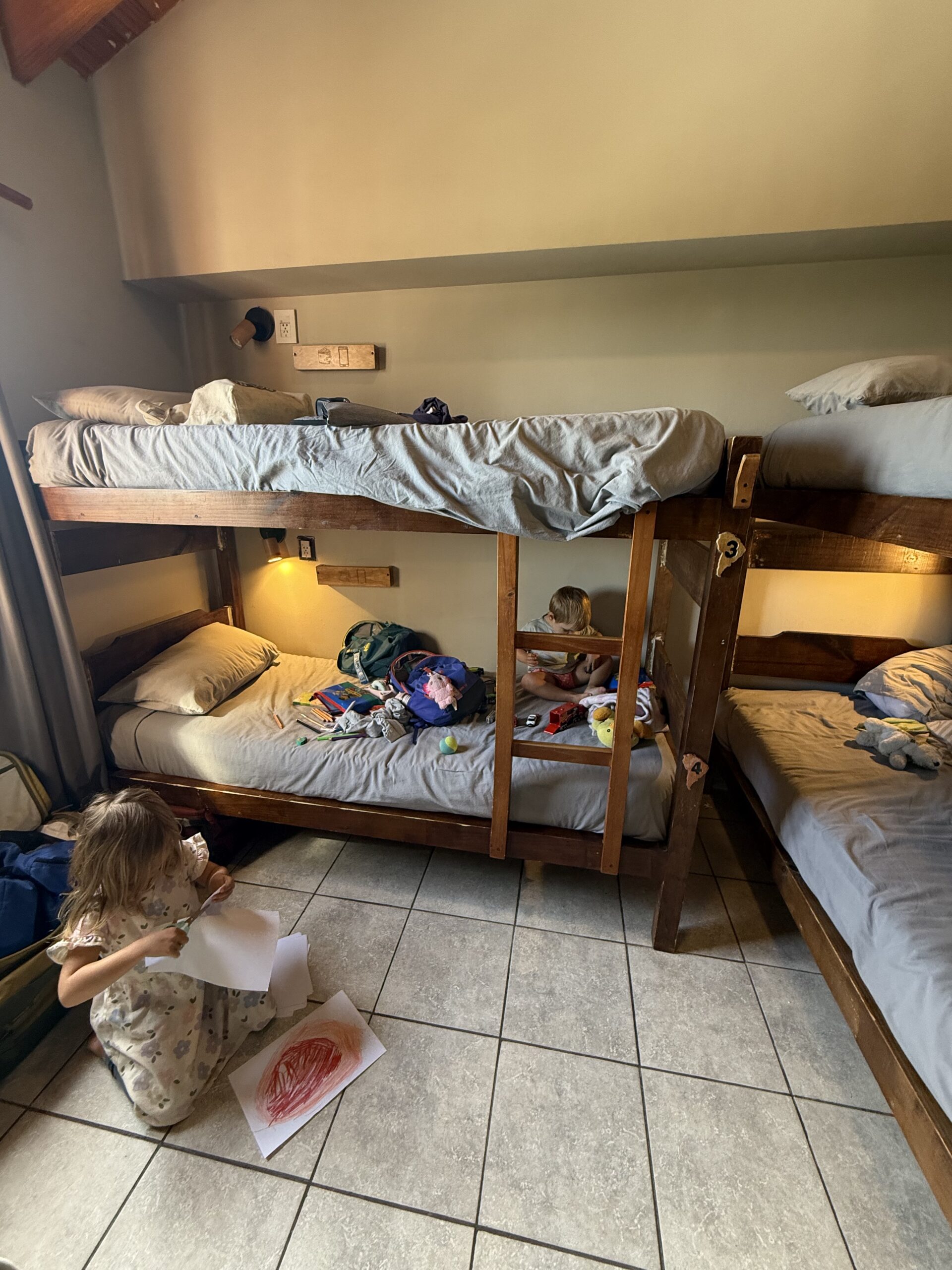
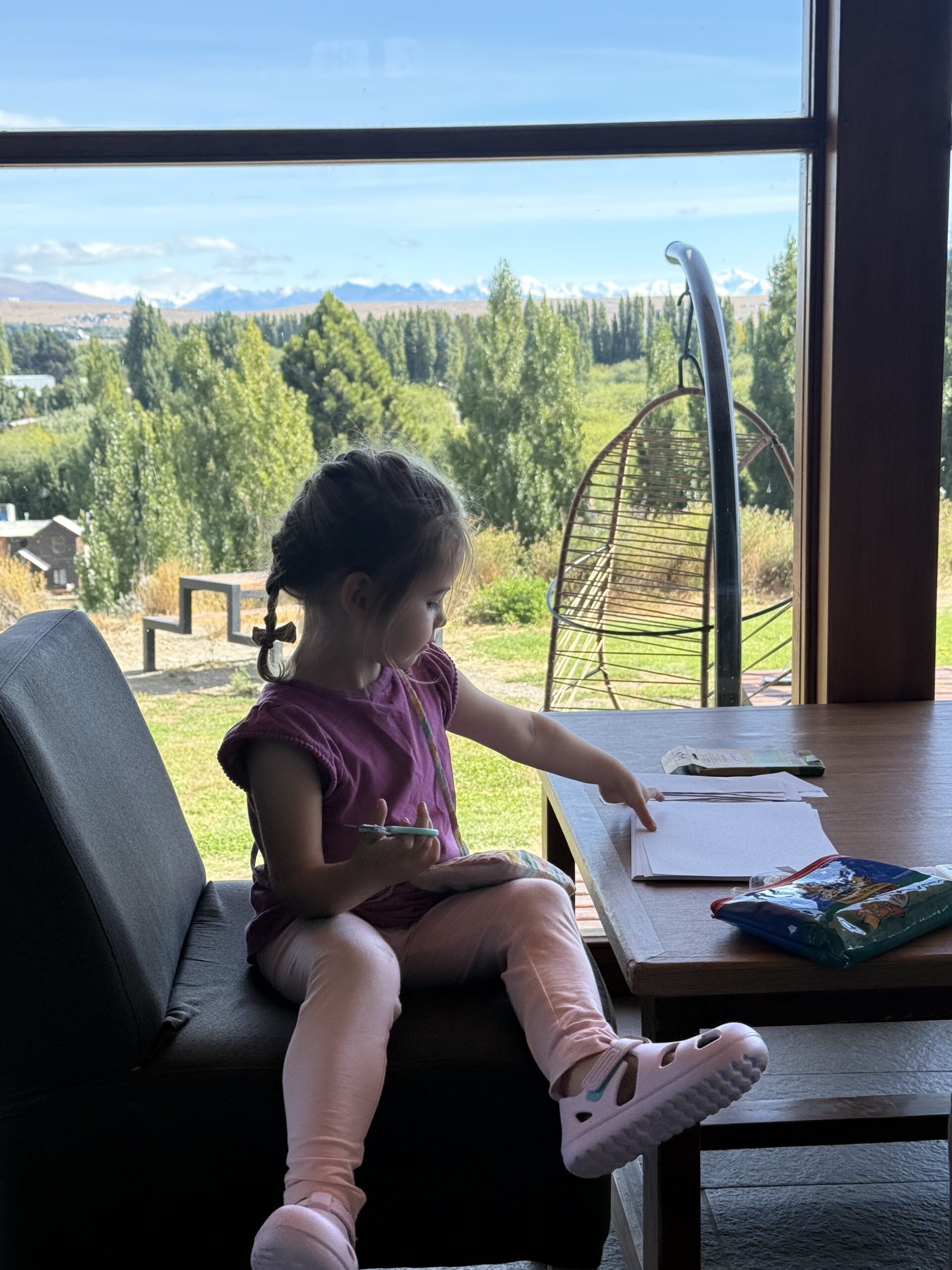
El Calafate is a well connected town and jumping off point to explore the greater Patagonia area with tons of tourist infrastructure. We tried out another bunkroom for lodging, this time at the America Del Sur Hostel, and enjoyed the common living areas with all of the 20-something backpackers getting ready to head out on multi-day treks. I was impressed with the attention Emmett and Mae gave to the communal copies of Chess and Scrabble despite not actually knowing the rules. I think I gathered that the horses (aka knights) were eating the hay (aka Scrabble tiles).
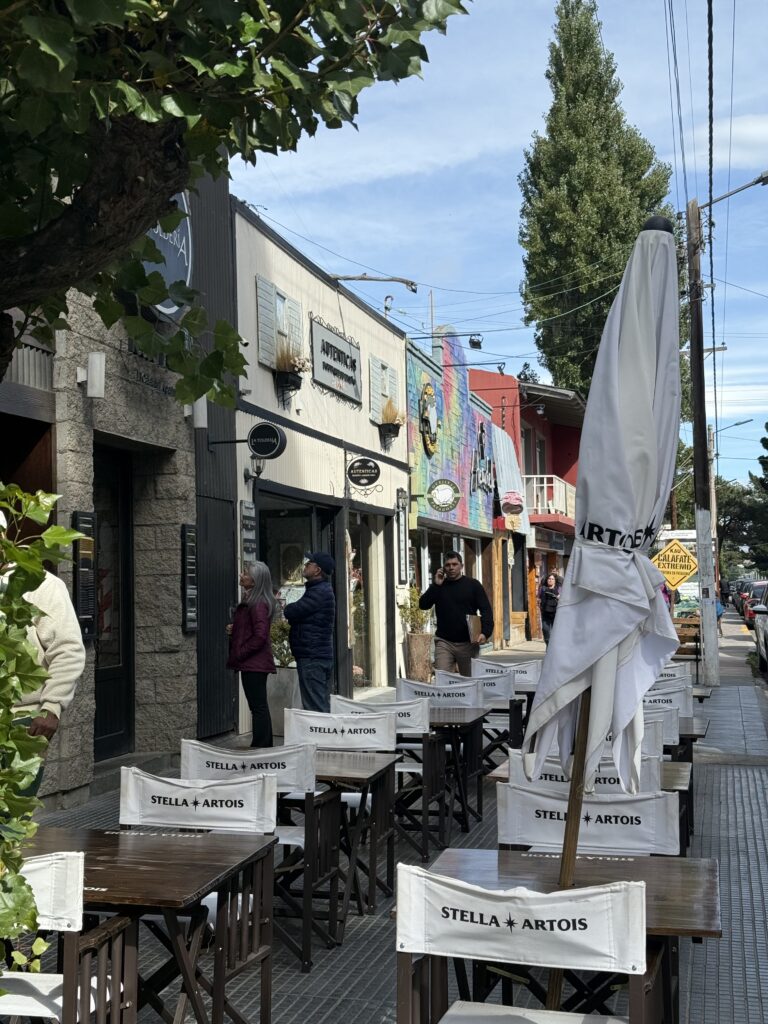
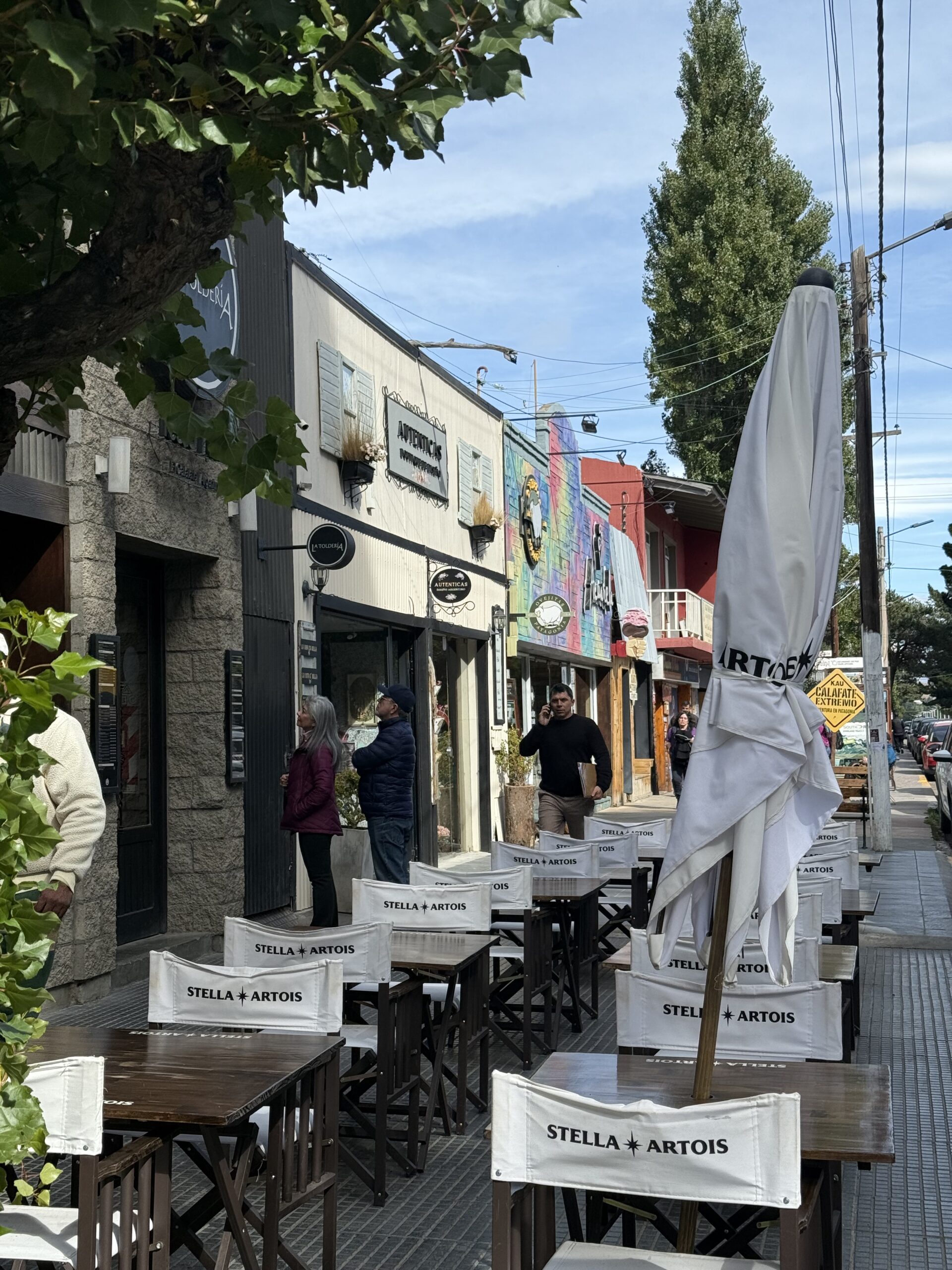
The main street of El Calafate is tree lined and a great place to stroll. In addition to the countless tour excursion providers and souvenir shops, we found some delicious food. We had our first intro to Italian in Argentina at Buenos Cruces Pasta Bar and were thoroughly impressed. Argentina has the largest population of Italians outside of Italy, and their expertise in all things pasta, pizza and gelato shows.
Additionally we tried another local item for the first time, Yerba Mate. Mate, is a caffeine rich herbal drink made from the leaves of the namesake plant and is everywhere in Argentina, Uruguay, Paraguay and parts of Brazil. It is traditionally drank out of a dried gourd with a metal straw with filter built in, called the bombilla. Being big tea drinkers, Madeline and I were excited to try it and of course became obsessed. More on that later as we progress through South America, but we are definitely coming back to the States with a few gourds and bombillas.
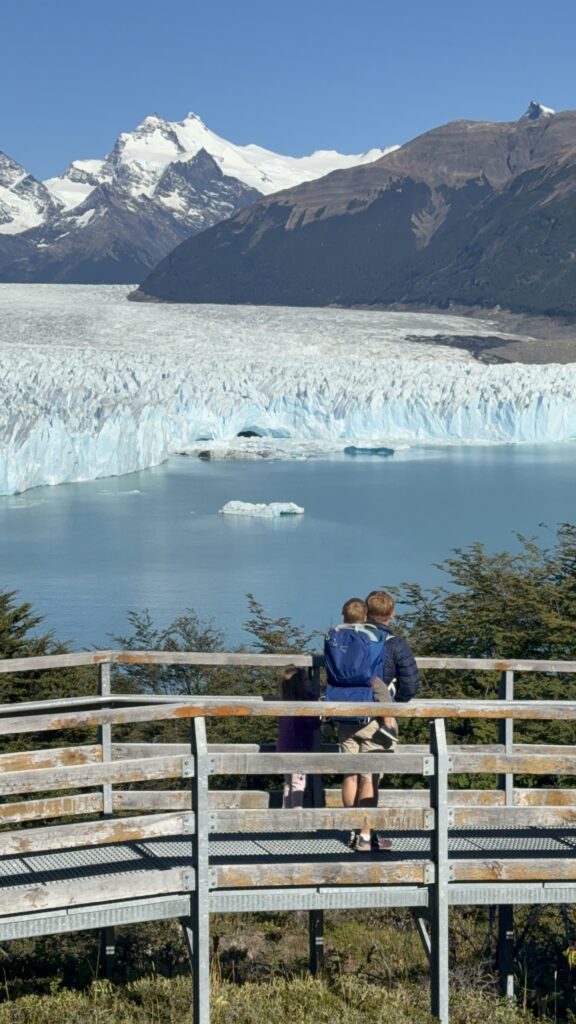
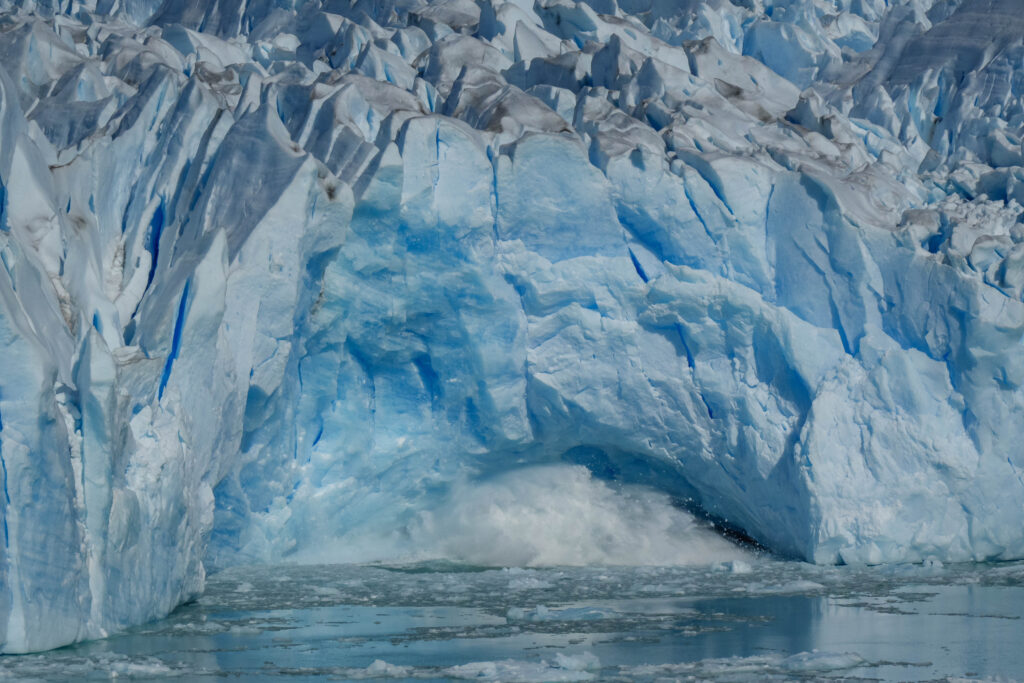
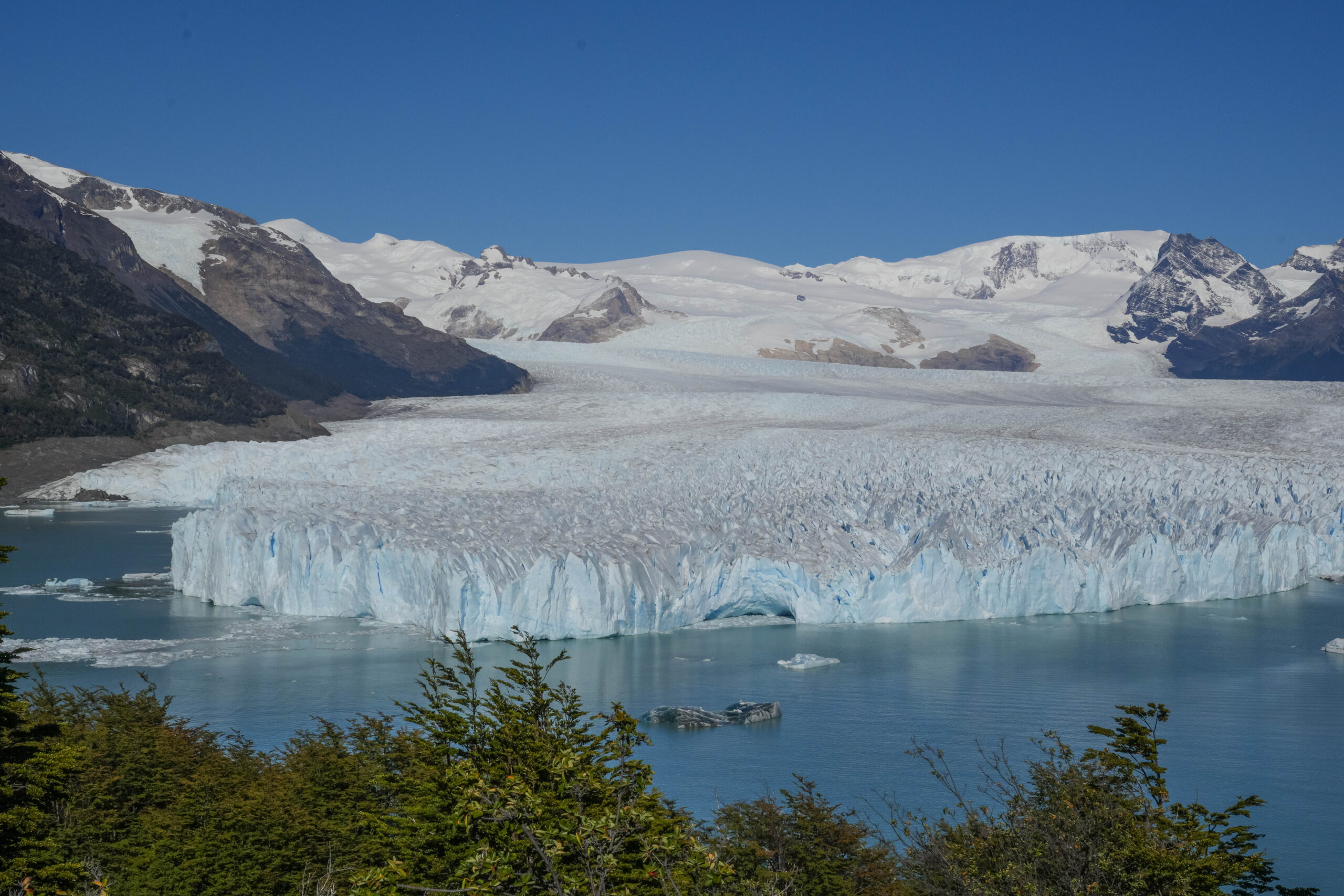
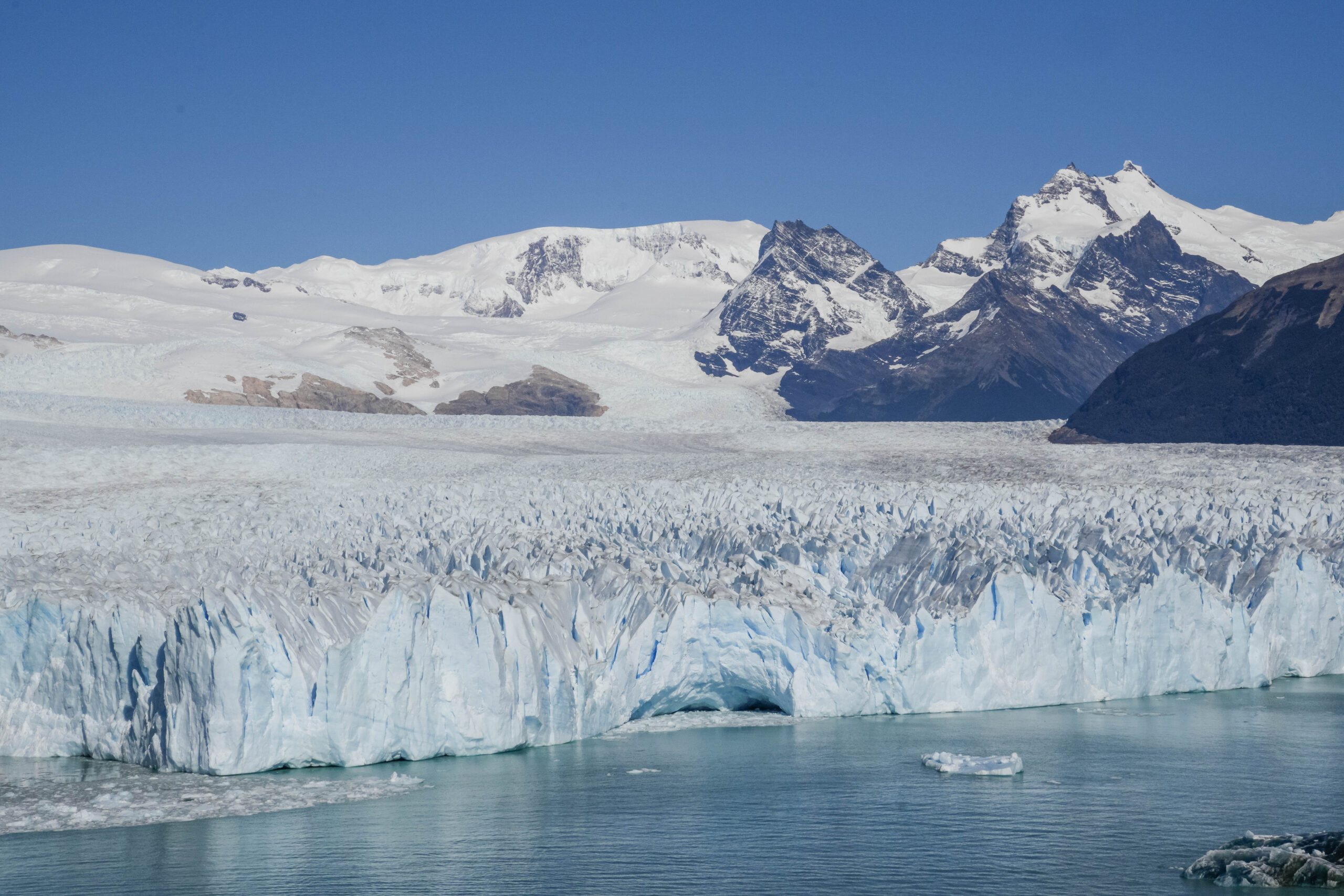
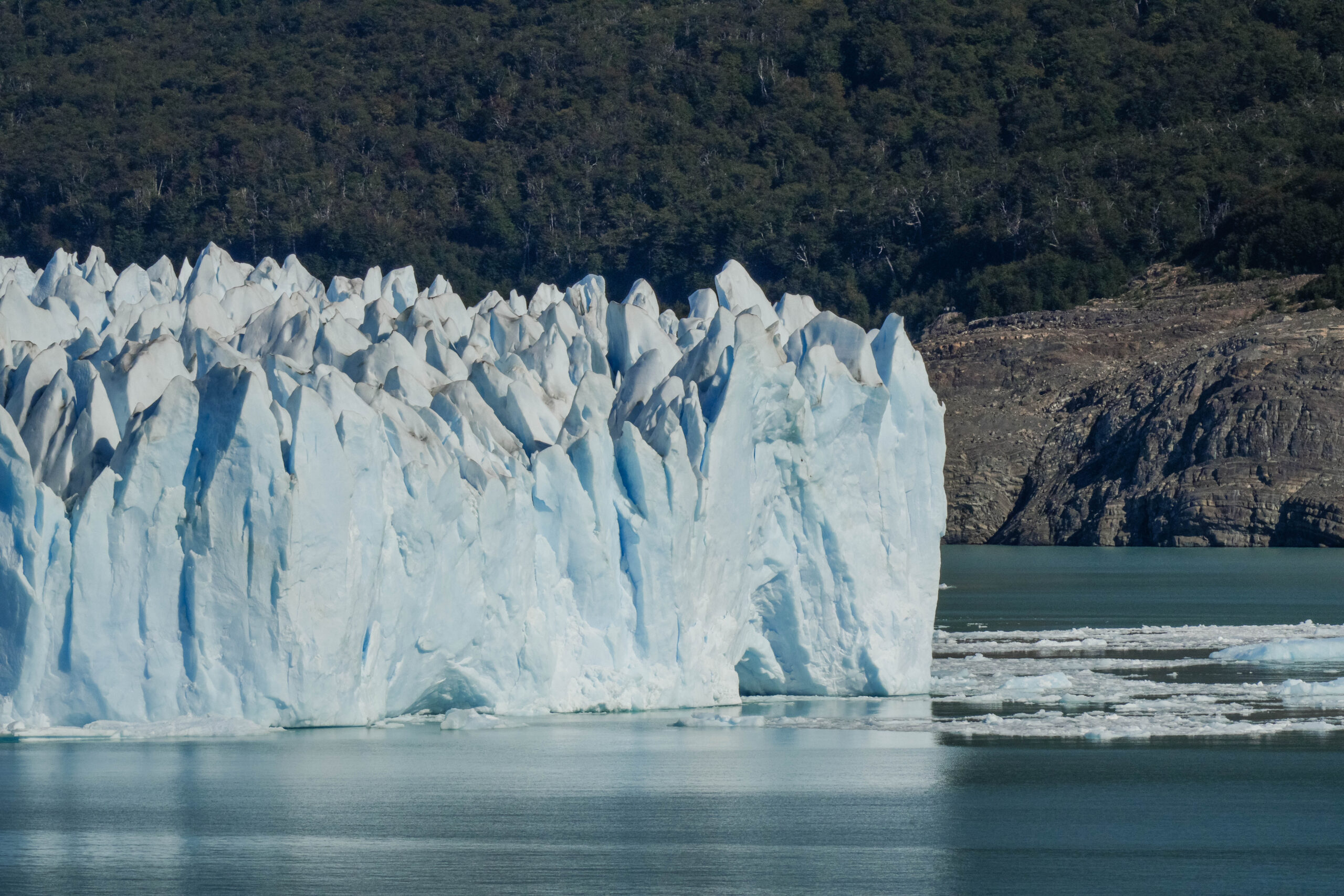
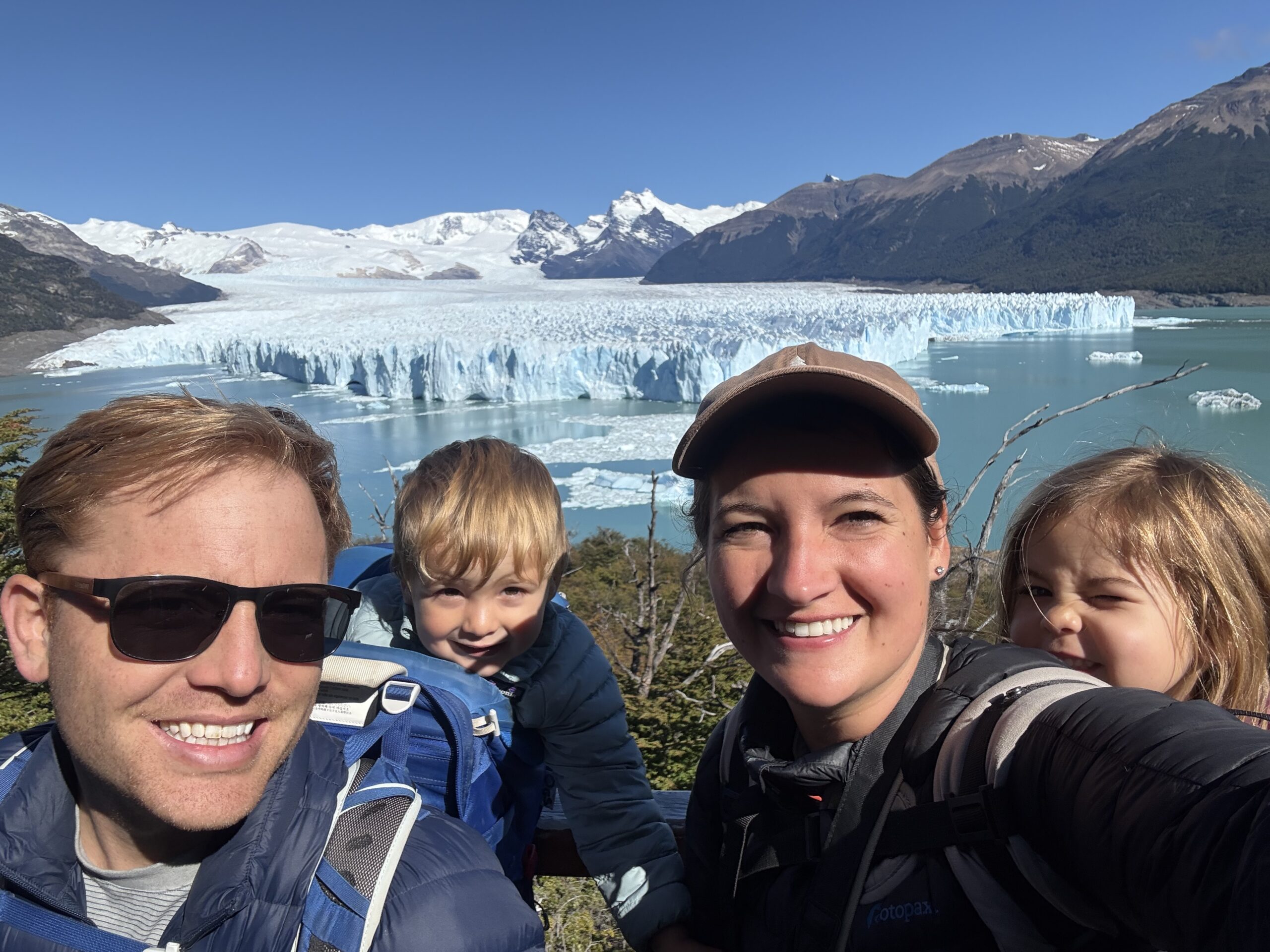
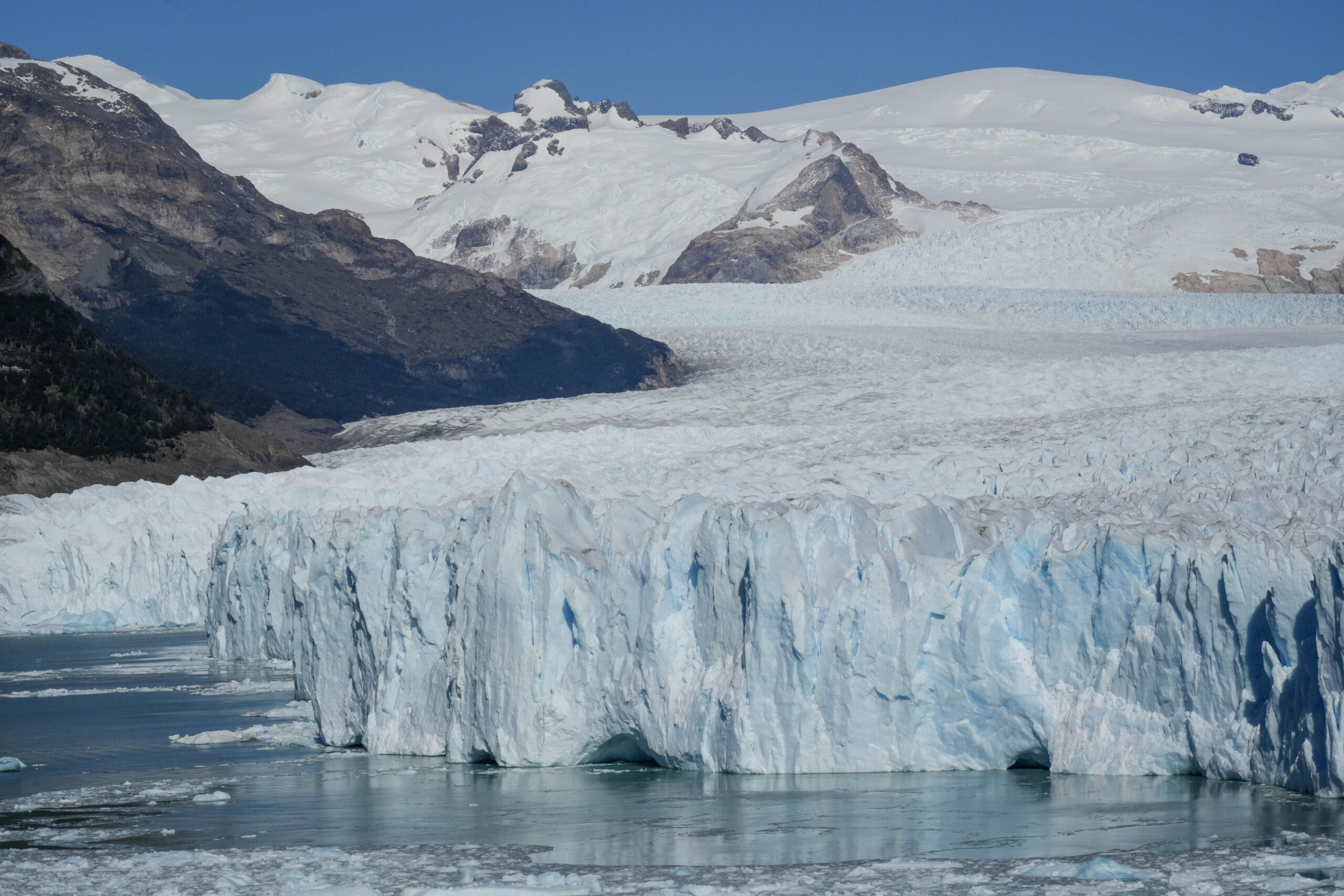
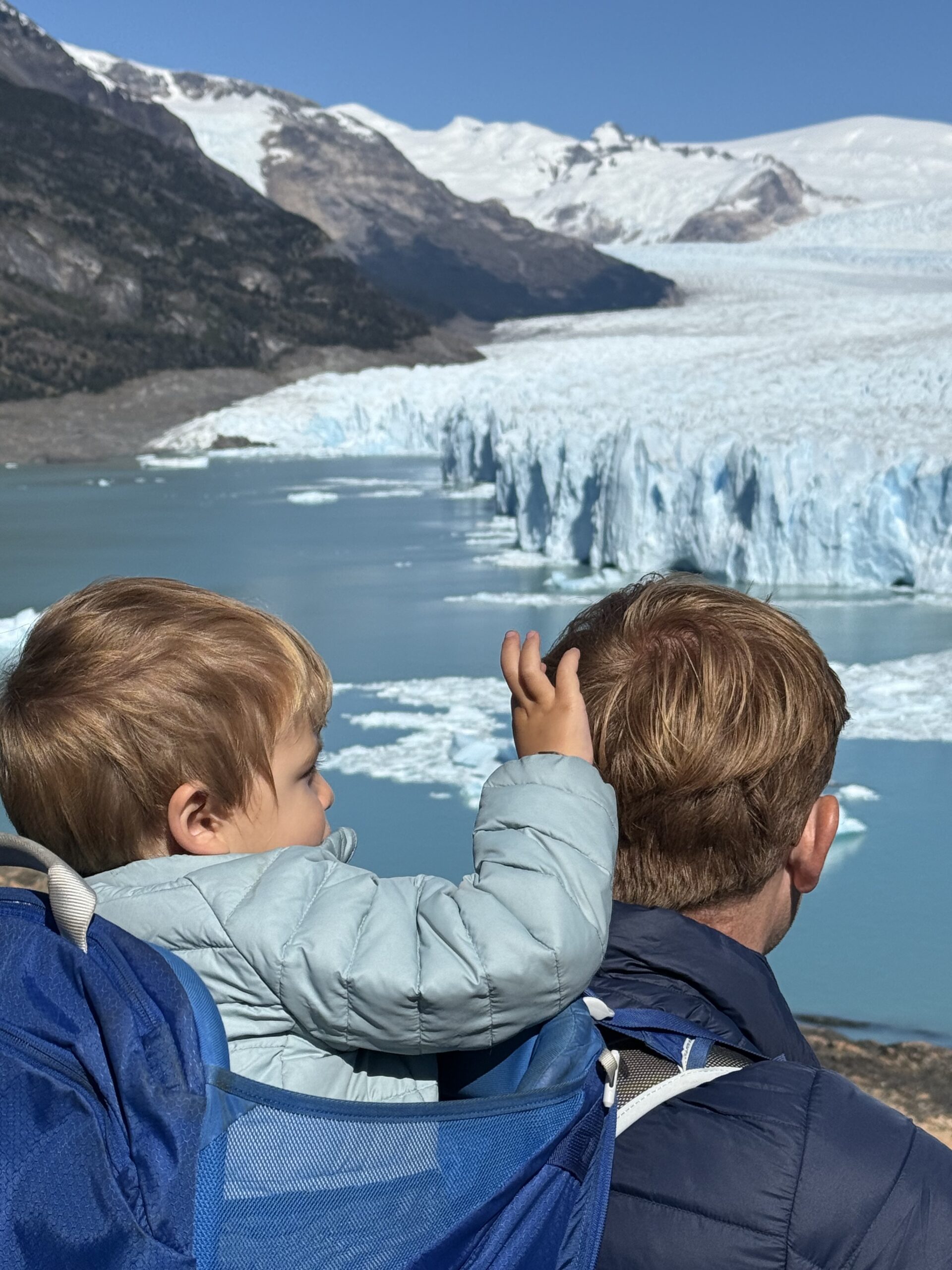
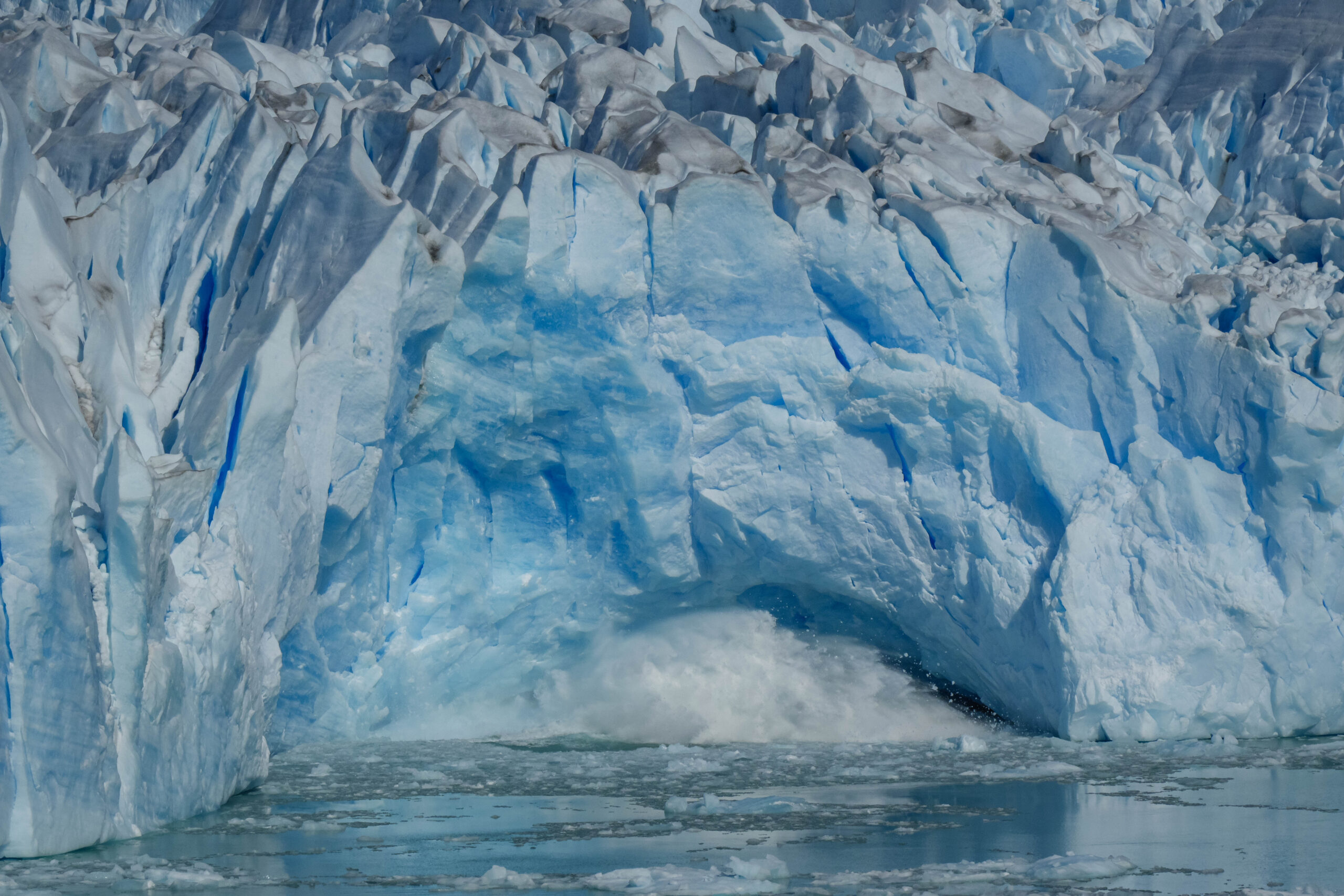
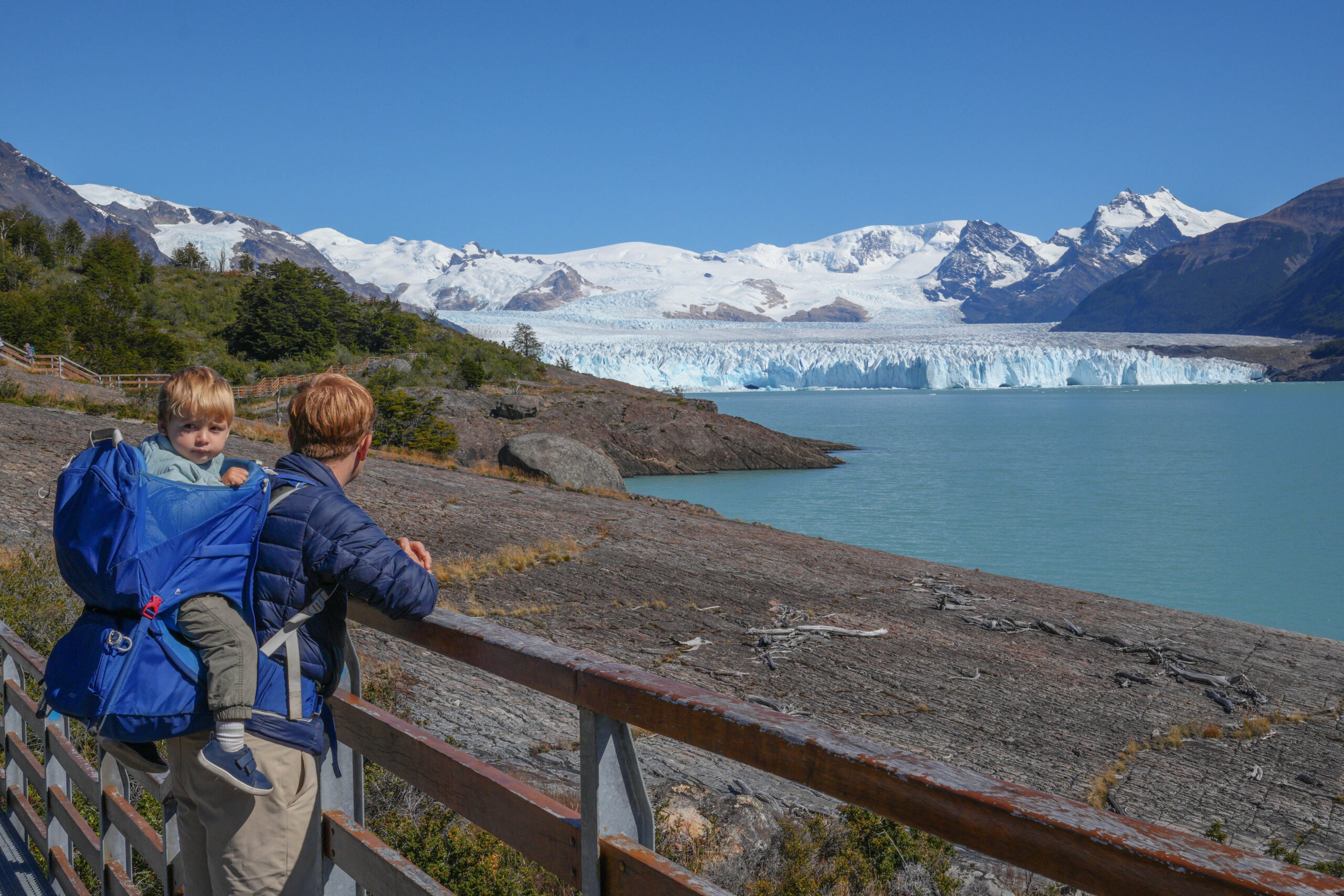
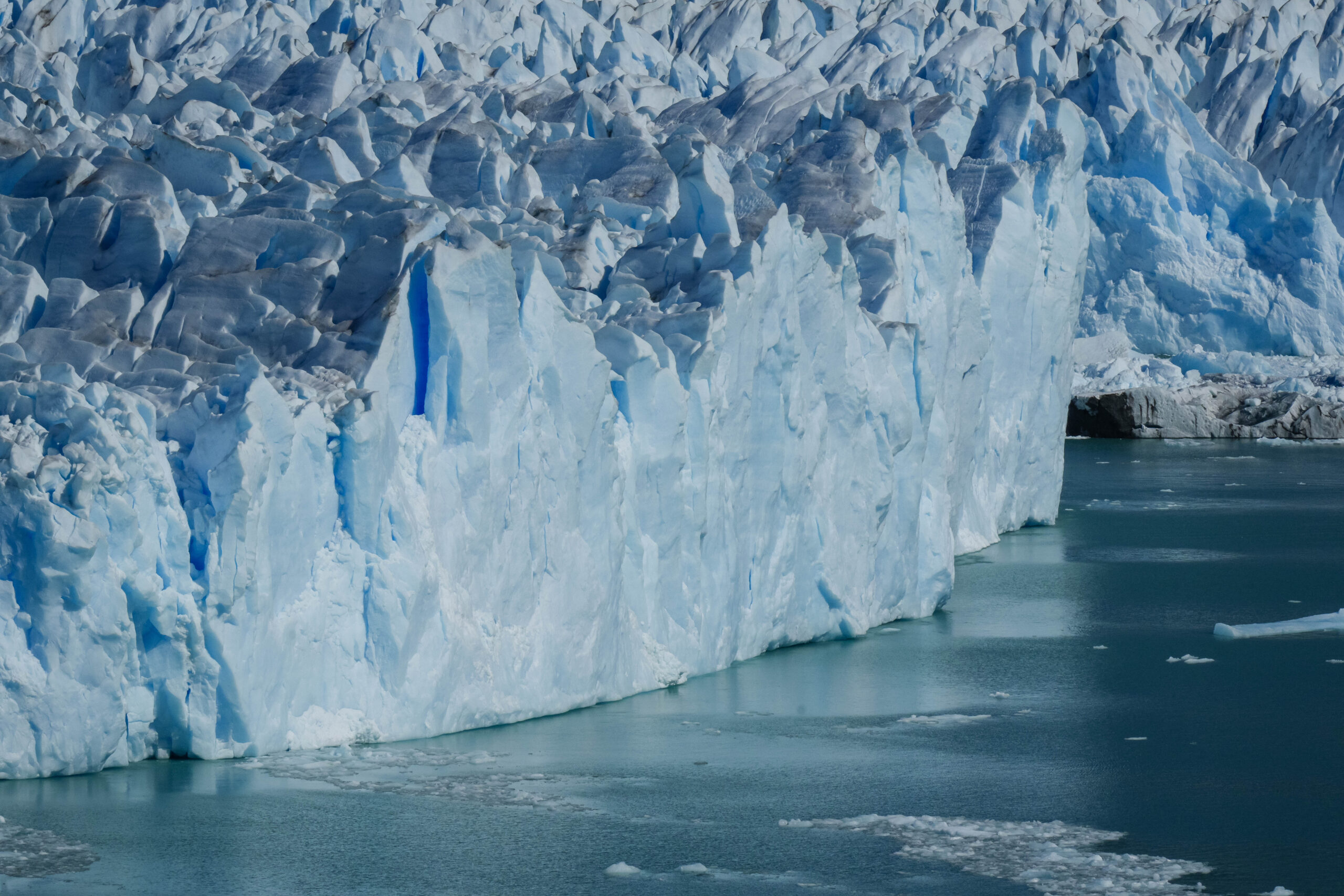
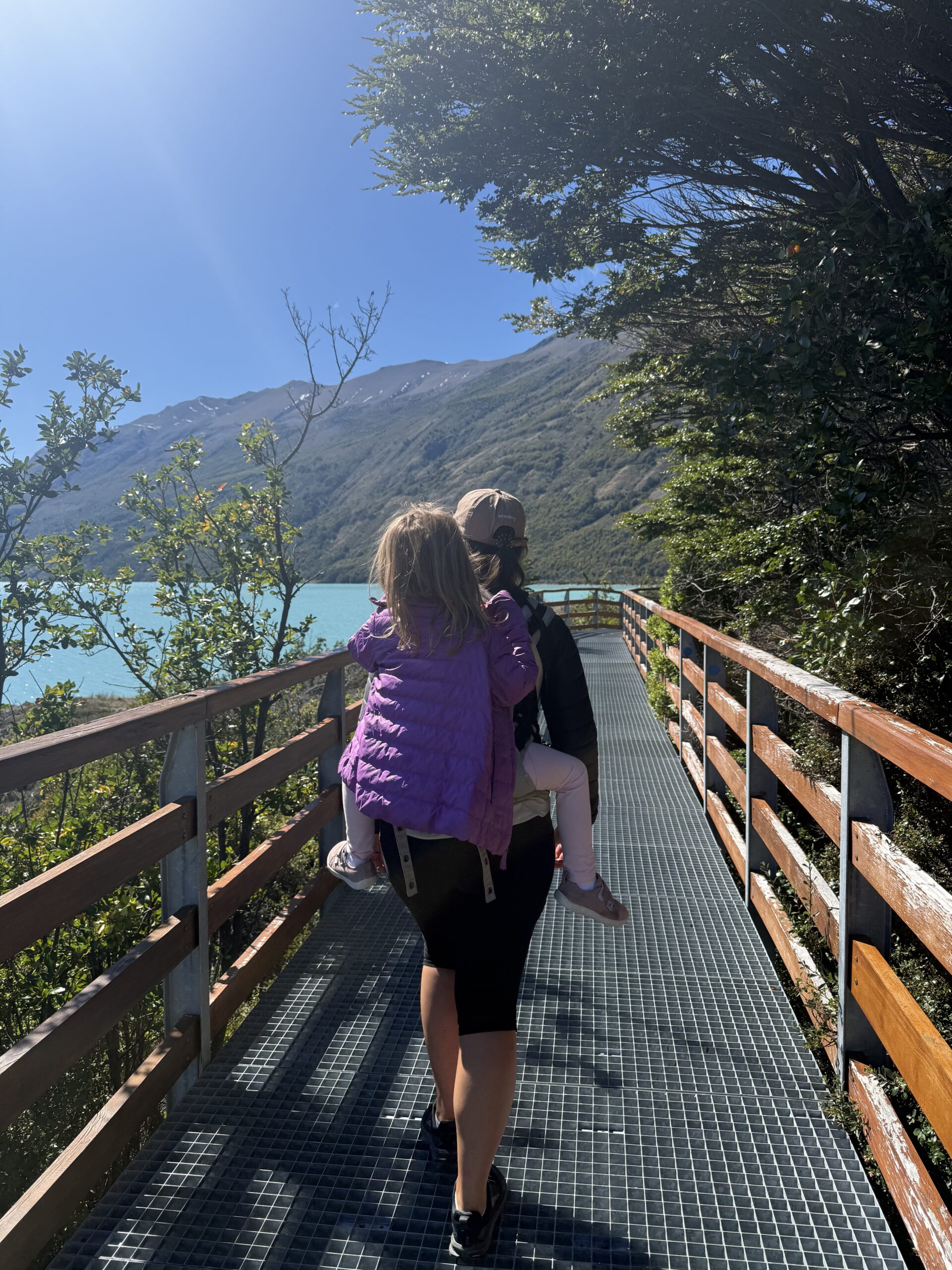
Finally, on to the main attraction of the area. Located in the Los Glacieres National Park, The Perito Moreno Glacier is one of the few glaciers in Patagonia that hasn’t retreated from global warming (yet). While it’s only the third largest in Patagonia, it is the most accessible and the observation decks and boardwalks viewpoints were truly amazing. We spent hours watching the walls of ice and listening for the loud *cracks* as huge chunks broke off in to the lake, reverberating through the valley. Neither kid nor adult wanted to leave and I can say it’s in my top five things we’ve seen all year. Our 5 year old even said it was her favorite day – better than Disneyland (gasp). We also visited the Glaciarium (aka Glacier Museum) along the way but it unfortunately felt dated and in need of maintenance. Seeing the Perito Moreno Glacier is a must, but I’d only do the museum if you have spare time.

El Chalten
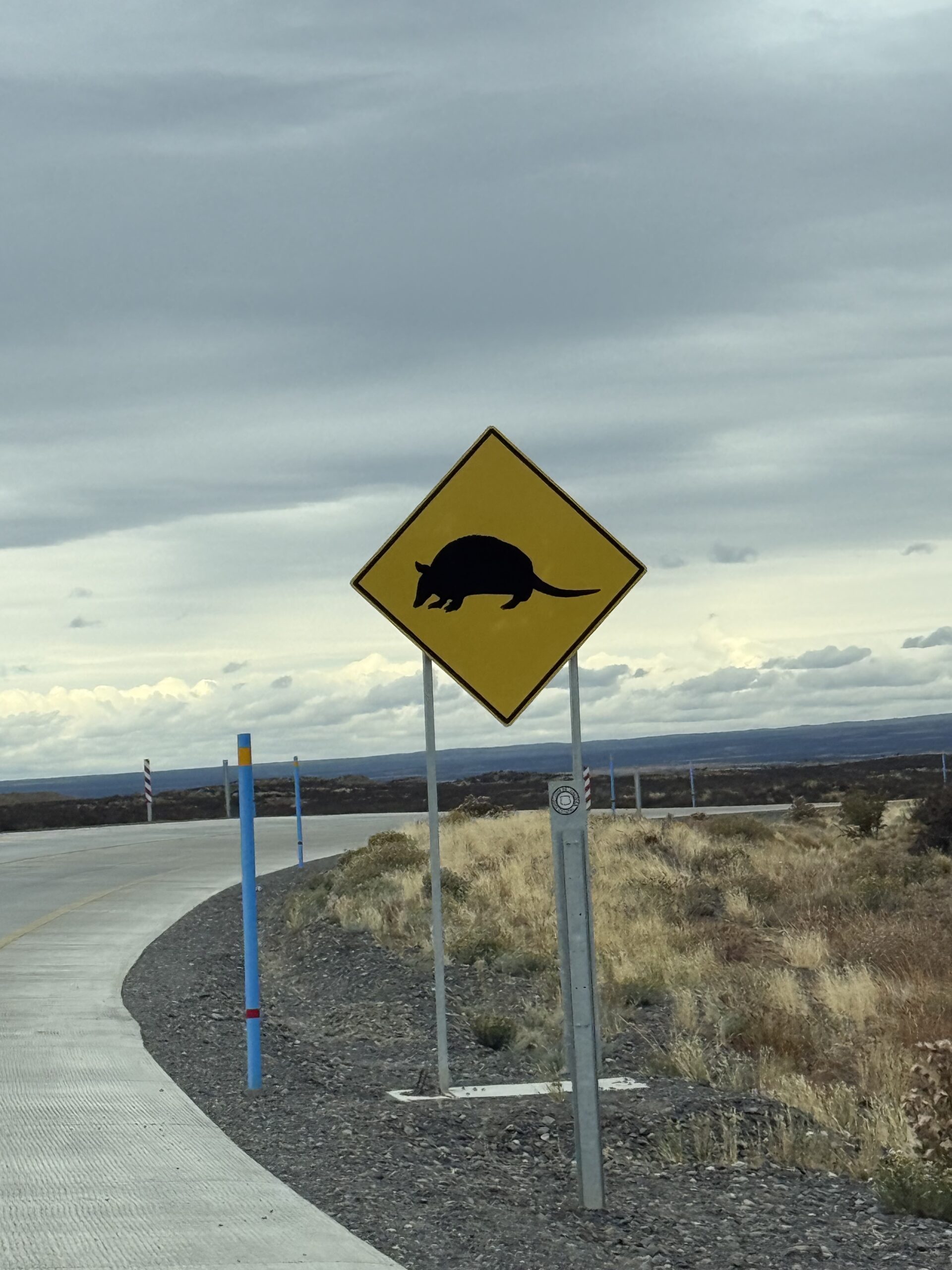
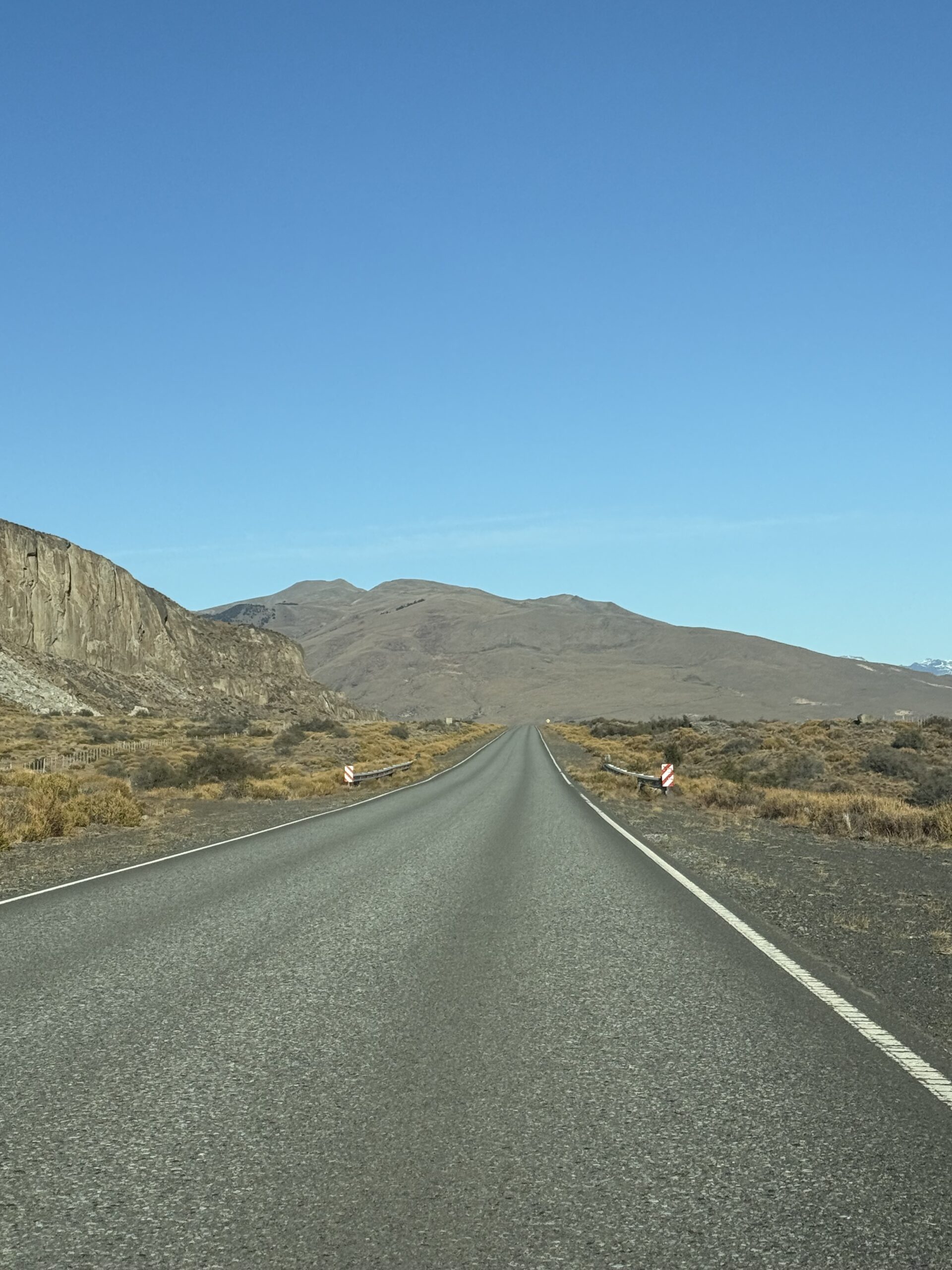
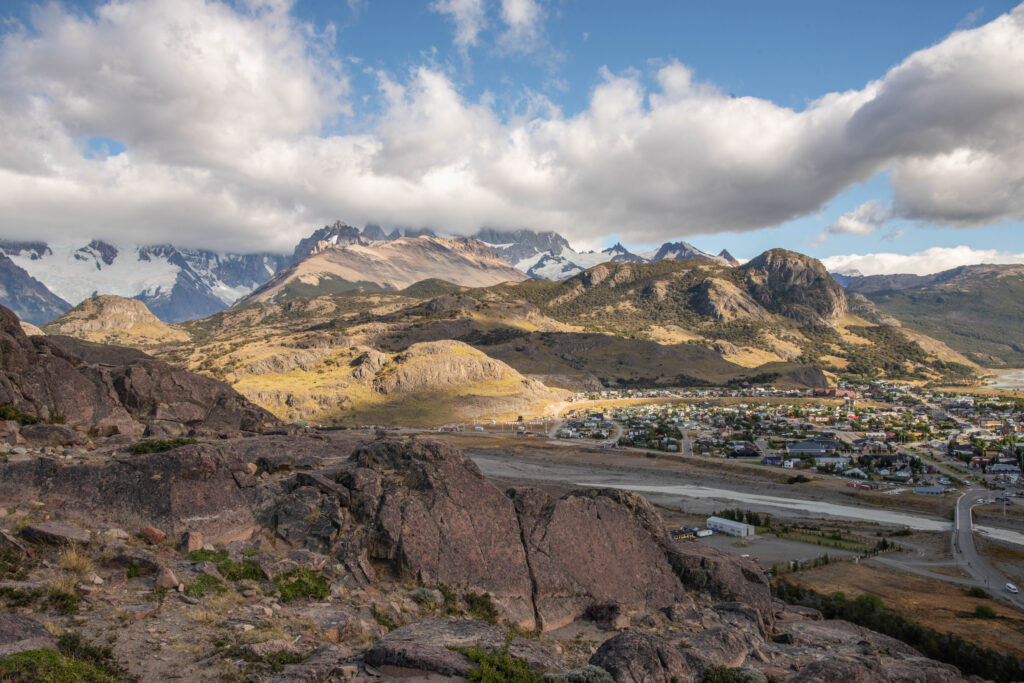
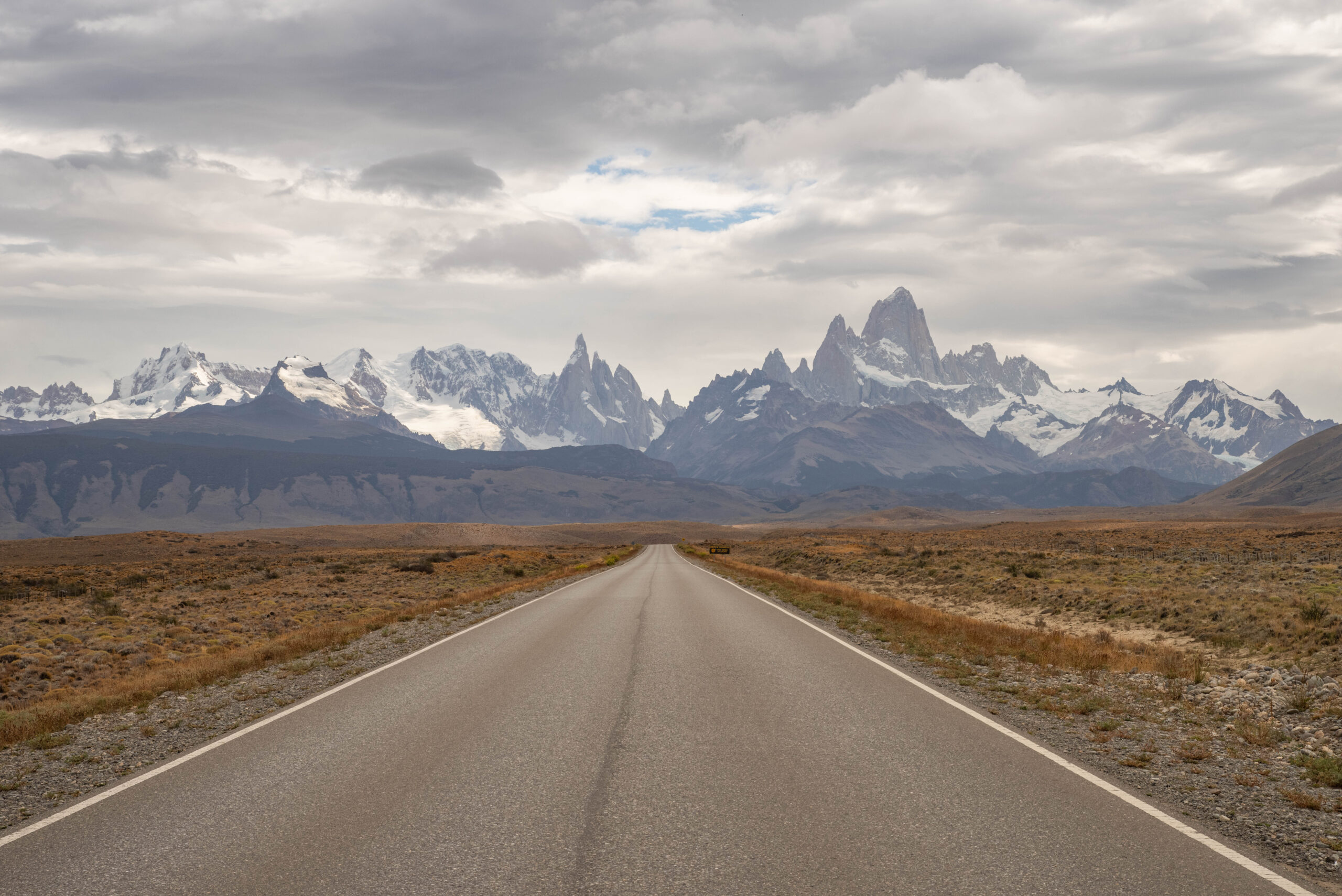
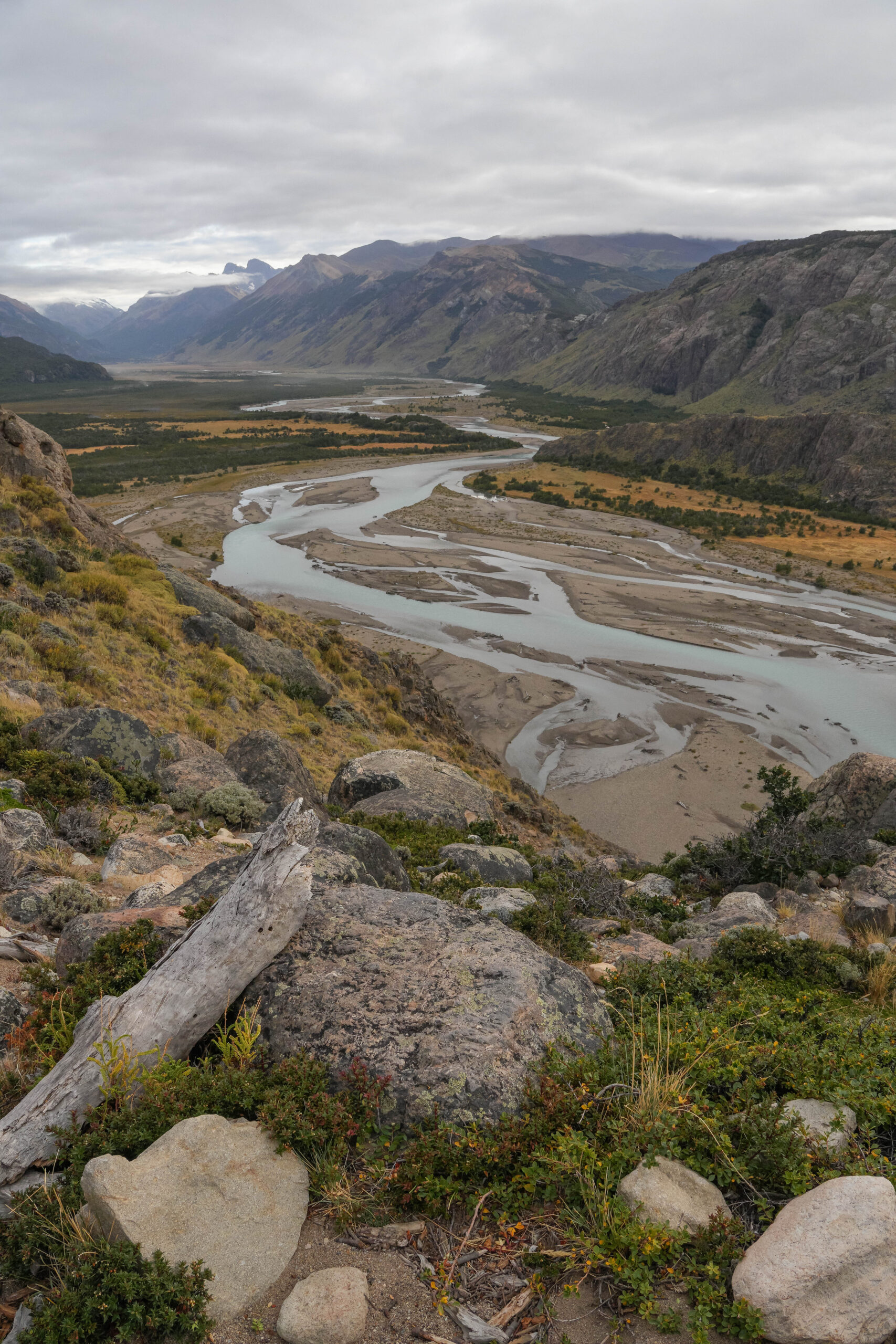
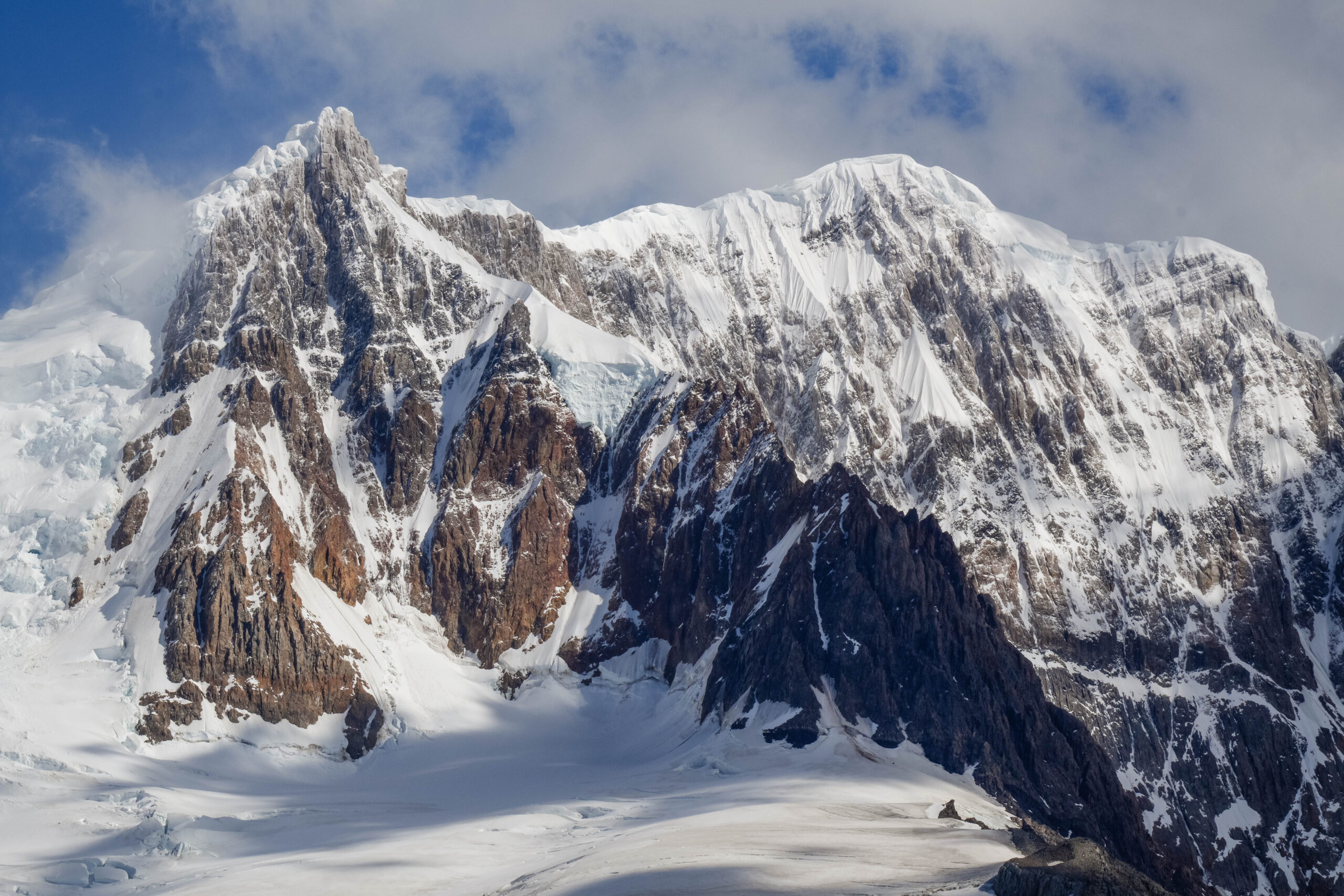
Our final and longest stay in Patagonia was in El Chalten, a town literally built in the 1980s for hiking tourists. It’s a journey to get here, traveling 3 hours through high plains where the only signs of life were some stray guanacos and one armadillo (first time I’ve ever seen one in the wild!) that I almost ran over. Still, the journey is worth it because you end up in a town on the doorstep of some of the best hiking in the World.
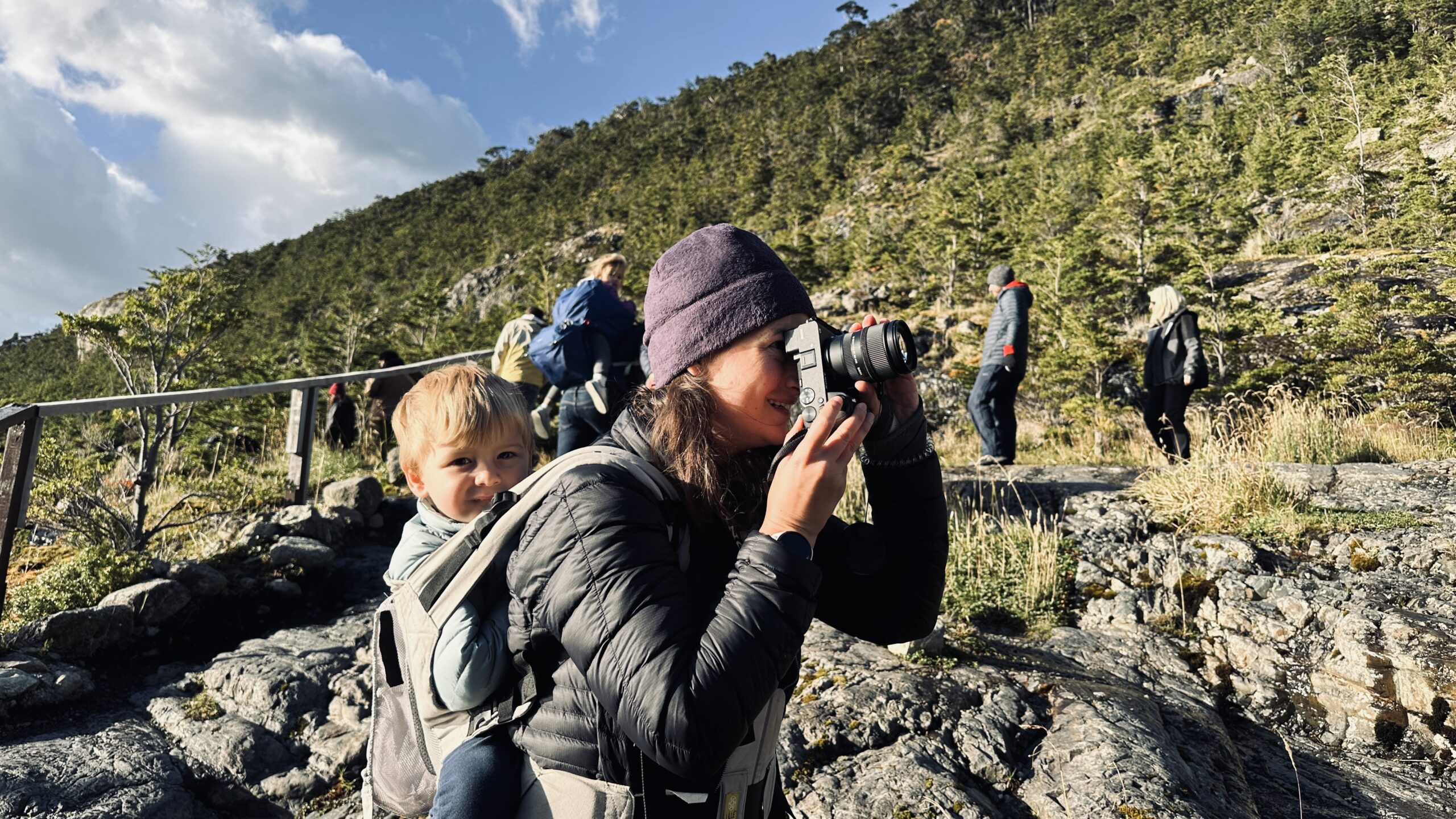
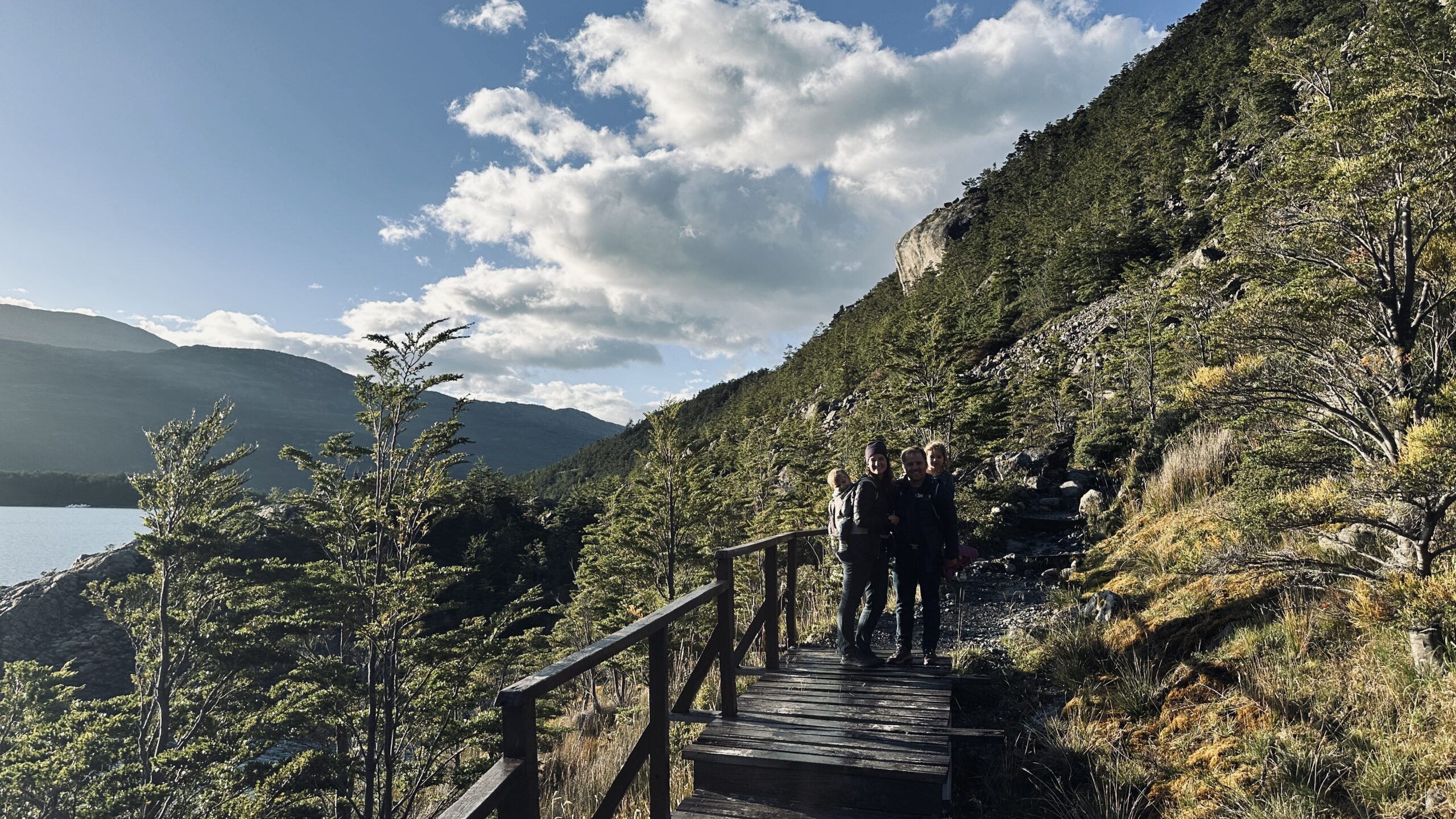
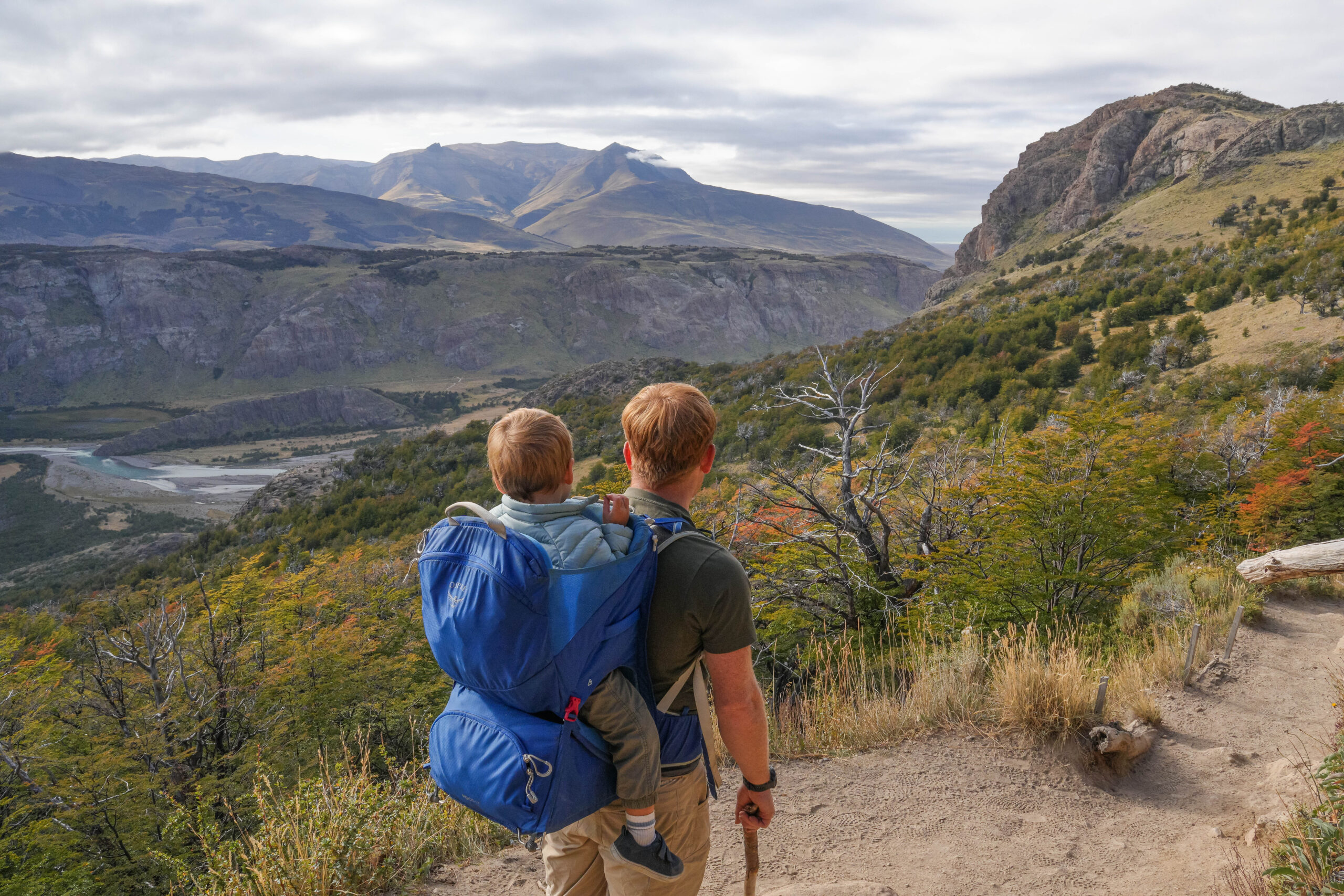
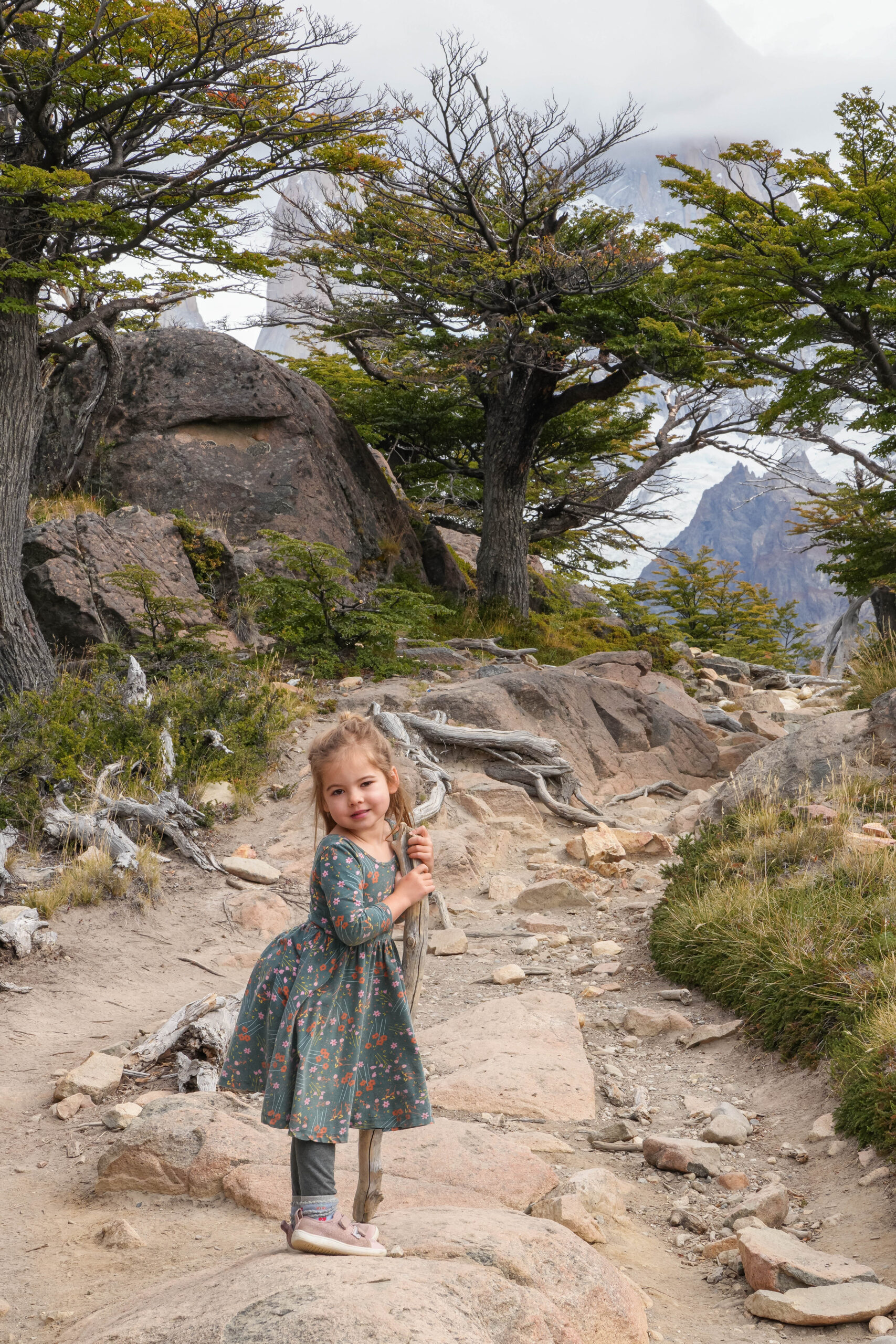
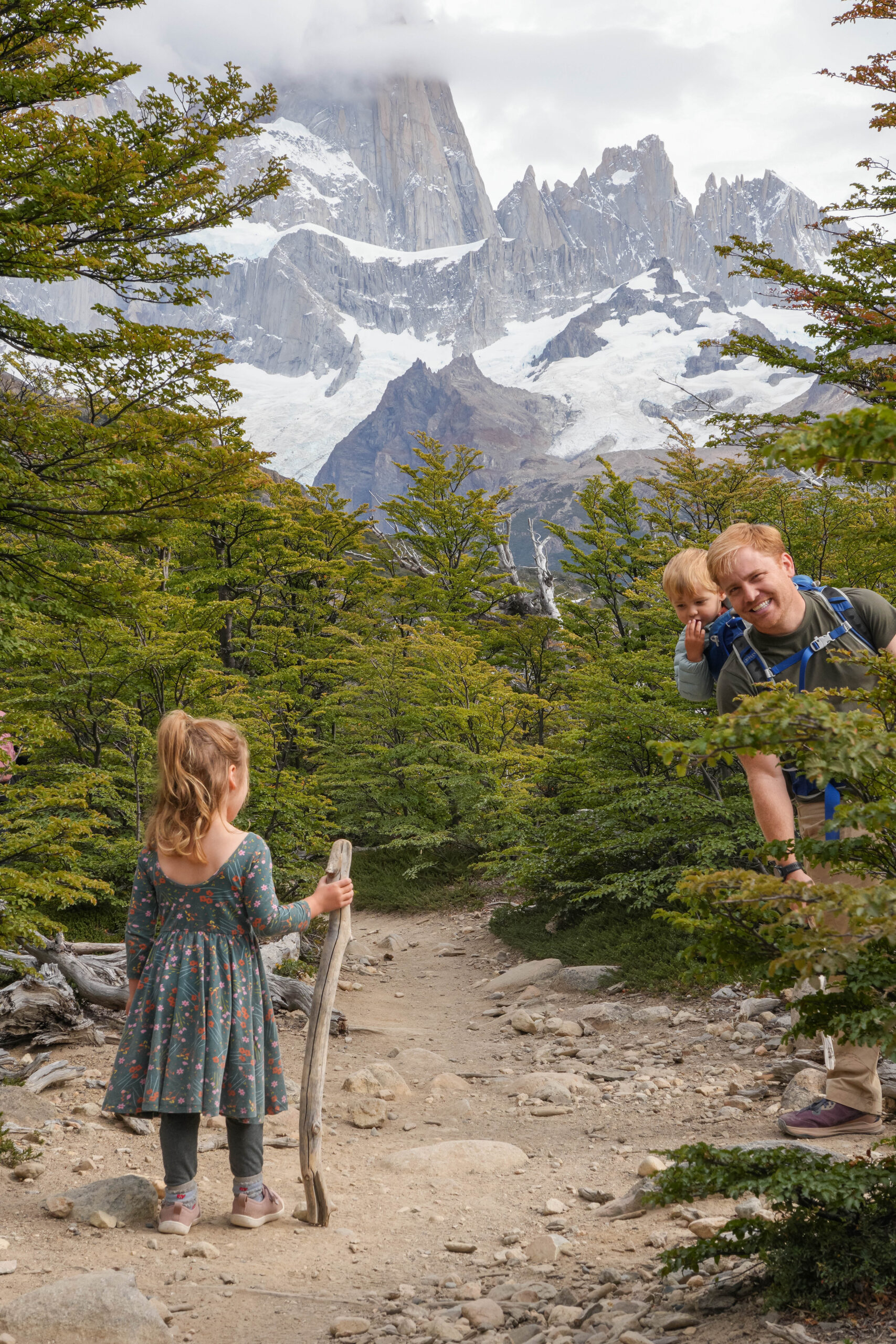
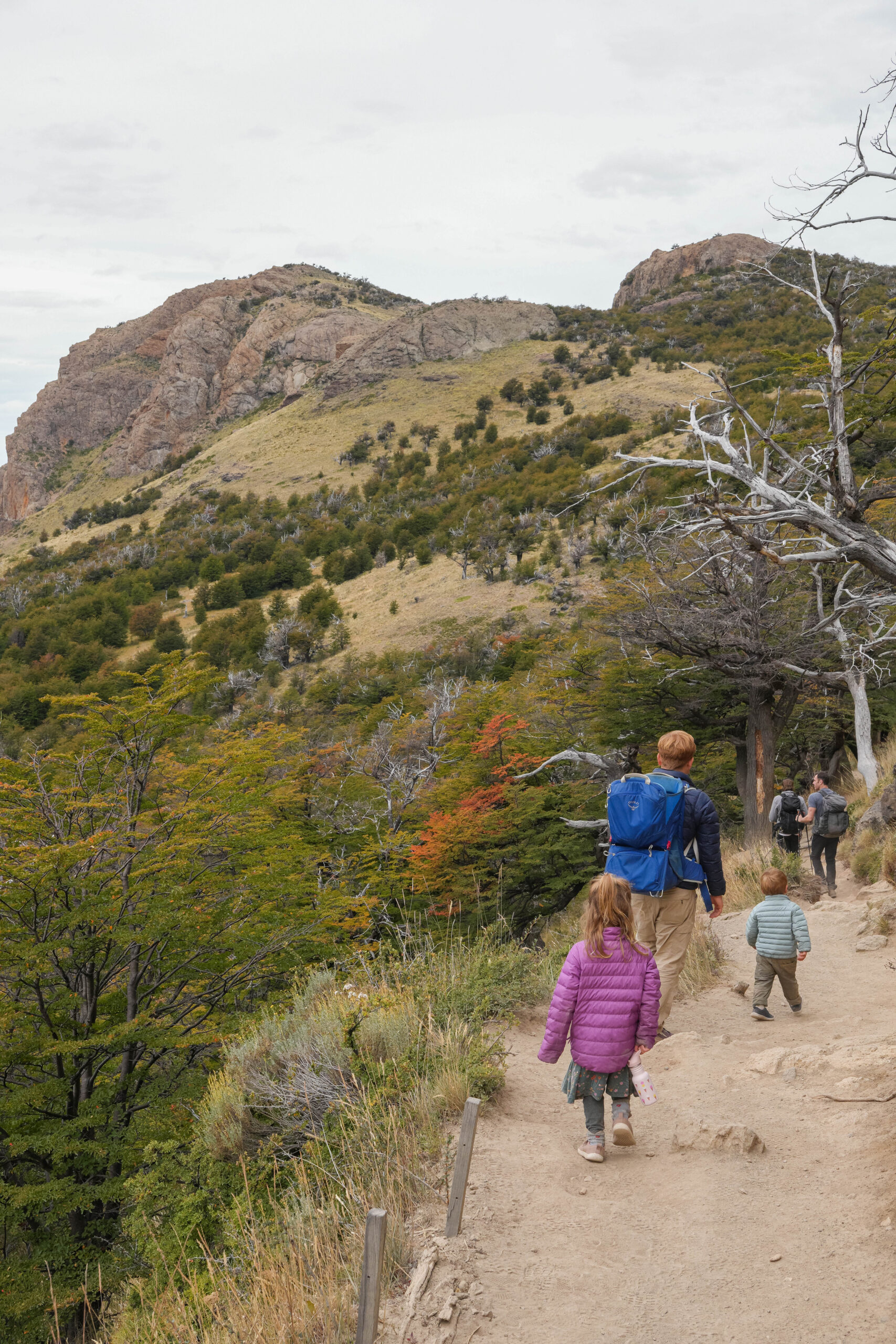
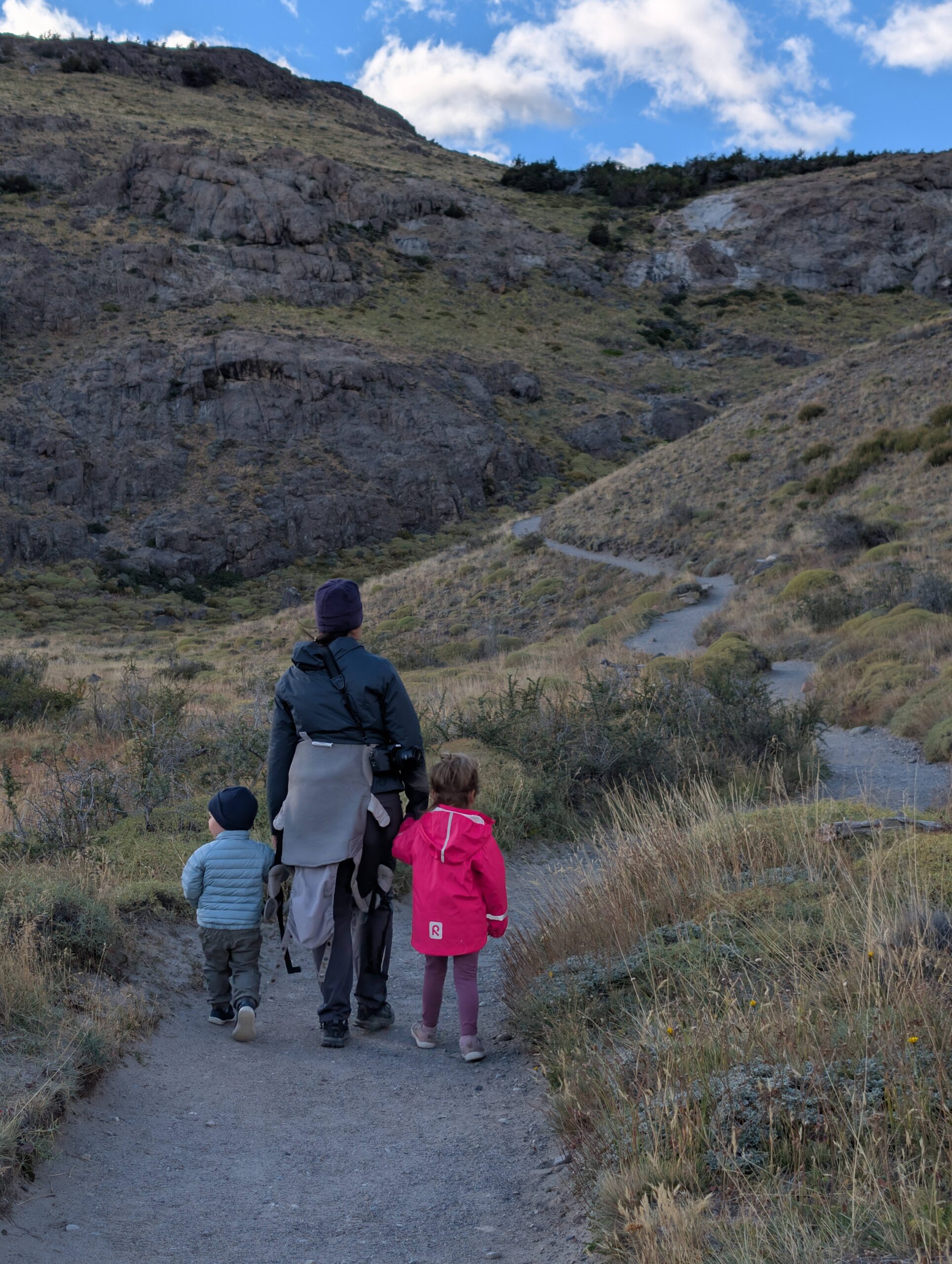
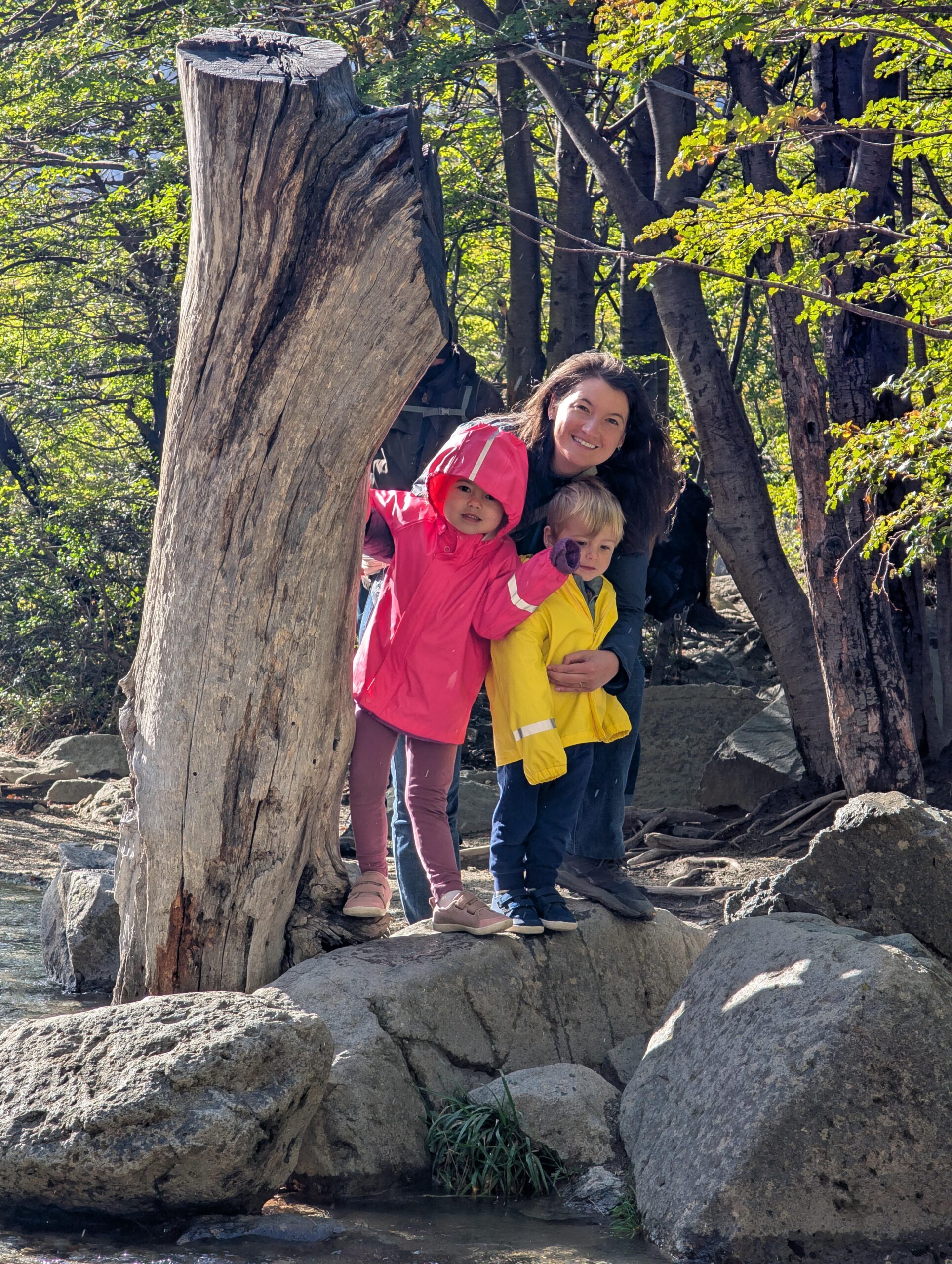
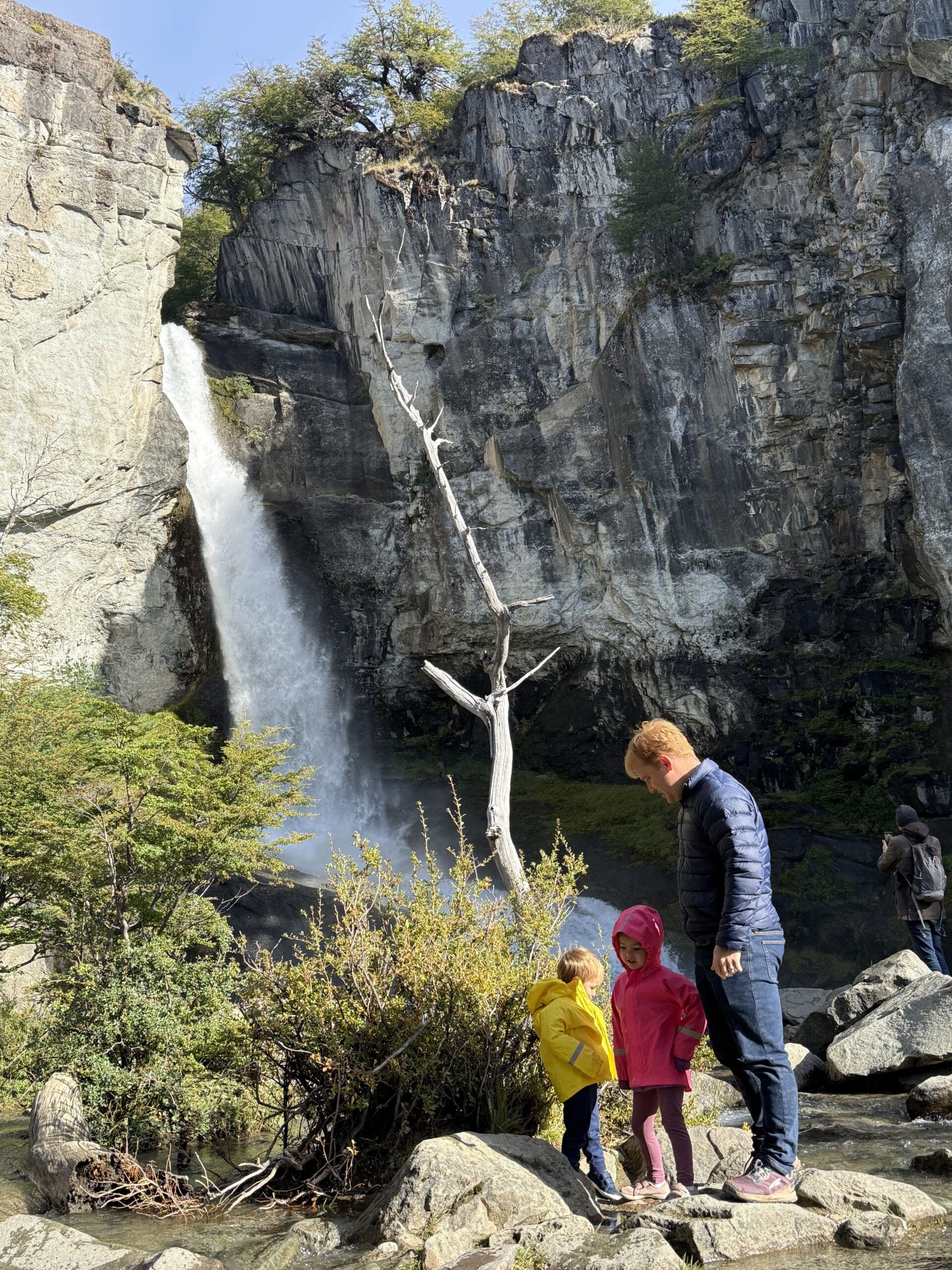
While hiking isn’t at the top of our kids “favorite-things-to-do” list, they’ve graciously put up with a lot of their parents plans, so long as some carrying is included. Honestly, they did really well on these trails. Almost all have pretty good elevation gain to get out of the town and into the mountains. It took a while for me to learn the patience to go at the 1 mile-per-hour pace when they walk, but watching their imaginations run is inspiring. On one hike they found sticky seed pods that they proceeded to collect, name and carry with them as their children. Here were the hikes and our thoughts:
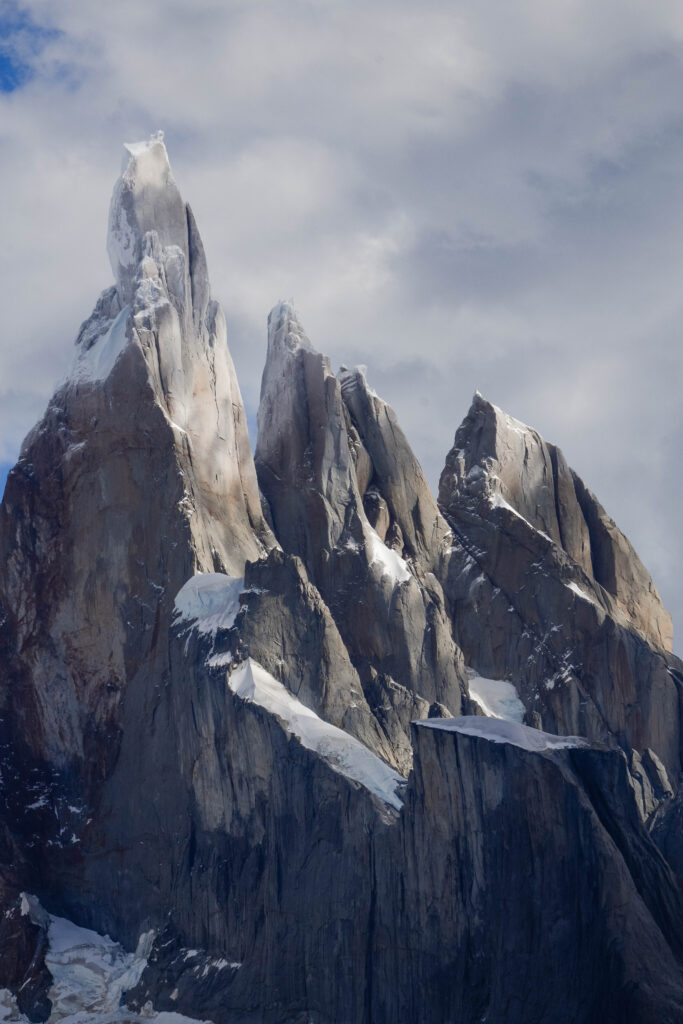
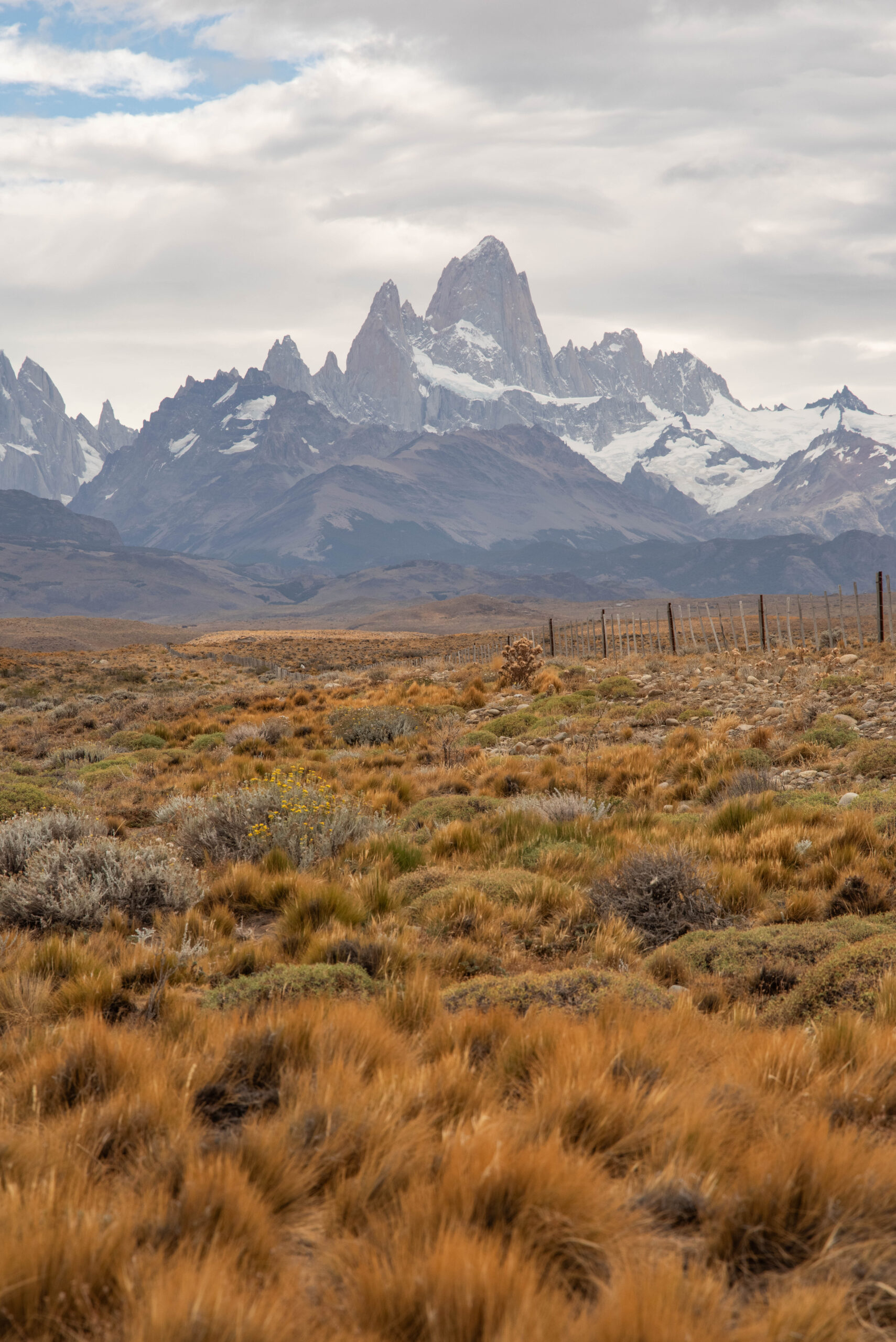
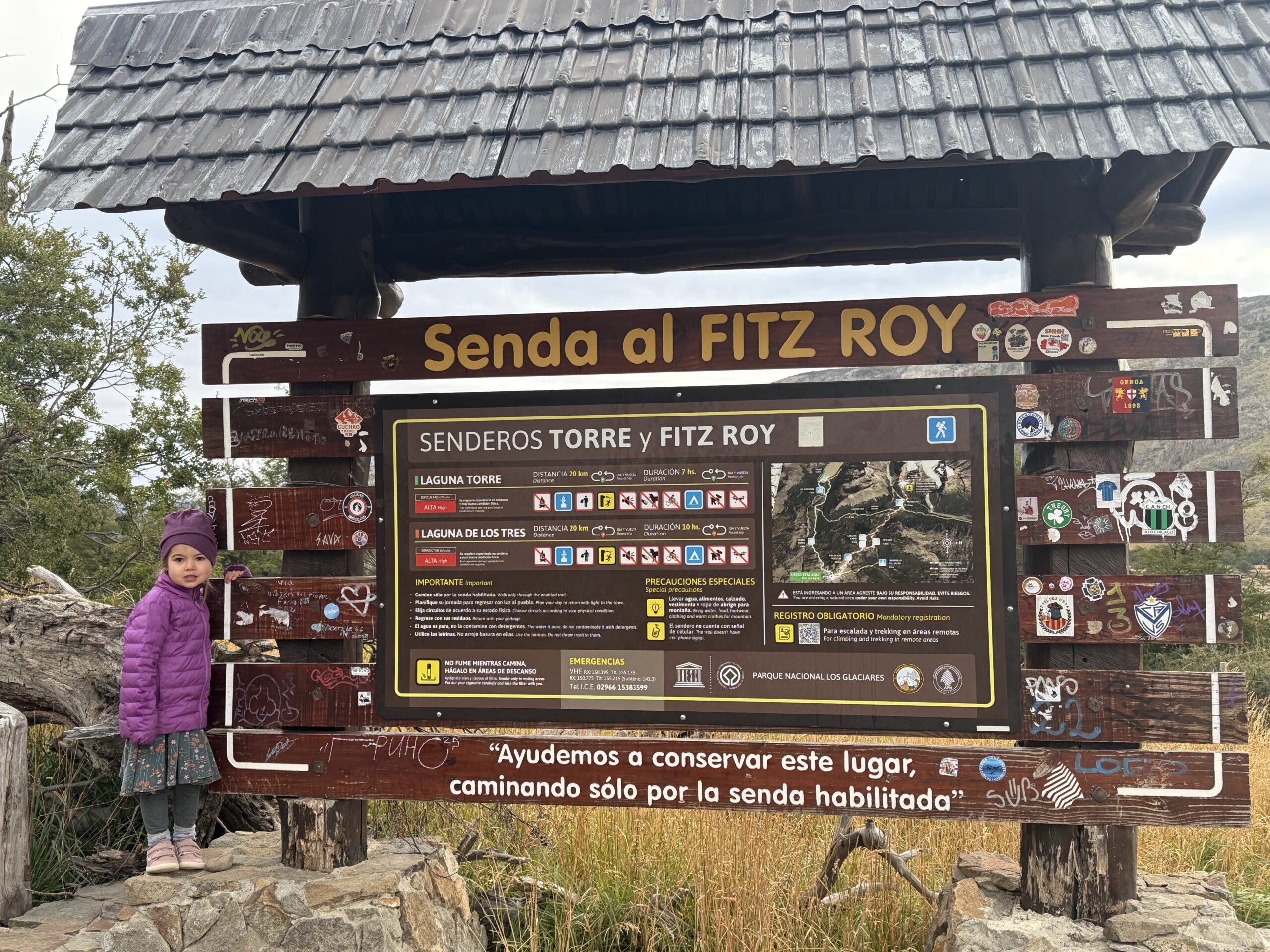
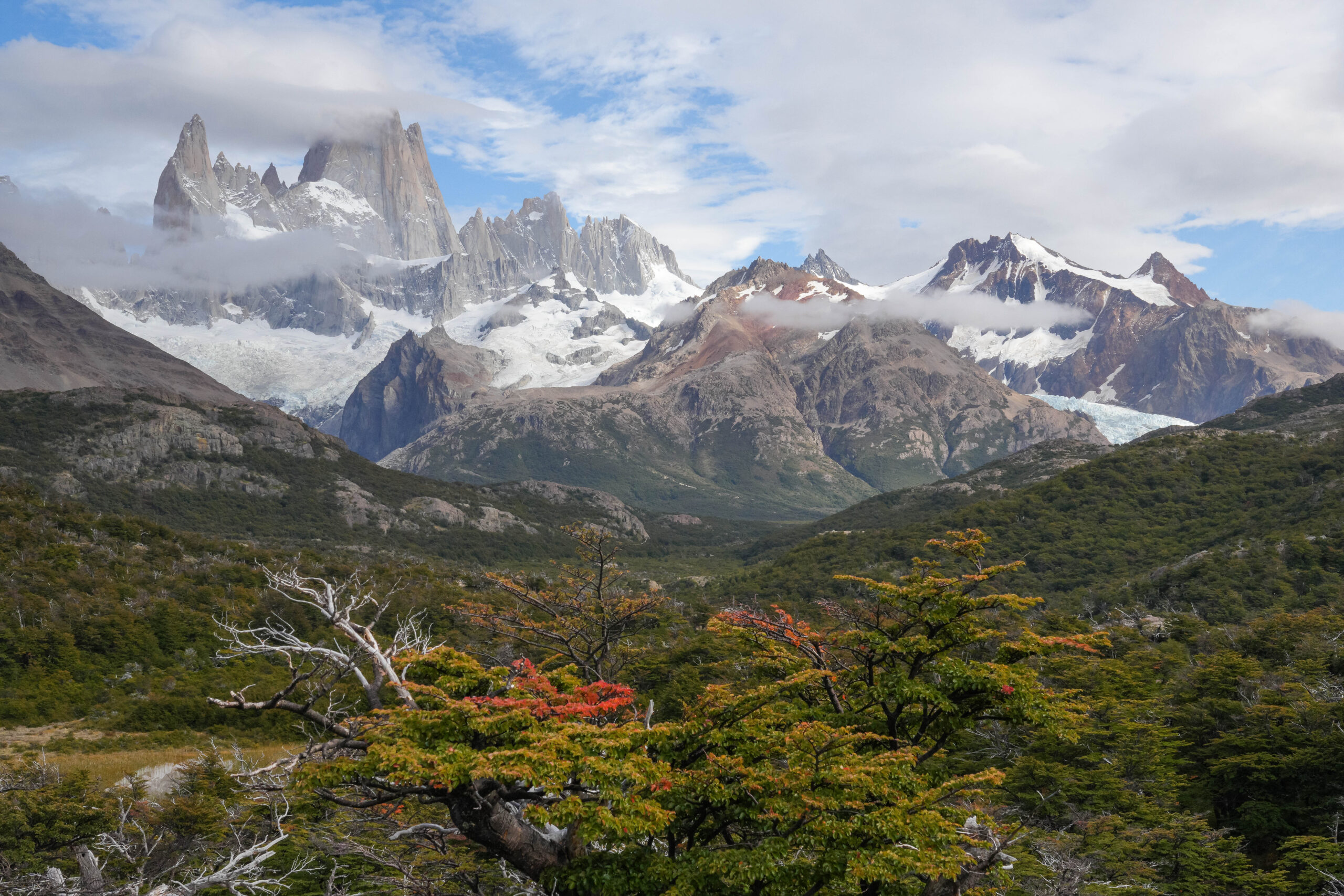
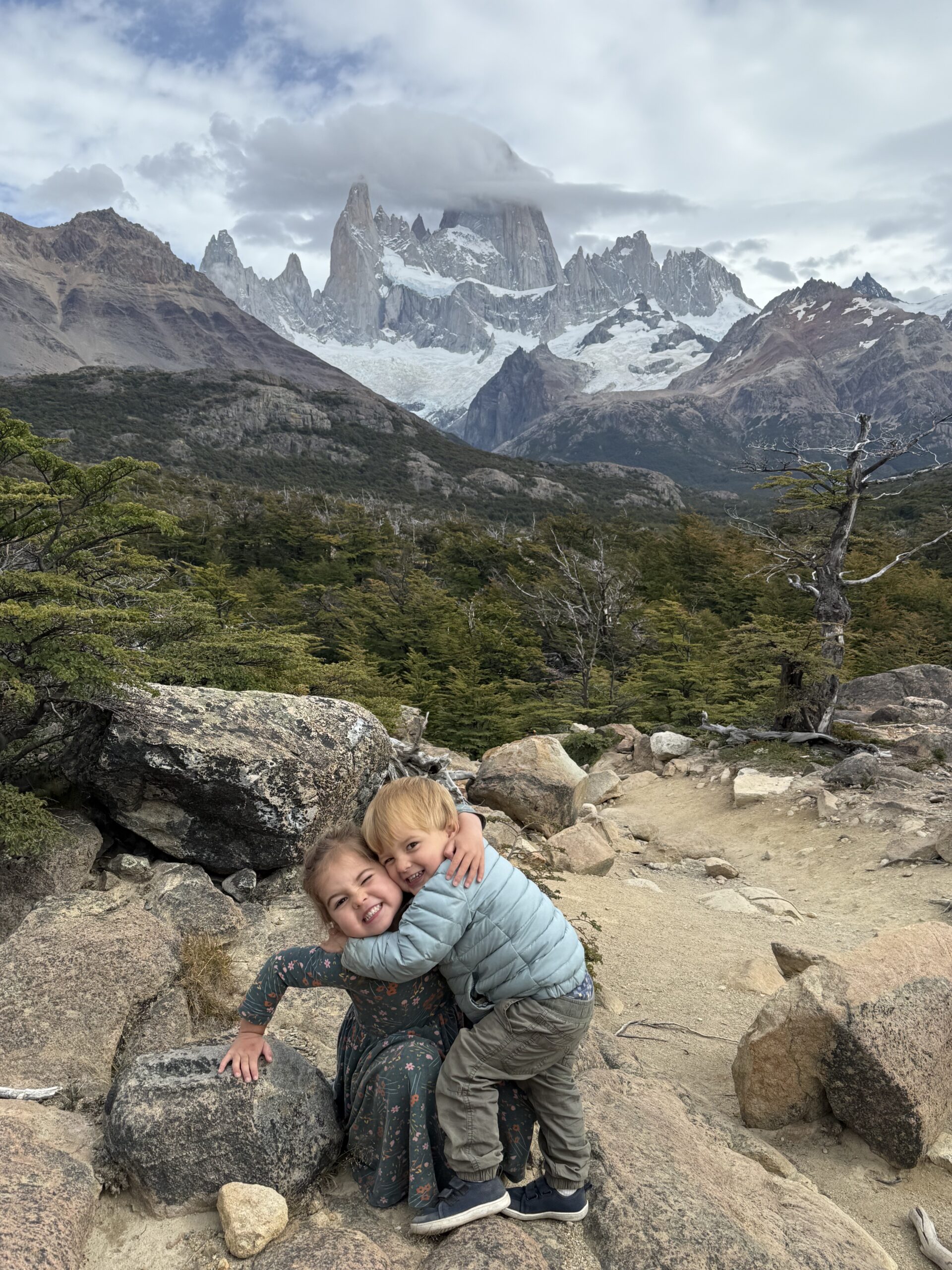
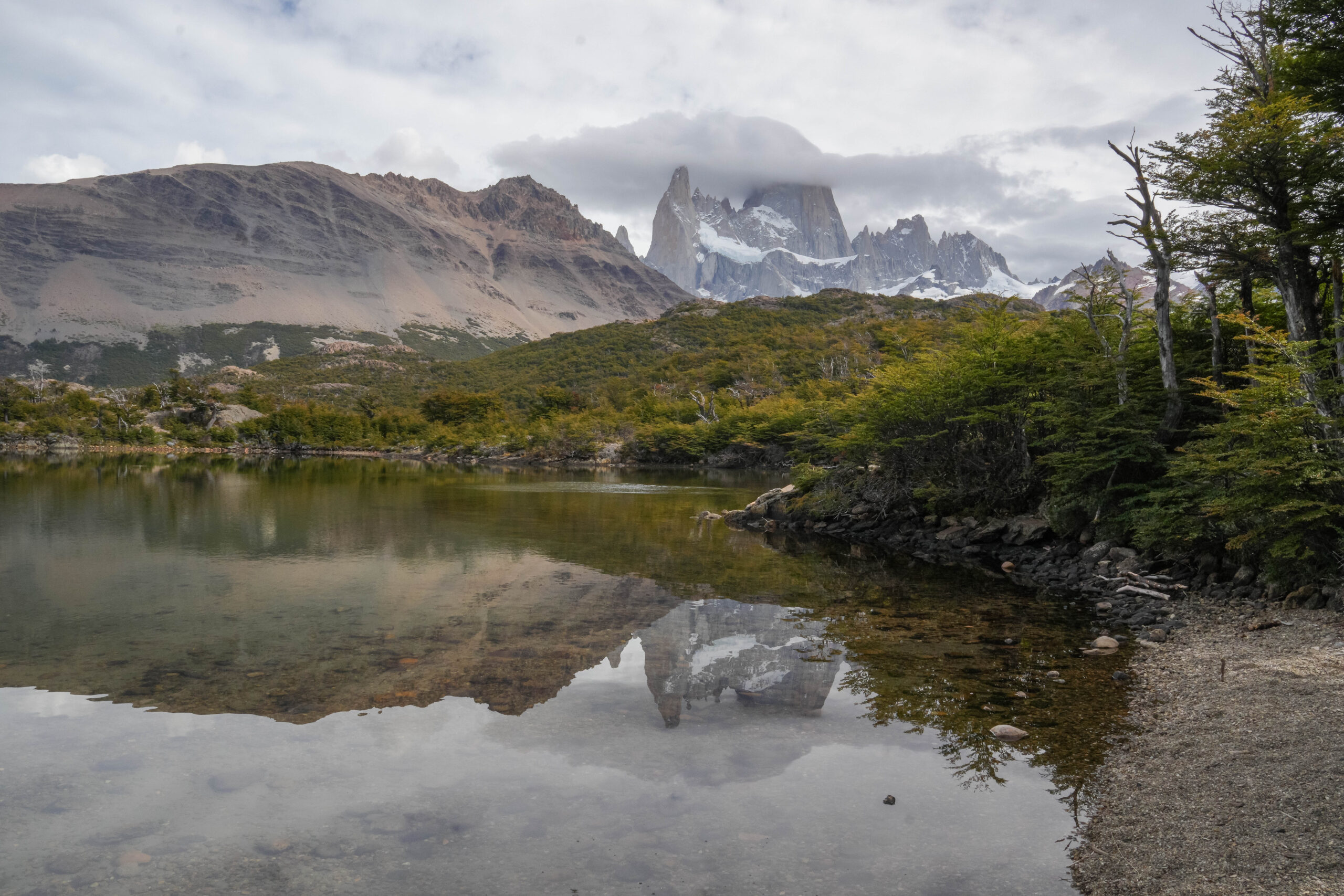
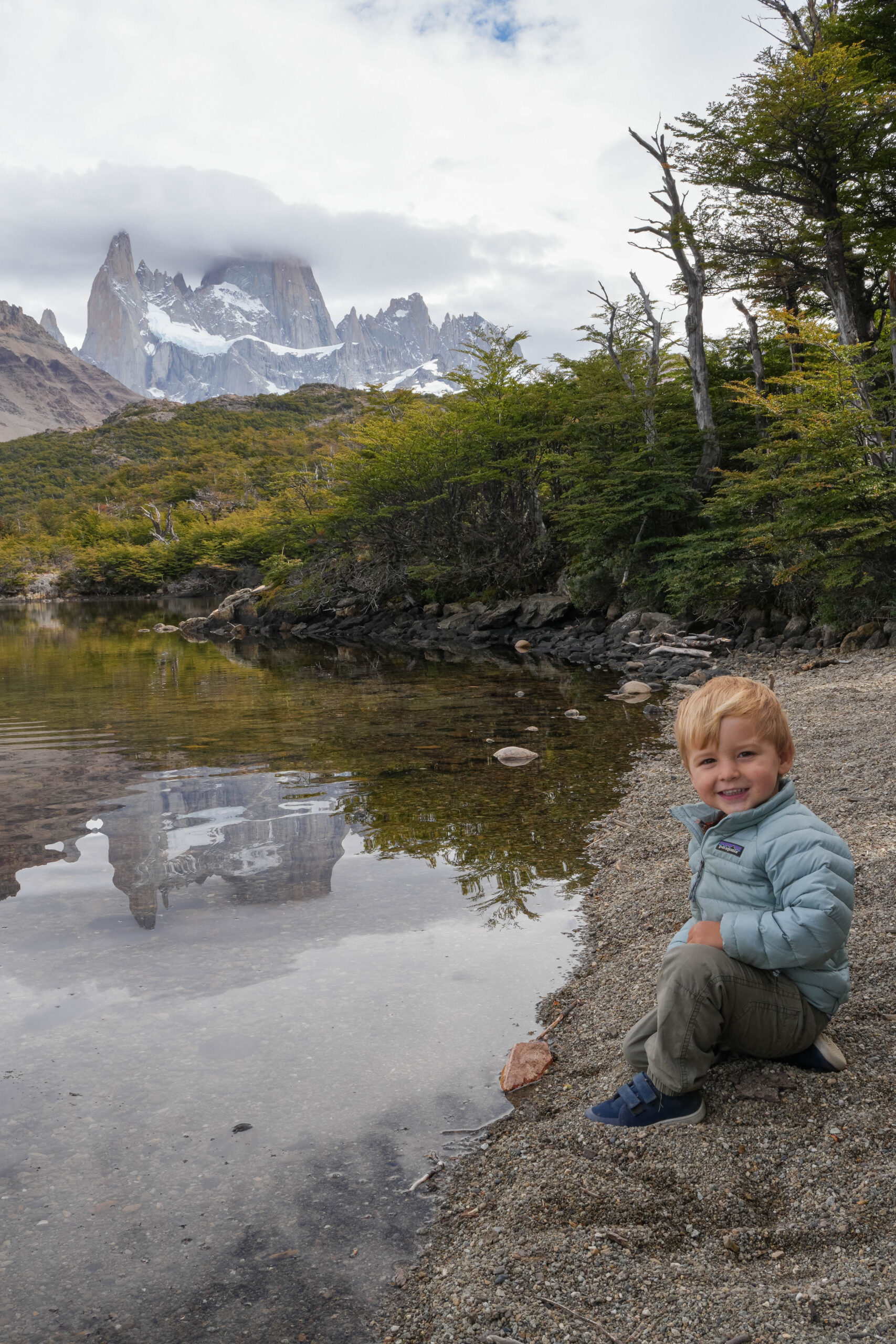
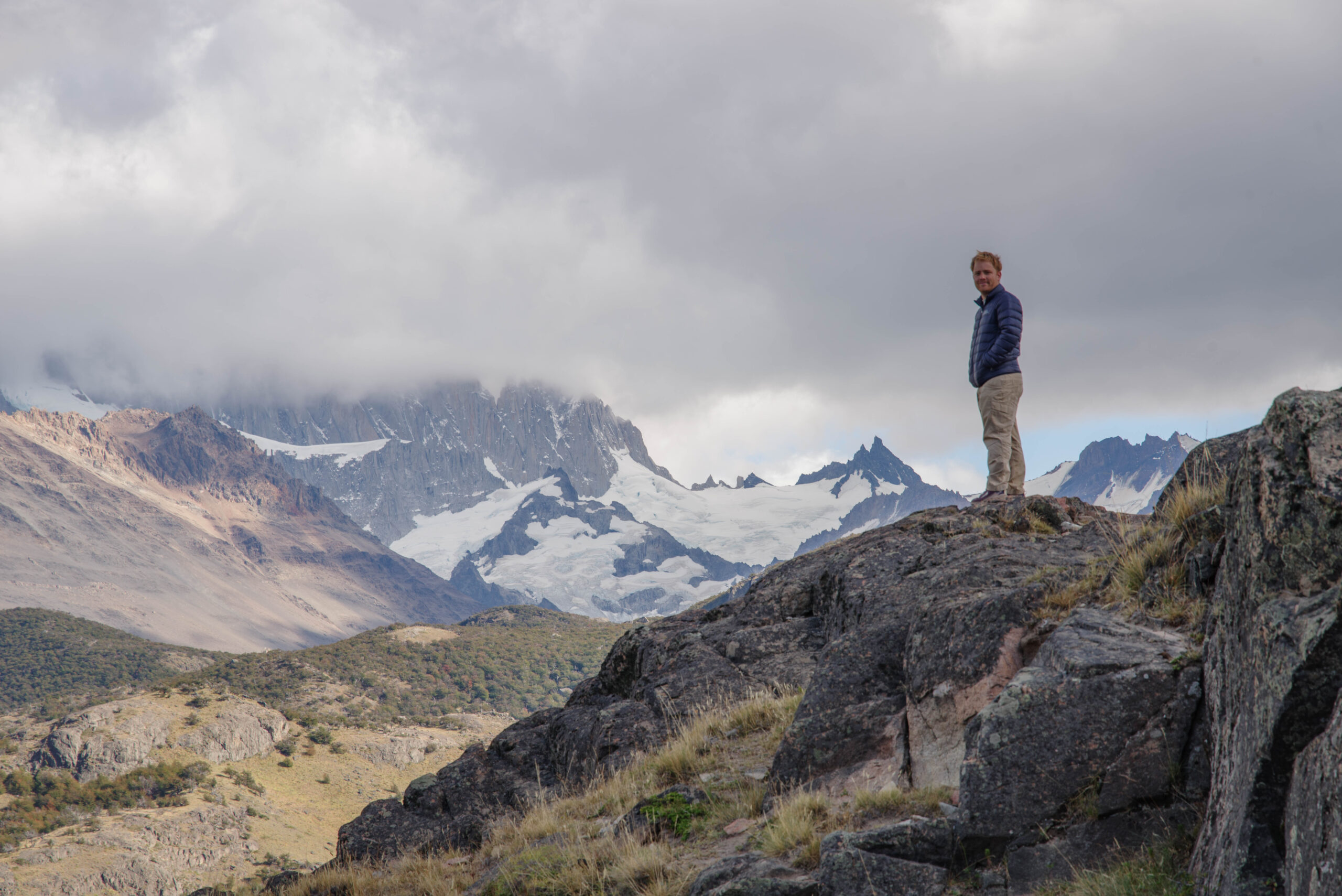
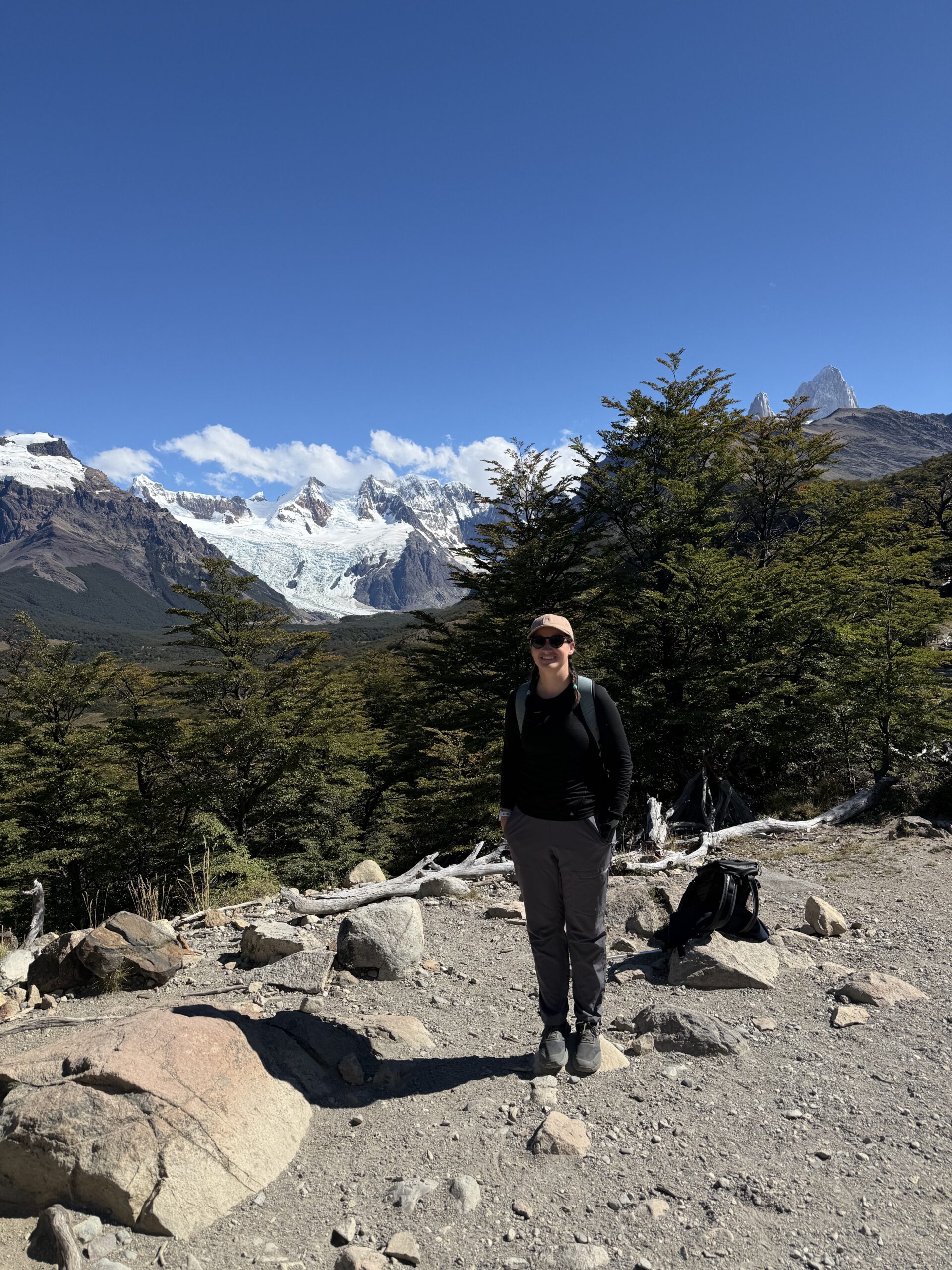
- Sendero al Fitzroy Trail to Laguna Capri – This is the main trail people come here to hike, and it was by far the most crowded. The full trail to Fitzroy is 14 mile roundtrip, but we did about half that going as far as the lookout at Laguna Capri. There was a good amount of elevation gain, but also enough changes in scenery to keep everyone interested and after about an hour you reach views of Fitz Roy (tallest peak) and can turn around at any time, based on toddler emotional state. This hike required a hiking pass for Glaciers National Park. You could either pay cash at a kiosk at the base or credit card online.
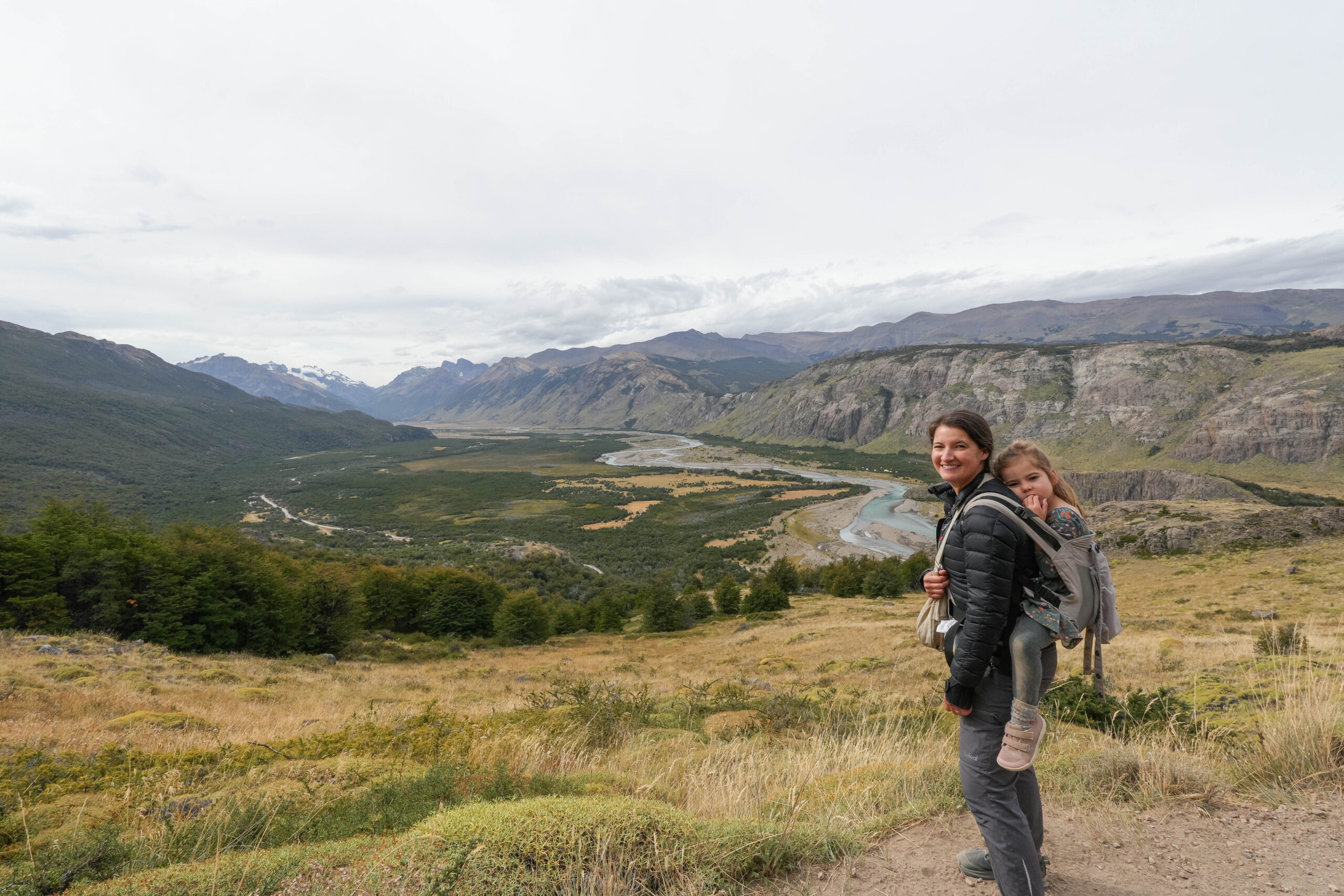
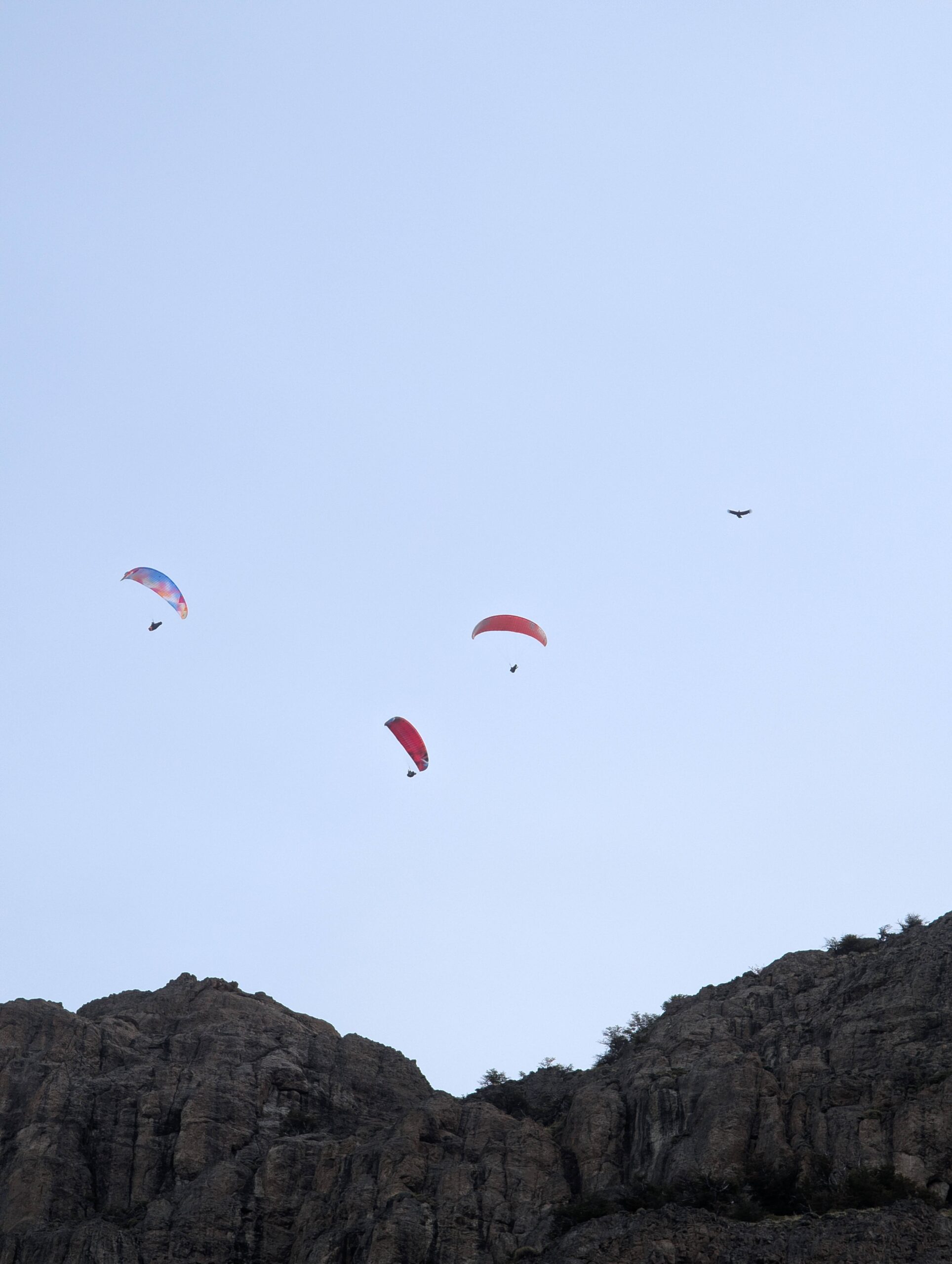
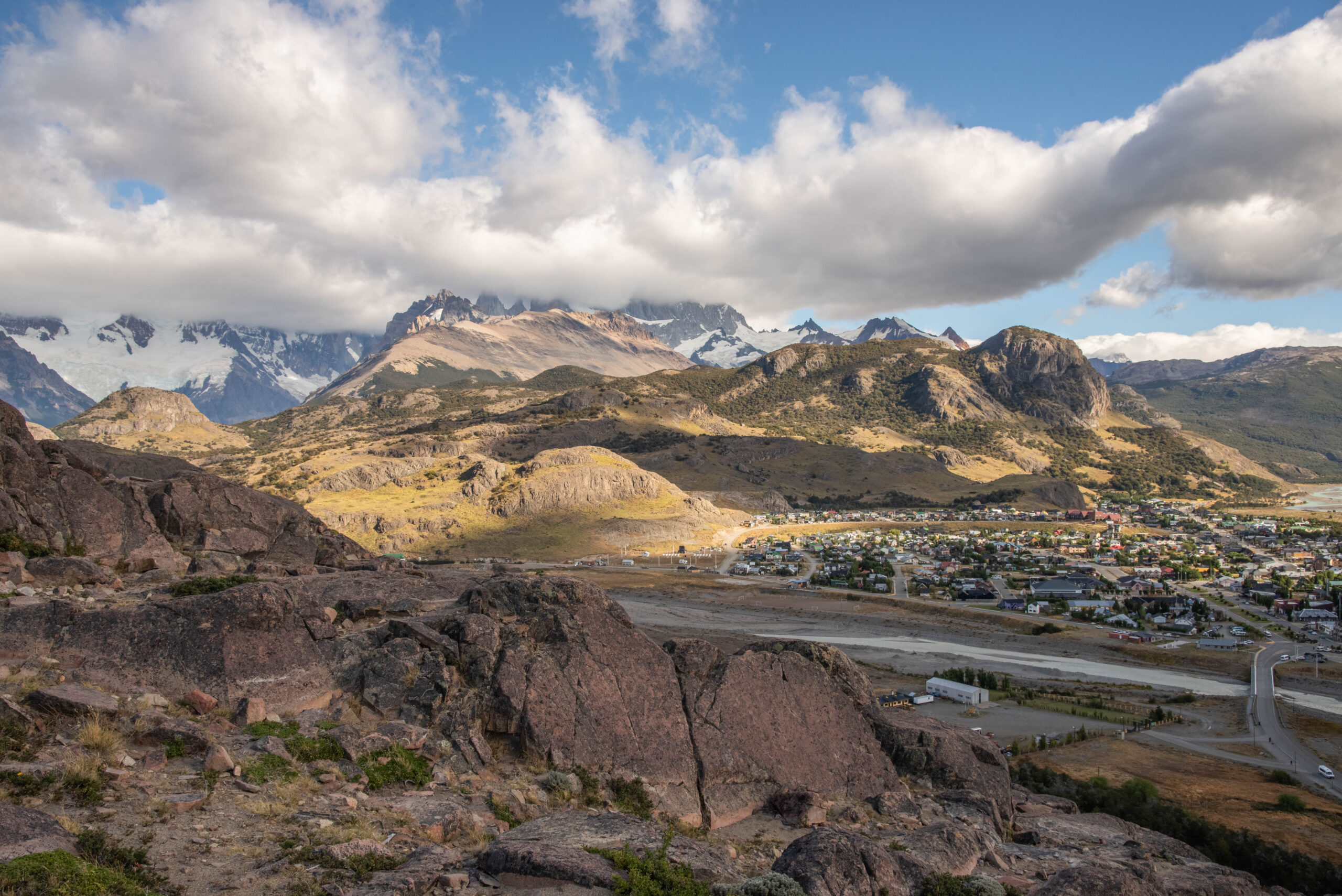
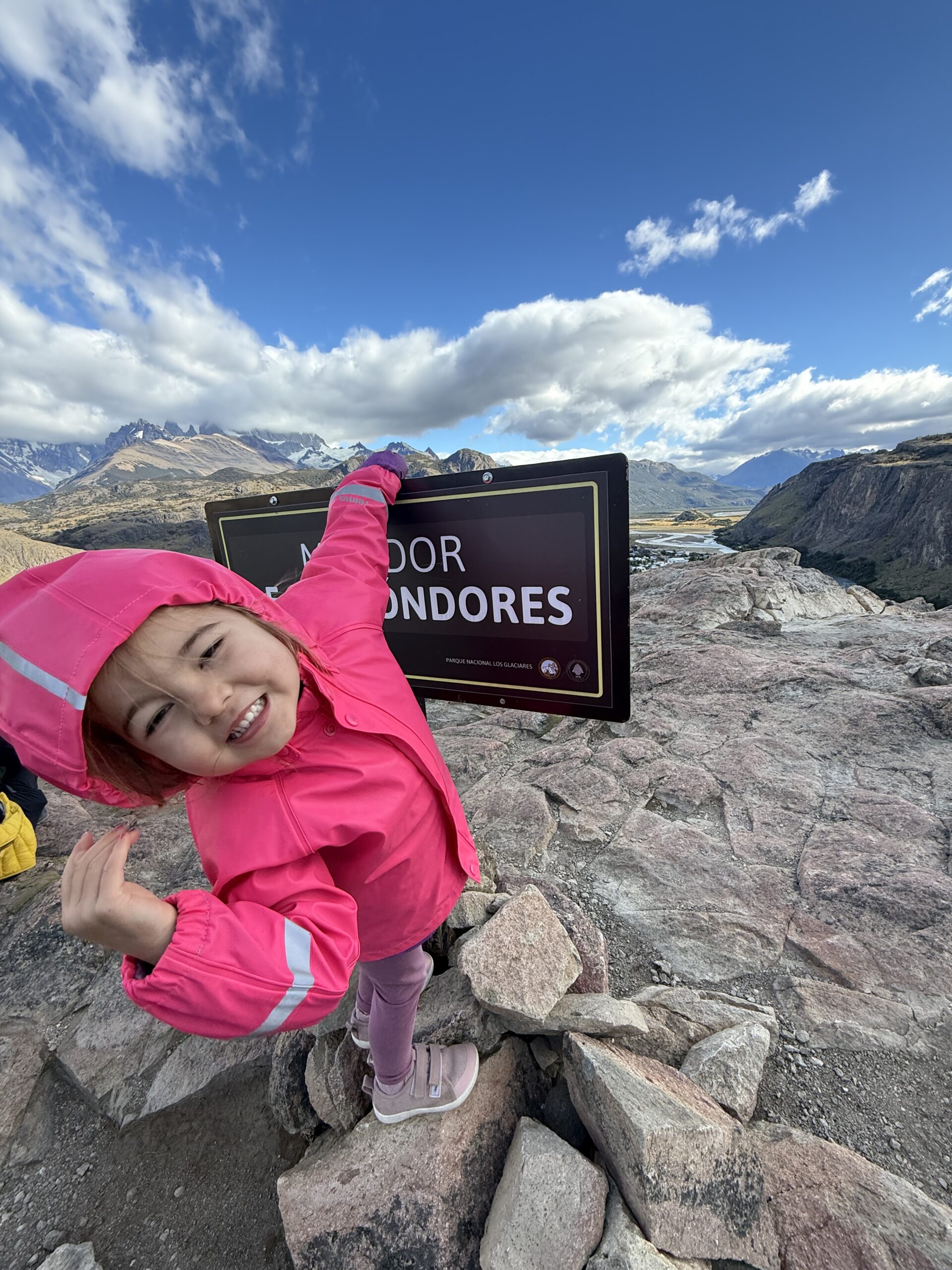
- Mirador de Los Condores – Apparently there are a lot of “Mirador Condors” hikes around Patagonia, all with the same theme of hiking to a rocky outcropping to see birds. Similarly, all of these hikes are prone to high wind and we again missed out on seeing any birds. The hike was a short 1.6 miles and the views of town were worth it too. This hike required the same Hiking Pass as above.
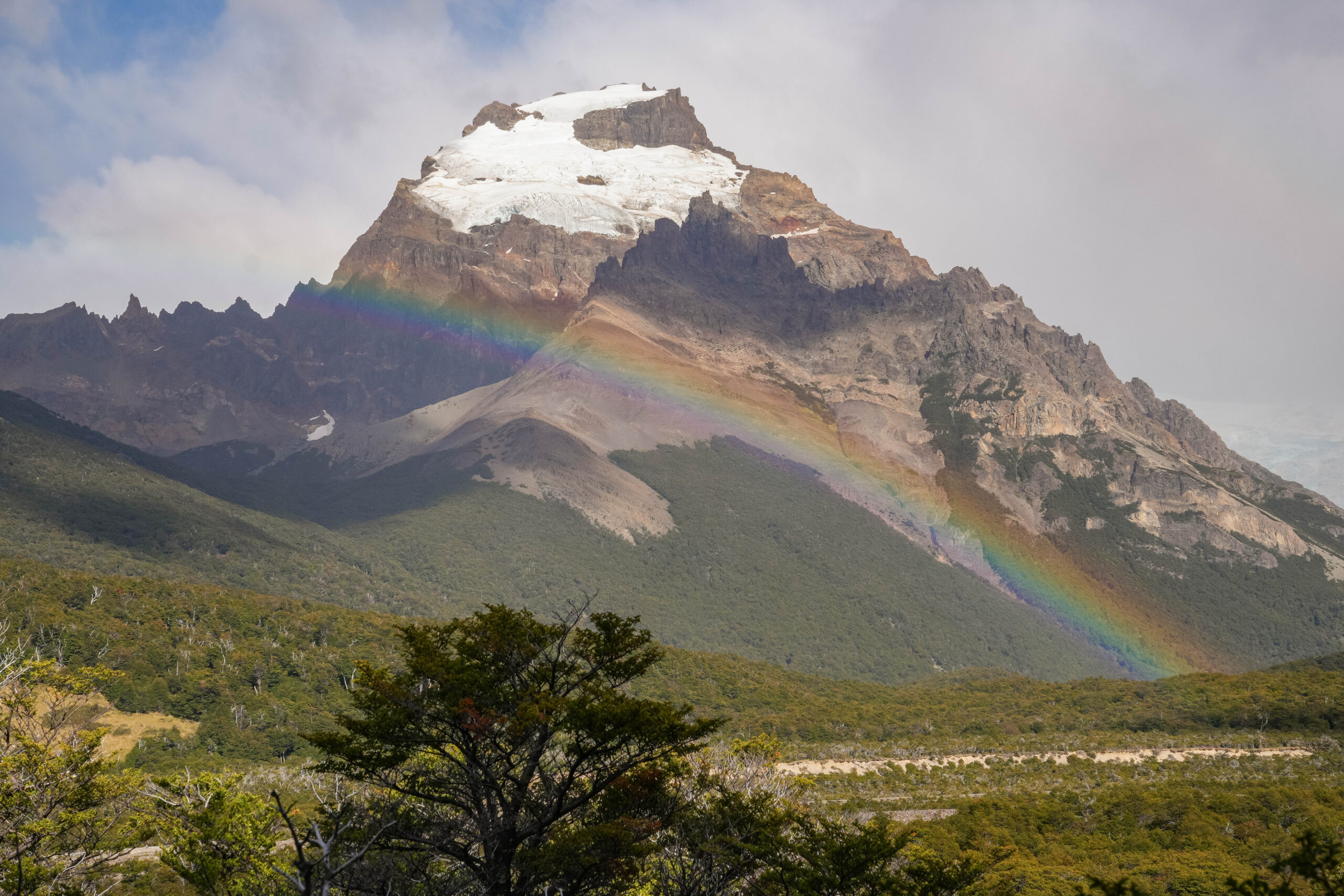
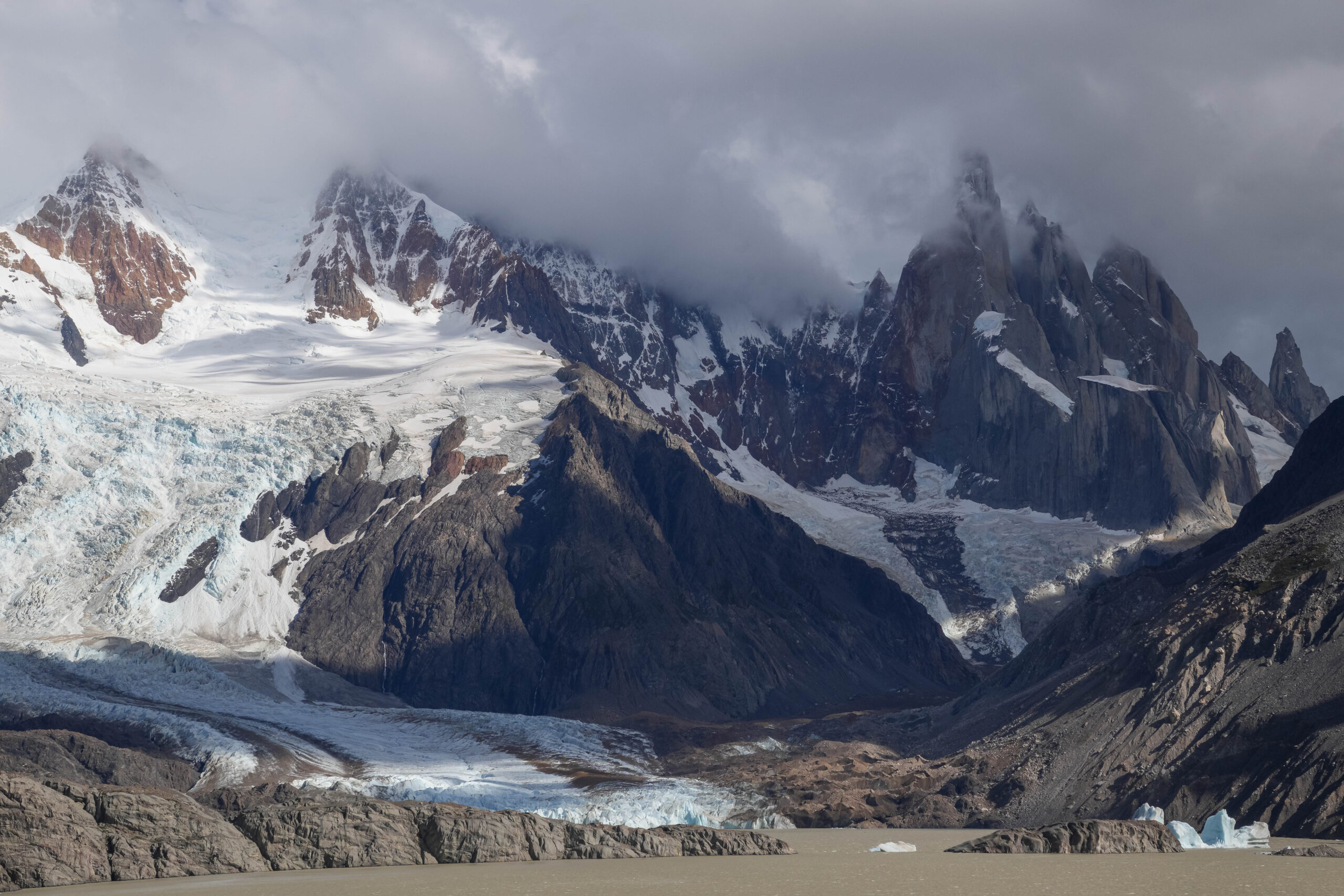
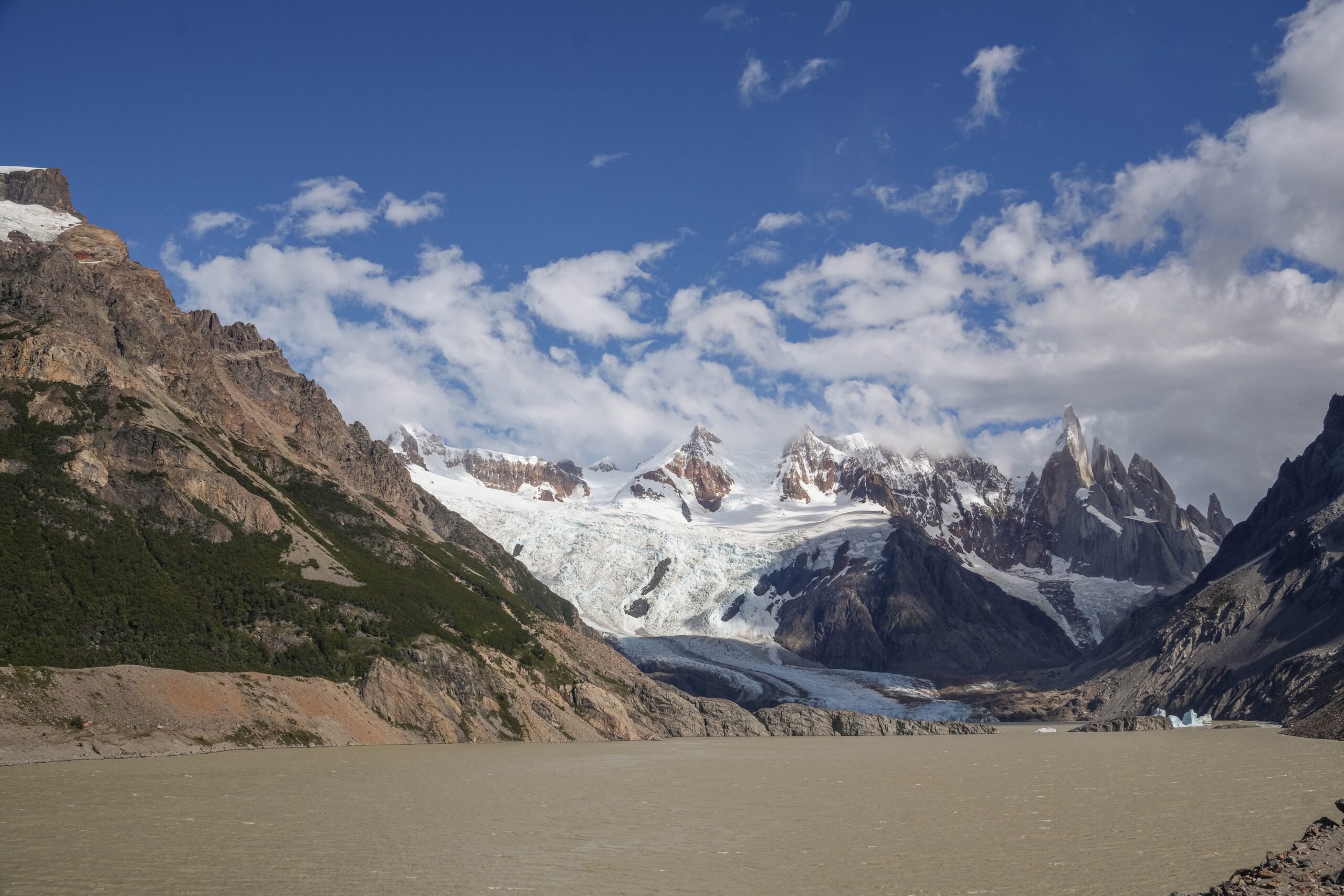
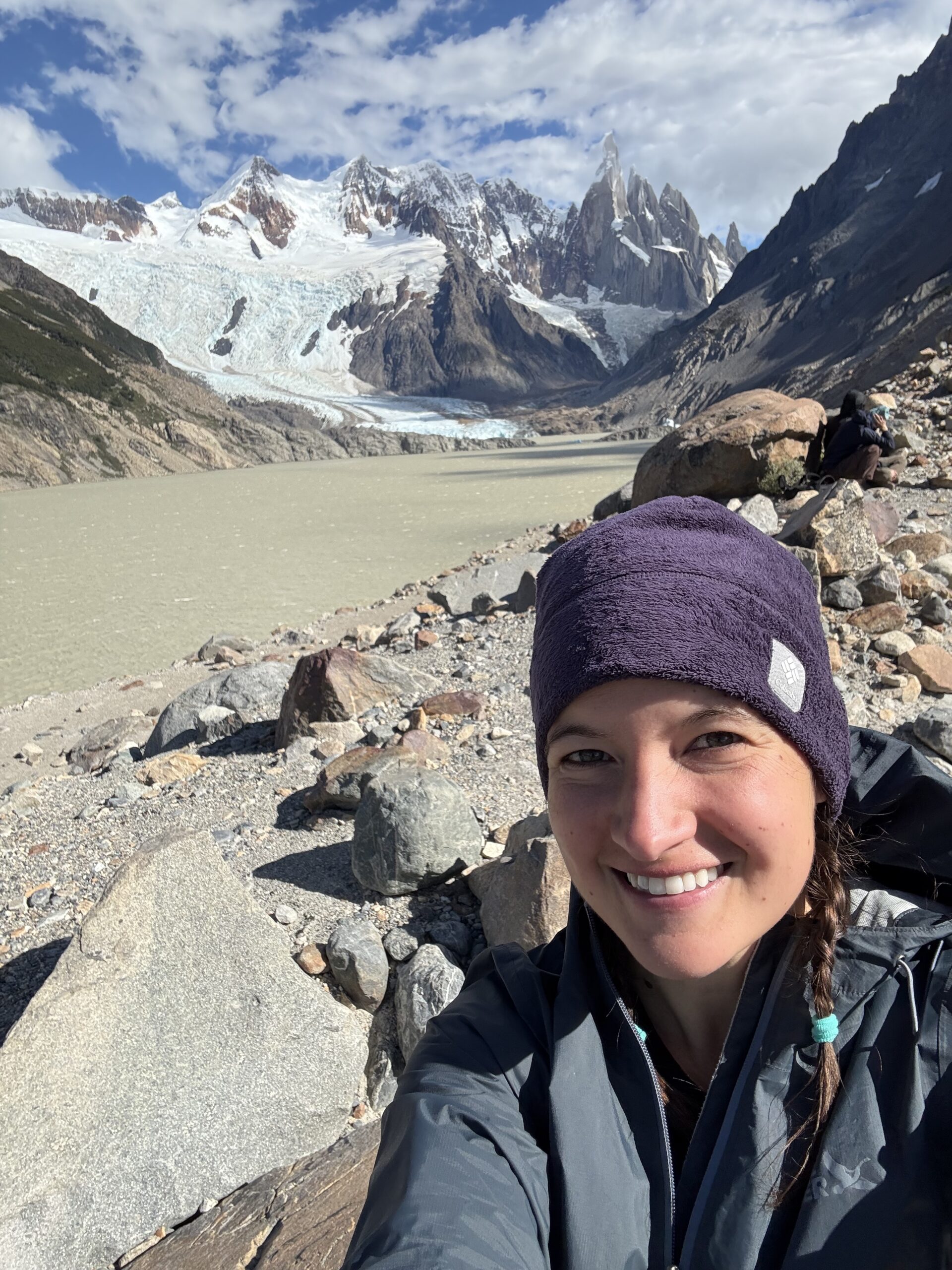
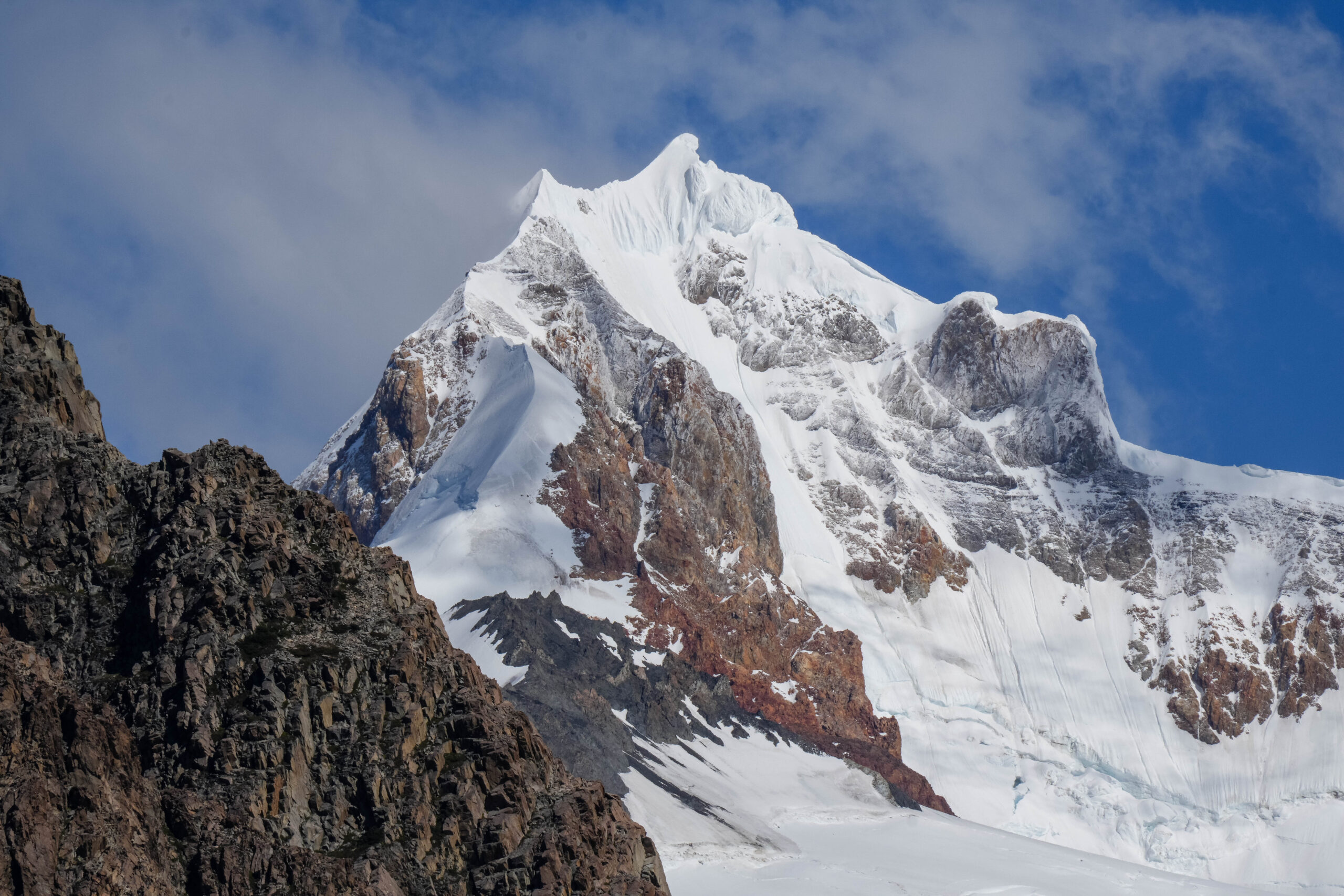
- Laguna Torre Trail – Madeline and I each took on a solo hike while the other stayed back with the kids. We both hiked the Laguna Torre trail, but I only went about halfway in an afternoon hike while Madeline made the whole 12 mile journey briskly in the morning. It was a more arid hike than the main Sendero one, but had good viewpoints and the lake at the end with the glacier right below the mountain was epic. We were both amazed just how quickly you can hike without kids or gear. No Pass required.
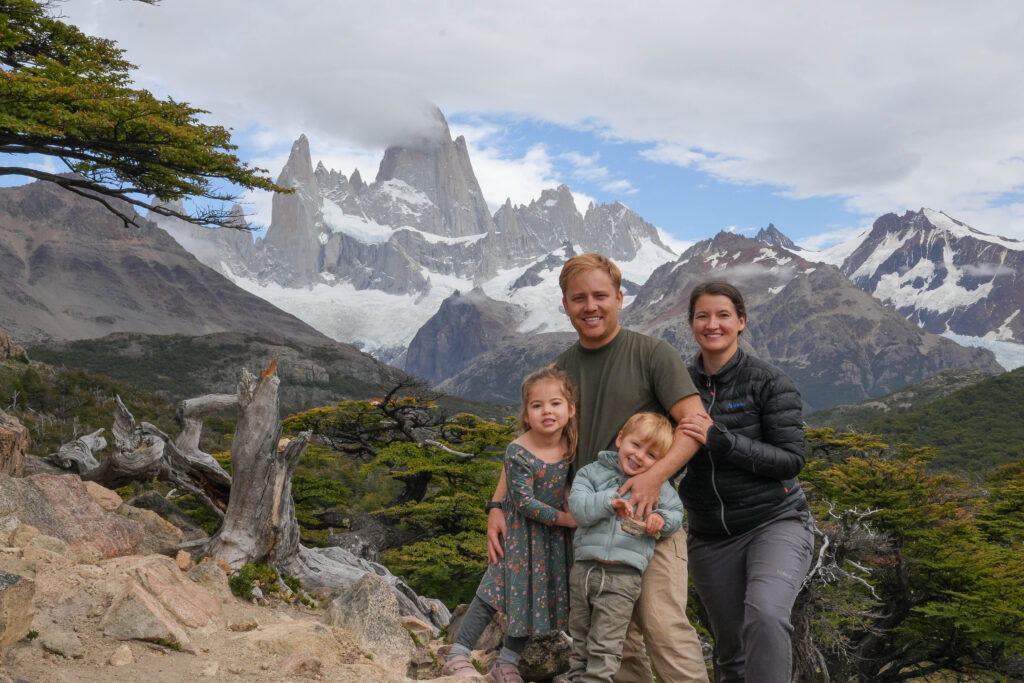
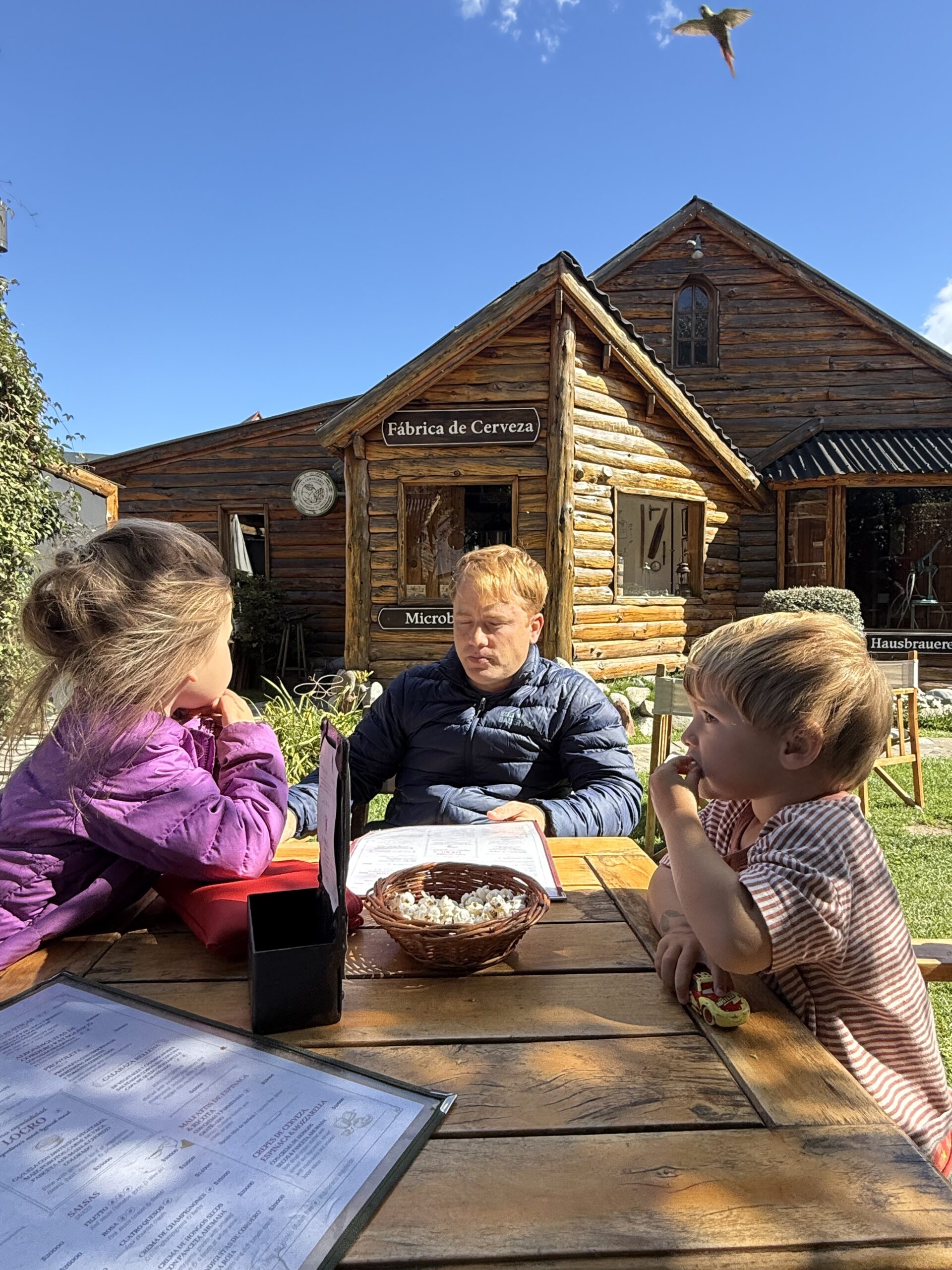
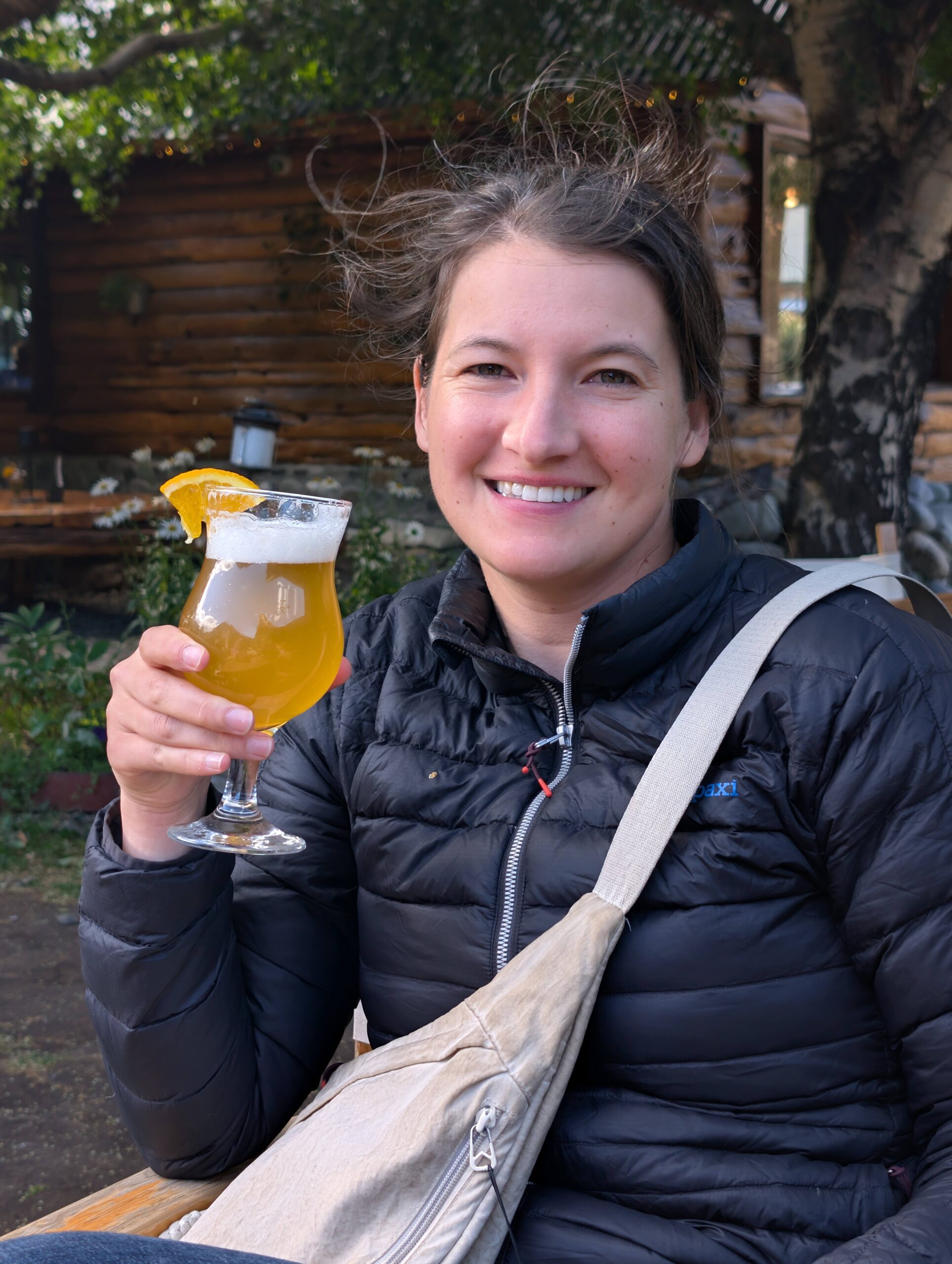
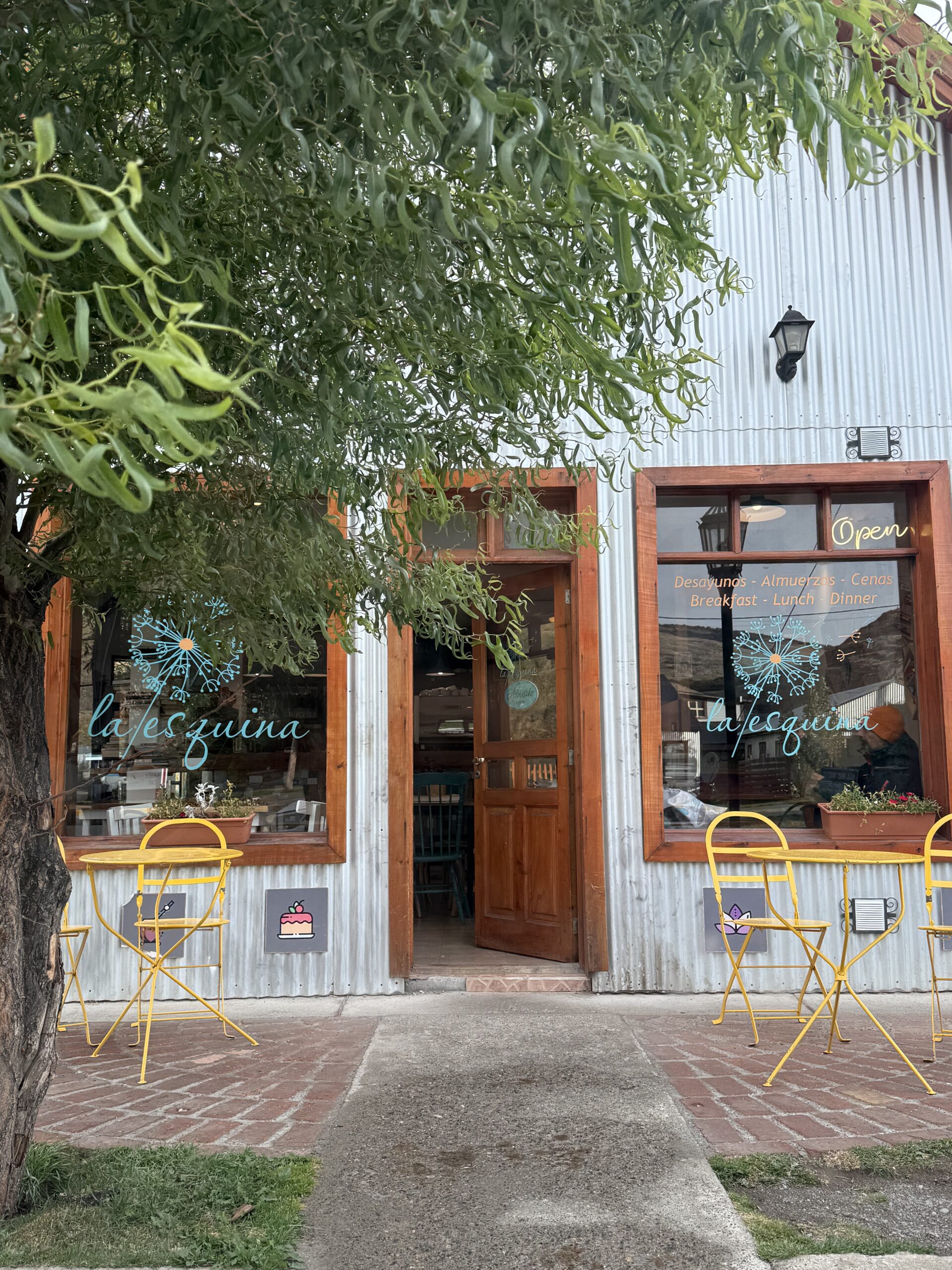
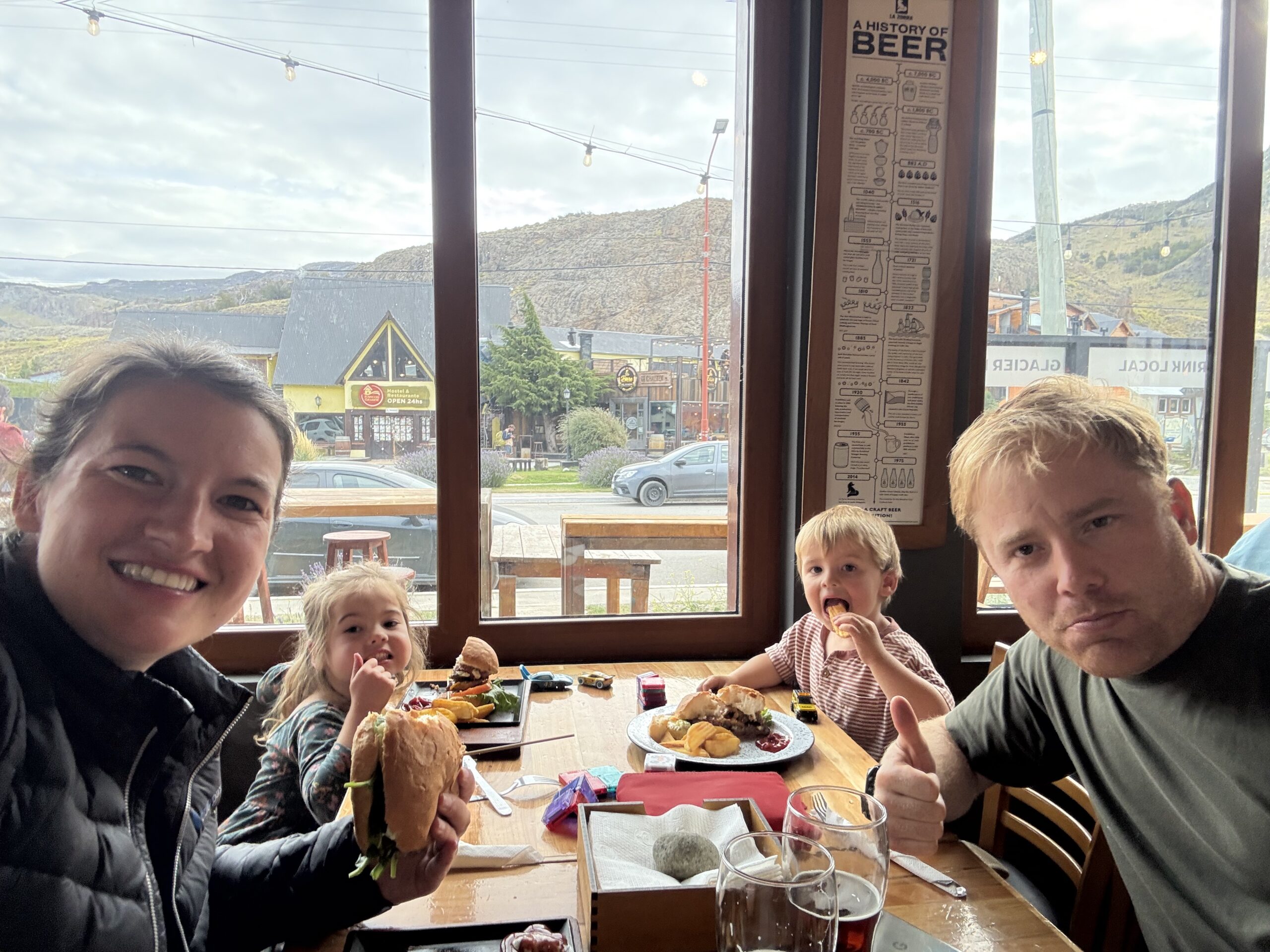
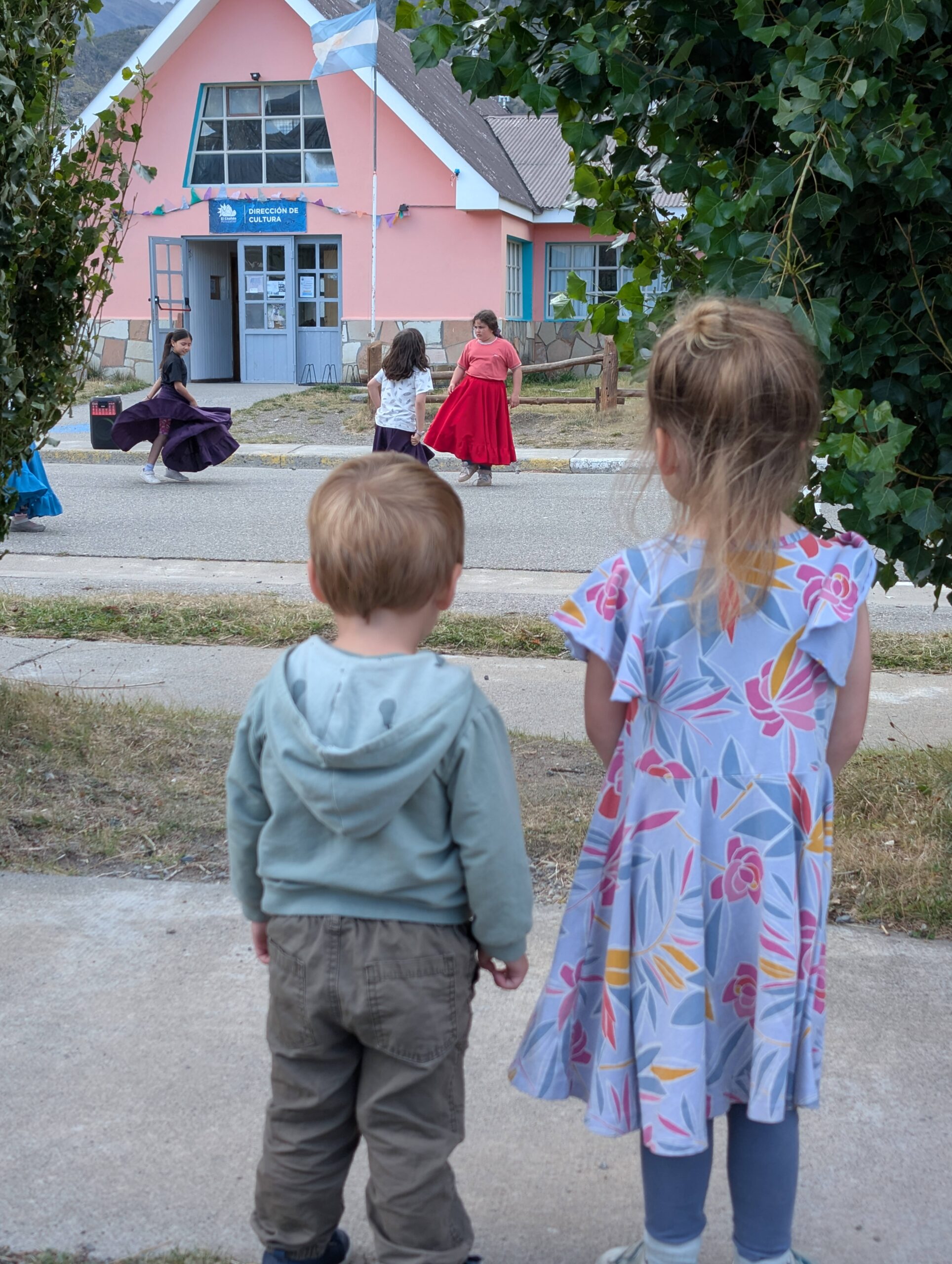
The coolest part about El Chalten was that everyone was there for the explicit purpose of hiking. Every day followed the same routine of hikers leaving in the morning and returning in the afternoon, famished and looking for a post-hike beer. As a result, the town is filled with microbreweries serving fantastic pub food and pints, which is exactly what you want after a long day’s trek. After our Laguna Capri day, we gladly settled at La Zorra for burgers, fries, and frosted mugs of hefeweizen and amber ales that hit the spot. The community here feels at peace with its tourist identity, and our kids had no problem mingling with the locals at the playgrounds, once we taught them the Spanish word for “play.” One memory that sticks with me is seeing Emmett and Mae transfixed by some girls practicing traditional dance in the street. It was a special place.
Tips & Lessons Learned
This is where we put all of the things we learned along the way about traveling in the region as well as traveling with toddlers.
- Getting Around – For the Chilean side, a rental car is essential to explore Torres del Paine and reach all the highlights. While we also rented a car in Argentina, in retrospect, the robust bus infrastructure made it feasible to get to places like the Perito Moreno Glacier or El Chalten, where you can walk to the trailheads. One note: I looked into renting a car in Chile and returning it in Argentina, but the fees ($1000) and paperwork made it easier to do two separate rentals with a bus in between. Also note gas isn’t abundant in these areas and you need to plan your fills and be aware there may be long lines.
- Chile vs Argentina Patagonia – A common debate! Torres Del Paine was more expensive and had less easy to reach resources (grocery store, gas, etc), BUT the scenery took our breath away and most of the hikes were family friendly with spectacular views throughout. It also felt more rugged. For Argentina, the towns are well built for tourist infrastructure but you had to work more for the scenery (surprise, also spectacular!). Many long hikes with significant elevation gain – I don’t think it’d be worth it to go there if you aren’t going to do at least one 6+ mile hike.
- Cash Concern – Before arriving in Argentina, we were warned about having USD cash on hand to get the “Blue Dollar” exchange rate, which is significantly better than the official rate you’d get at an ATM. However, in 2026, we found that 95% of the places we visited accepted cards, with an exchange rate only 1-2% different (sometimes better) than the Blue Dollar rate. The easiest way we found to exchange currency was actually paying for dinners with USD and getting the change back in Argentinian pesos. Finding a dedicated “cambio,” or exchange house, wasn’t super obvious, and we only really used cash for small purchases and tips (10% is typical). They are also very picky about the cash being clean, with no tears or markings, and prefer $100 bills. Otherwise, you may get a markdown on the exchange rate, so check your bills before you go!
- Tour Options – Being a well-touristed area, there are many companies and excursions to choose from. Ultimately, what you choose will depend on your group’s individual interests, but here are a few thoughts: 1) Torres Del Paine (the drivable park, not the larger treks) is doable without a guide and in your own car. There is great signage throughout. 2) Don’t do the Perito Moreno Glacier boat tours; you get a phenomenal, if not better, view from the boardwalks. Spend the money on the glacier trek (didn’t do) or a tour of glaciers you can’t already see from an overlook, like the Balmaceda and Serrano one we took. 3) If you want to do it all from one location, El Calafate is your best option. It has an airport with frequent flights and day trips to both El Chalten and even Torres Del Paine in an off-road vehicle that takes a shortcut. It’s a lot of bus time, so we didn’t want to do it with our toddlers, but just FYI.
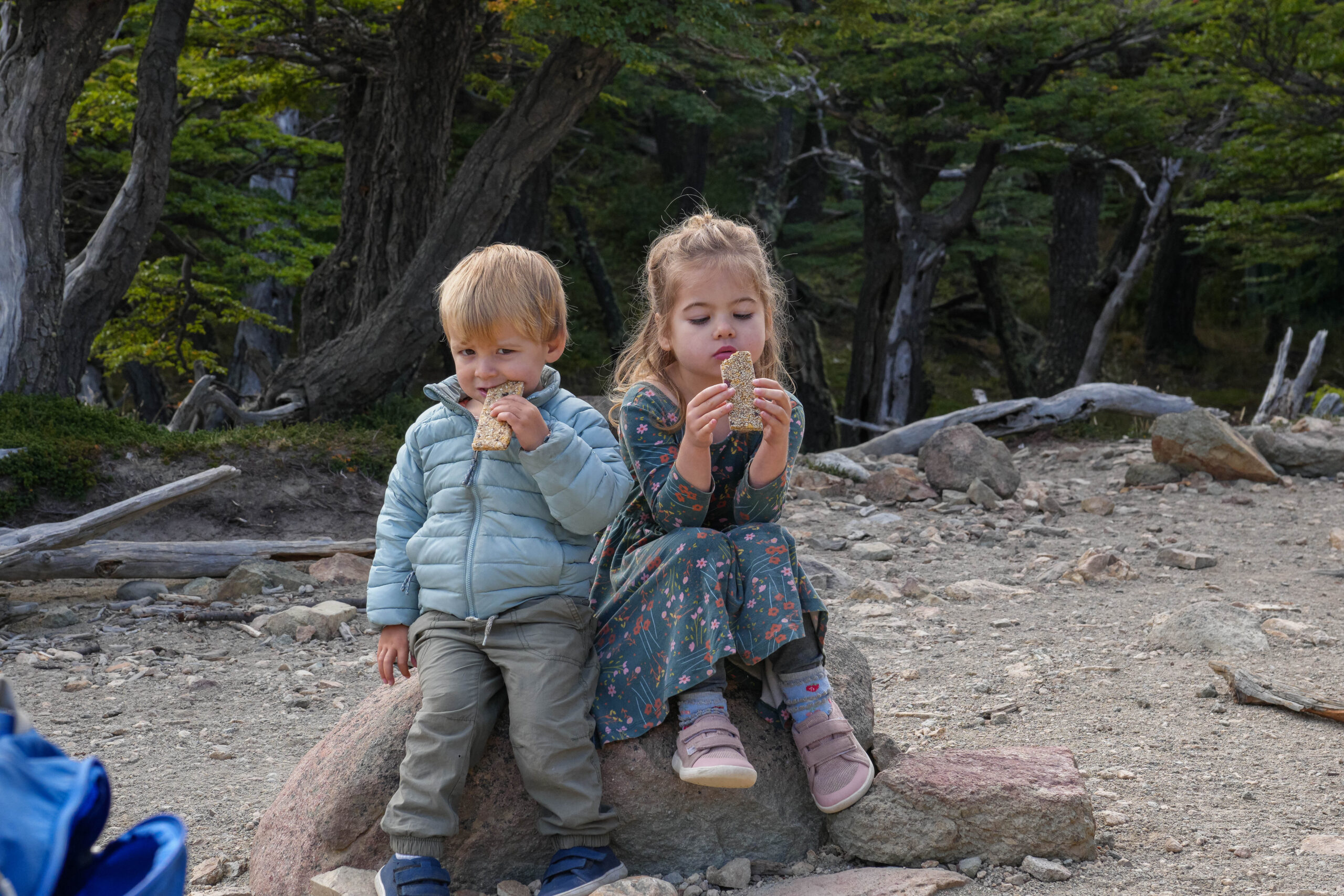
- Hiking with Kids – We’ve taken our kids hiking since they were born, but fresh air and hills still aren’t a good enough selling point for them. After much trial and error, I think our two main notes are: 1) It’s going to be slow, like 1 mph slow. We really had to rethink our expectations for just how far and how many stops we could make in a day. If we had to/wanted to go faster, we would carry them, but there was no goading them to move faster with their own two legs. 2) Candy milestones, games, and distractions made the hikes more enjoyable for all. We let the kids pick any treat they wanted from the grocery store, and they were excited to go on a hike to get to eat them. It’s amazing how much elevation they can do for 1 gummy worm. Playing “I spy,” “find something colored X,” “20 questions”, and “count how many of Y” were our go-tos.
- Weather – Weather is always a huge question mark in Patagonia and you never know when the winds and rain will hit. The best things you can do is plan extra days so you have some flexibility and bring good rain/wind gear if you have to go out in it. We found that the Windy App was our best resource for assessing the local conditions on a map where you can pinpoint the predicted cloud cover of an area.
Closing
Thanks for reading everyone. Our exploration of South America continues when we visit the safest and most modern country in the continent. You guessed it (or maybe you didn’t): we are off to Uruguay!